Industries / Energy, water and waste
Electric transmission and distribution
Electric transmission and distribution is the work of carrying electricity from power plants to the homes and businesses that use it, over high-voltage lines, through substations and local networks, while control rooms keep supply matched to demand and meters record what each customer uses.
1882
Thomas Edison's Pearl Street Station began supplying direct current through underground cables to paying customers in lower Manhattan on 4 September 1882; IEEE counts about 85 customers with about 400 lamps on the first day.
45
Milestones achieved across 7 domains.
12
To watch for: announced, not yet confirmed outside.
14
Open deliverables. Nobody has shipped them.
In one minute
Where it started
In the early 1880s electricity was made a few streets from where it was used, because low-voltage direct current lost too much power over distance. Transformers, built in Budapest in 1885 and put to work in Massachusetts in 1886, let alternating current be raised to a high voltage for the journey and lowered again for use. In 1891 a line carried three-phase power, the form most grids still use, 175 km to Frankfurt.
Where it stands
Lines now run at up to 1,100 kV and carry power more than 3,000 km across China. North American control rooms follow binding rules written after large blackouts, and the most recent major blackout cut power to all of mainland Spain and Portugal in April 2025. New plants wait years to connect: about 2,061 GW sat in US queues at the end of 2025, by Berkeley Lab's count, and large transformers are in short supply.
What is open
Much of what the industry knows sits in PDF studies, outage maps and confidential surveys that no one has turned into public data. Models that read documents and images, and open forecasting models, now let a small team do that work. The most useful early jobs are public records, and outside tests of claims so far checked only by the companies that make them.
Domains
AchievedWatch forOpen
Domain
Progress
Last achieved
Watch for
Open
Transmission lines
Transmission is building and running the high-voltage lines, on towers or as buried and undersea cables, that carry power long distances from power plants to cities.
6 · 2 · 2
Last achievedA 1,100 kV DC line2019
Watch forFlexible DC at 800 kV
2
openSubstations
Substations are fenced yards or buildings where transformers raise or lower the voltage and switchgear (breakers and switches) connects lines, protects them from faults and cuts them off for repair.
7 · 1 · 2
Last achievedA warning in the oil2025
Watch forSF6-free switchgear at top voltages
2
openIn depthTransformers and switchgear
Grid control and balancing
Grid control is the work of control rooms that match the power going into the grid with the power being used, second by second, keep frequency and voltage within safe limits, stop a local fault from spreading, and restart the system after a blackout.
7 · 2 · 2
Last achievedIberia blacks out on overvoltage2025
Watch forAI autopilot for reserve power
2
openDistribution and outage repair
Distribution is the local, lower-voltage network of poles, wires, underground cables and pole transformers that carries power along streets into buildings, and the crews and systems that find faults and fix them.
7 · 2 · 2
Last achievedPower cut to prevent fires2019
Watch forFive-day storm damage forecasts
2
openMetering
Metering measures how much electricity each customer uses, reads that figure, and uses the data for billing and for running the network.
7 · 1 · 2
Last achievedBritain's meters lose their smarts2018
Watch forMeters that spot faults
2
openIn depthSmart metering
Connecting new plants
Before a new power plant, wind or solar farm, or battery can plug into the grid, the grid owner studies its effect on nearby lines and decides what upgrades are needed and who pays, while the request waits in a line called an interconnection queue.
6 · 2 · 2
Last achievedBritain reorders its queue2025
Watch forAutomated studies at MISO
2
openLine inspection
Line inspection means checking lines, towers and nearby trees for damage and wear, by foot patrol, helicopter, drone, robot or remote sensing.
5 · 2 · 2
Last achievedThe Camp Fire's worn hook2018
Watch forOne rule for long-range drones
2
open
Other narrower industries
EV charging infrastructureMicrogridsElectric cooperativesPower line tree clearing
Figureheads
11 people
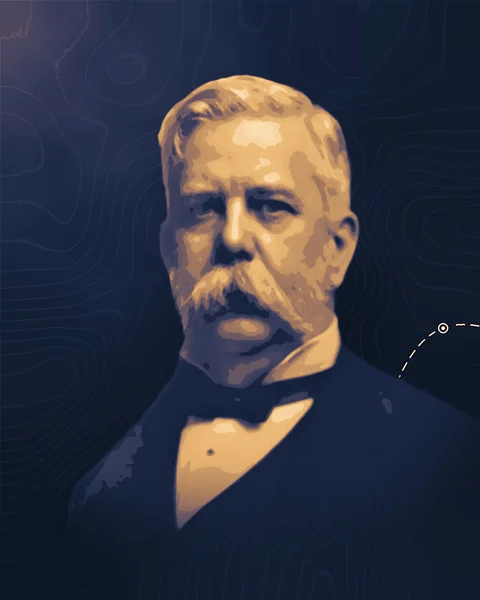
George Westinghouse
1846–1914
He put his company behind alternating current when American stations ran on direct current, and built the generators at Niagara Falls that settled the question.
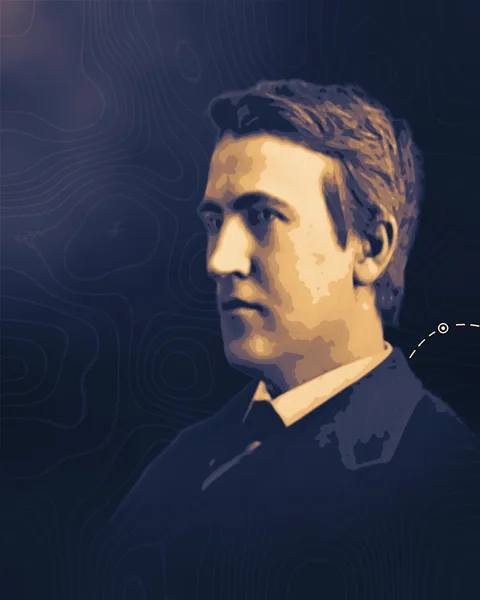
Thomas Edison
1847–1931
He built the first permanent central power station, which sold electric light to a whole district from one plant, and the lamps, dynamos and underground wiring to go with it.
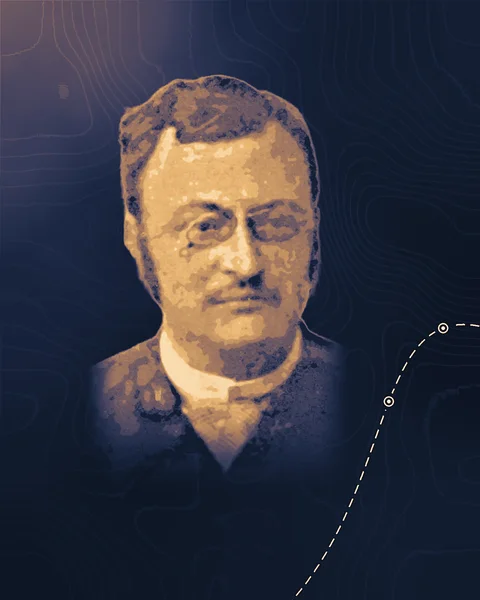
Károly Zipernowsky
1853–1942
He built up the electrical department of the Ganz Works in Budapest and, with Miksa Déri, worked out the parallel connection of transformers that lets one high-voltage AC line feed many customers who each switch on and off without upsetting the rest.
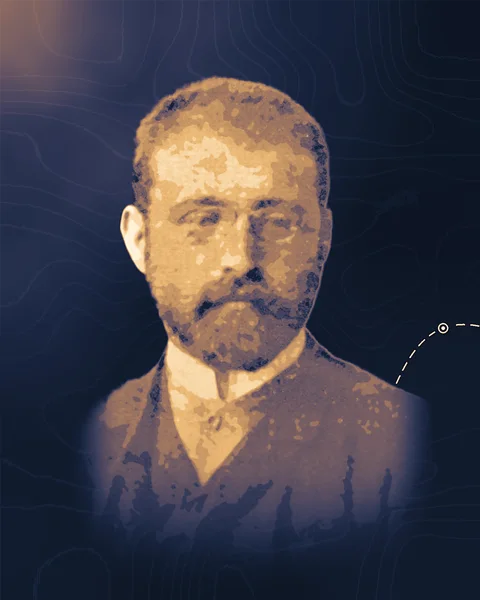
Miksa Déri
1854–1938
At the Ganz Works he did most of the experiments behind the 1885 transformer system and built its first central stations, and he later designed the repulsion motor that carries his name.
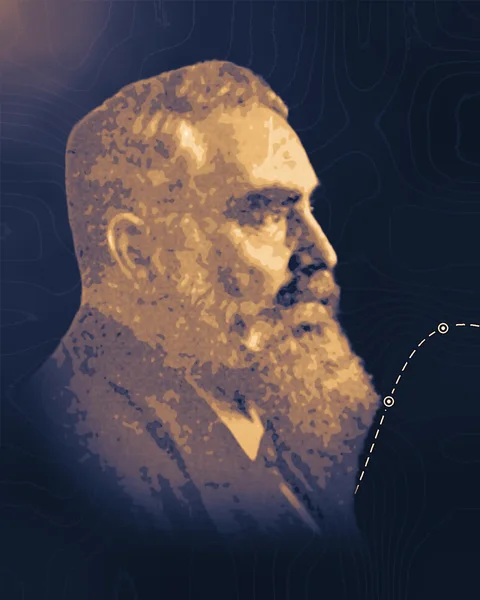
Oskar von Miller
1855–1934
He organized the demonstrations of 1882 and 1891 that sent electric power 57 km and then 175 km, and later planned a shared high-voltage grid for all of Bavaria.
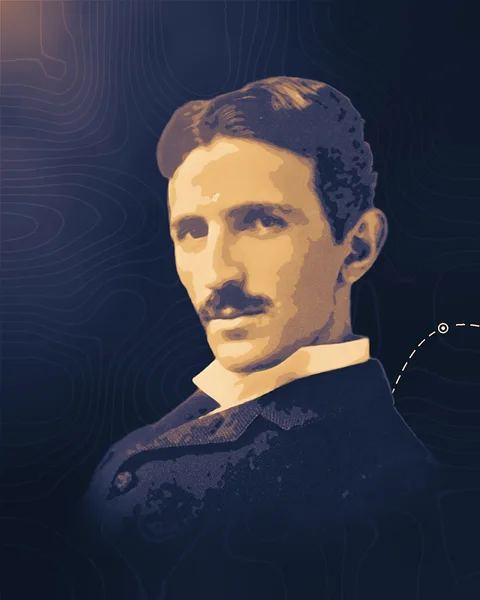
Nikola Tesla
1856–1943
He designed a system of alternating-current generators, transformers and motors working on several currents out of step with one another, the kind of system power plants have used since Niagara.
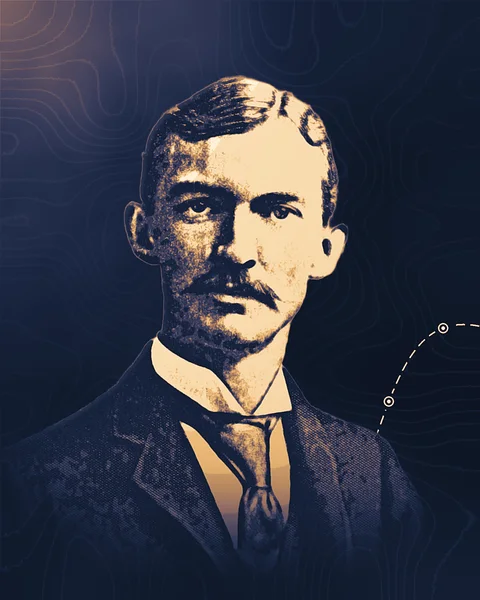
Oliver B. Shallenberger
1860–1898
He turned a chance observation in 1888 into a meter for alternating current, so AC supply could be sold by measured use.
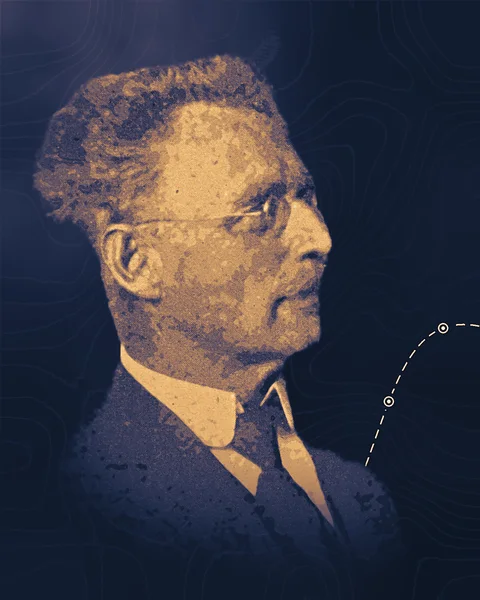
Charles E. L. Brown
1863–1924
At Maschinenfabrik Oerlikon he designed the generators and oil-insulated transformers of the 1891 Lauffen–Frankfurt line, then co-founded Brown, Boveri & Cie, where he devised multiple-break oil switches and the cylindrical rotor of turbo-generators.
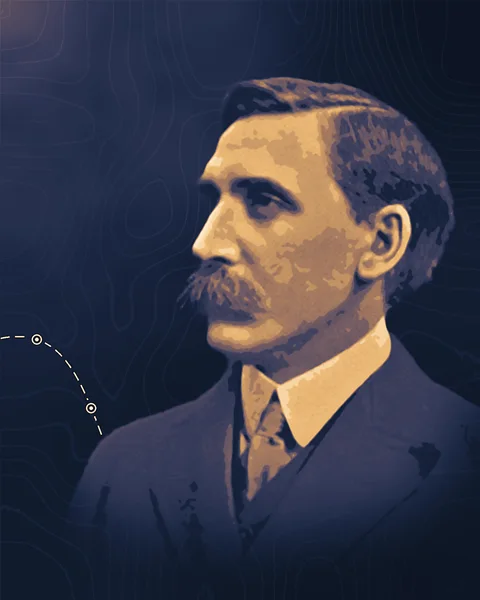
Sebastian Ziani de Ferranti
1864–1930
He built the Deptford power station on the Thames and sent its current into central London at 10,000 volts through cables of his own design.
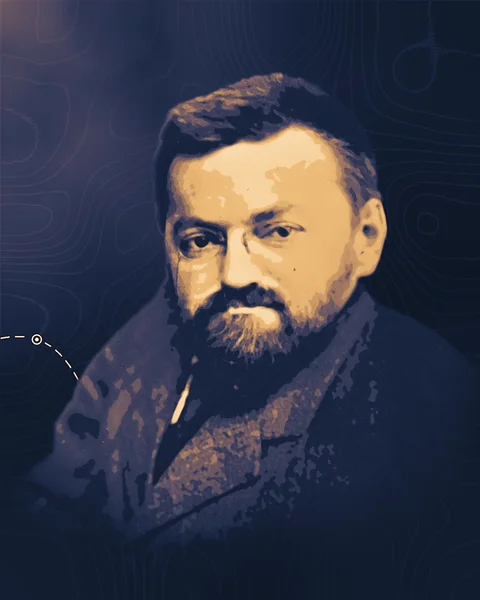
Charles Proteus Steinmetz
1865–1923
He found the law that predicts the power lost in the iron of transformers and motors, and taught engineers to work out alternating-current circuits with complex numbers, as simply as direct-current ones.
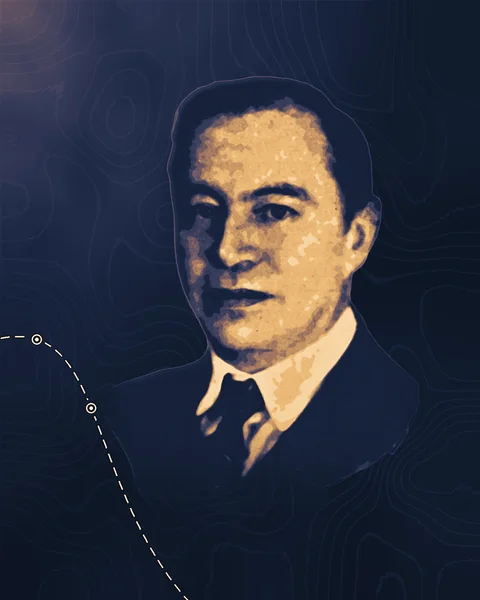
Charles LeGeyt Fortescue
1876–1936
He showed in 1918 that any unbalanced set of three-phase currents or voltages can be split into balanced parts, the method grid engineers still use to work out faults and to build protective relays.
Advances to build with
2 research notes
Mistral Large 4
A trillion open parameters
Mistral published its Large 4 AI model, a trillion numbers by its count, free to download and sell, though firms that rent out models need a separate license.

Cursor Agent SDK
Findings that cite notes
Cursor released a kit for building AI agents, and its example, a code reviewer that cites the note behind each finding, is known only from Cursor's account.
Open in electric transmission and distribution
3 of 14 open deliverables
Open · Transmission lines
An open cable failure record
A public table of failures on high-voltage underground and undersea cables, one row per event, with the date, the cable, the cause where one was reported, the days out of service, and links to the notices and reports it came from.
Built with what exists
Outage notices that EU grid operators must publish within an hour, with the reason, when an outage cuts cross-border capacity by 100 MW or more, or an offshore grid outage cuts wind output by 100 MW or more; operators' press releases and regulators' reports; a language model that drafts each row and cites the sentence it came from (see the Note "Findings that cite notes"); two human checkers.
Open · Substations
AI-written substation configurations
A tool that writes the configuration file for a digital substation's control system from a plain description of the substation, and a public test of the files it writes. The file, in IEC 61850's System Configuration Language (SCL), tells each relay and controller what data to send and receive; engineers now build it by hand in vendor tools.
Built with what exists
Current language models; OpenSCD, an open-source SCL editor now maintained by LF Energy's CoMPAS project; the open-source Auto-SGCR toolchain, whose example substation models include SCL files and which turns them into a working test network; one protection engineer to review results.
Open · Grid control and balancing
Test AI forecasts against operators
A public, running comparison of next-day electricity demand forecasts from open AI forecasting models with the forecast the grid operator itself published, scored on the same hours.
Built with what exists
ERCOT's public Seven-Day Load Forecast, posted hourly; the open-source gridstatus Python library, which fetches demand and forecasts from nine North American grid operators; forecasting models trained on many kinds of time series, such as Amazon's Chronos-2 (released October 2025, Apache-2.0 license) and Google's TimesFM 2.5; public weather forecasts.