Mistral Large 4
A trillion open parameters
Mistral published its Large 4 AI model, a trillion numbers by its count, free to download and sell, though firms that rent out models need a separate license.
Models · Checked 13 Nov 2026 · 14 sources · 9 min
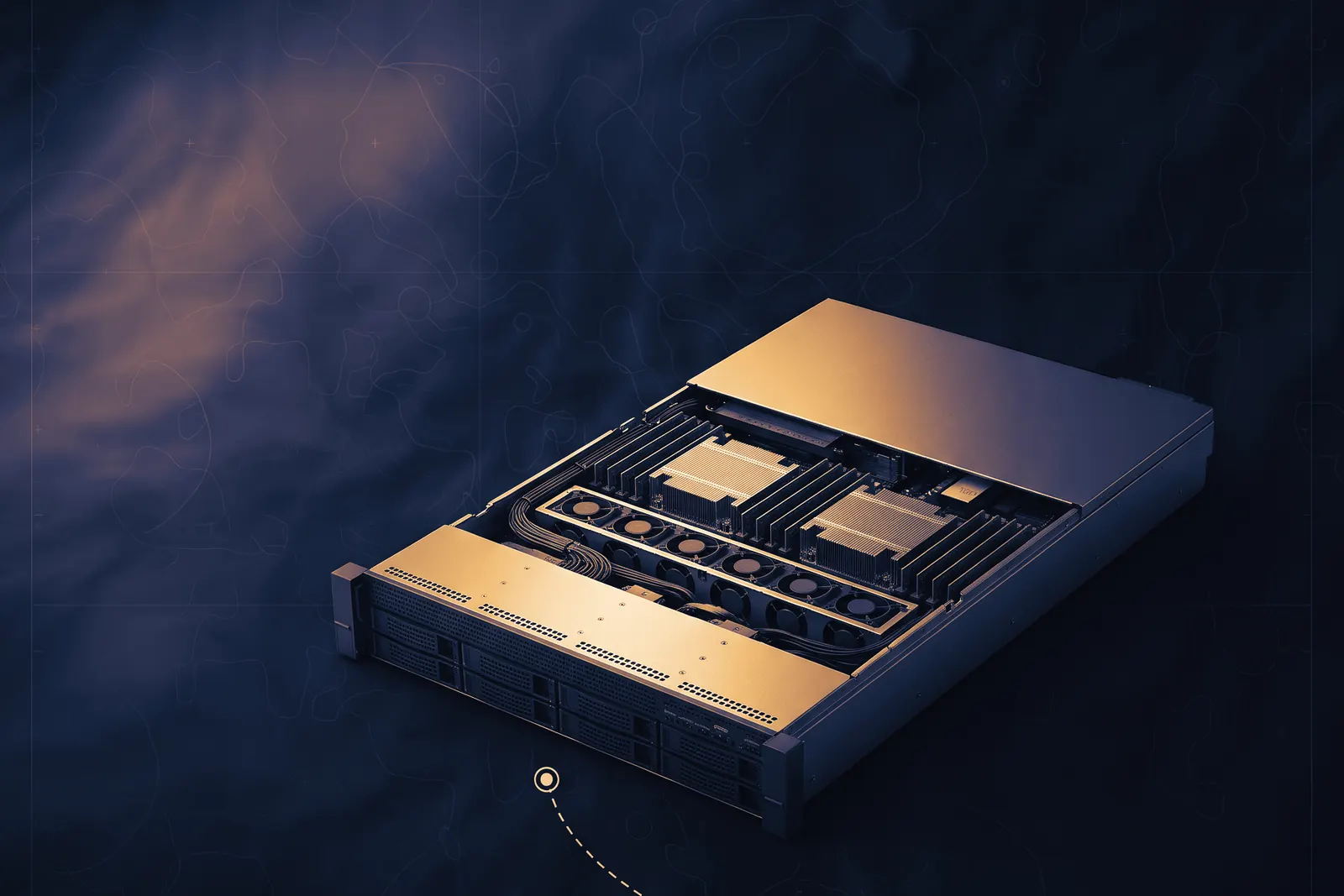
Type a question into a chatbot and the answer is worked out somewhere else. Your words travel to a building full of computers run by or for the company behind the chatbot, the reply is composed there, and it travels back. You are renting the use of a thing you never hold. The company can change it or withdraw it, and whatever you type passes through its machines.
The thing being rented is called a model, and with the packaging off it is a very long list of numbers. A program cuts your text into pieces, each a word or part of a word. These are called tokens. Each token is turned into numbers, which are multiplied and added, over and over, with the numbers on the list, until what comes out is a guess at the next token. Repeat that and a reply appears, one token at a time. Nobody typed the list in. It was set by training, in which the model is shown a vast amount of text and every number is nudged, a little at a time, toward a value that makes the guesses better. The numbers are called parameters, or weights, and whoever holds them holds the model.
On 29 October 2026 Mistral AI, a company that builds such models, published the weights of Mistral Large 4. It had announced the model on 6 October 2026 as a preview that could only be rented, with a promise that the weights would follow at the end of the month. They went up on Hugging Face, a website where models are shared, in a folder that anyone can download without asking. A model published this way is called open-weight.
Mistral's documentation counts 1.05 trillion parameters. The list of published files shows 54 files, 1.06 terabytes (TB) in all. A terabyte is a trillion bytes, so that is 1.06 trillion bytes for 1.05 trillion parameters, or about one byte of storage for each number. Suppose you download all 54 files. A drive with that much room will hold them, and there they sit, as inert as a folder of photographs.
Fifty-two billion at a time
To answer anything, the weights have to leave the drive. Every token of a reply means another pass of arithmetic through the model, so the whole list is loaded into the working memory of graphics processors, the chips this arithmetic is usually run on. If every number took part in every pass, each token would mean on the order of a trillion small sums. Mistral Large 4 is built to skip most of them.
The model contains many separate blocks of numbers called experts. As each token comes through, a small part of the model called a router picks a few experts to work on it, and the rest sit idle for that token. The model card specifies 128 routed experts, 4 of them active for any one token, plus 1 shared expert that always runs.
Mistral's documentation puts the parameters at work on any one token at 52 billion. Write 1.05 trillion as 1,050 billion, and 52 in 1,050 is about one in twenty. That does not mean a twentieth of the machine will do. In a model of this design the router chooses afresh for every token, and an expert that sat out one token may be needed for the next, so the whole list is normally kept loaded. The active share lowers the arithmetic each token costs and leaves the memory needed where it was.
As Mistral documents the model
About one part in twenty works on each token
What it takes to house the list is on record. vLLM, a program for running models on servers, publishes a recipe for this one. The setups it lists as validated range from a single unit of four graphics processors to two servers of eight working together, some using a second copy of the weights in a more compact format. On 13 November 2026 the same page said that no released version of vLLM supported the model yet.
Scored with its maker's own software
Whether that hardware is worth finding depends on how good the model is, and the release came with a claim. Mistral reported 41% on Terminal-Bench 4.0 and the lead among open-weight models, a figure measured by Artificial Analysis, an outside firm that tests models. Terminal-Bench is a set of tasks to be done through a terminal, the bare window where a computer is run by typed commands. Each task comes with tests, and an attempt passes only if every test passes. The score is the share of attempts that pass. A fixed set of tasks scored this way, so that models can be compared, is called a benchmark.
A model cannot sit that exam alone, because all a model does is produce text. Something has to hand it the task, pass the commands it writes to the computer, bring back what the computer printed, and decide when to stop. That surrounding software is called a harness, and a model working inside one is called an agent. Change the harness and the same weights can pass a different number of tasks. A Terminal-Bench score belongs to the pair.
The 41% comes from Artificial Analysis's Coding Agent Index, which scores each model together with a harness. The harness here was Mistral Vibe, which Mistral makes itself. On 13 November 2026 the index listed that pairing at 41.4% on Terminal-Bench, across 198 attempts, and an open-weight rival, GLM-5.3 in a harness called Opencode, at 39.9%.
The gap between the two is 1.5 points, and 1.5% of 198 attempts is about three passes. Terminal-Bench is also only one of three benchmarks that the index averages with equal weight, and over all three the order reverses. GLM-5.3 led the full index, 48.9% to 48.3%, a result Mistral calls "effectively tied".
Artificial Analysis also runs a second Terminal-Bench table that holds the harness still: every model gets the same one, called mini-swe-agent, on all 66 tasks. There, on 13 November 2026, Mistral Large 4 stood at 24.7%. That is about 25 passes in every 100 attempts, where the pairing with Mistral's harness managed about 41.
Five open-weight models were listed above it, led by Kimi K3.1 Pro at 67.2% and GLM-5.3 at 41.9%. The page dates Kimi K3.1 Pro to 23 October 2026, six days before Mistral's release, and that model is absent from Mistral's charts.
Artificial Analysis, as listed on 13 November 2026
The same two models, measured three ways
Kimi K3.1 Pro led the one-harness table at 67.2%.
| Mistral Large 4 | GLM-5.3 | |
|---|---|---|
| Terminal-Bench, in Mistral Vibe and in Opencode | 41.4% | 39.9% |
| The full index, three benchmarks averaged | 48.3% | 48.9% |
| Terminal-Bench, both in mini-swe-agent | 24.7% | 41.9% |
The benchmark, the firm doing the measuring and the model are the same in both tables, and the harness differs. Both figures can be right. The first says what the model does inside its maker's own harness, the second how the weights compare when every model is handed the same one. Mistral's claim to lead the open-weight models rests on the first table, and in the second five of them are ahead. For the files on your drive, the number that applies depends on the harness you would run them in.
Mistral also describes a gain of 13 points since the preview, from a score the preview post gave as 28.3% to the 41.4% that Artificial Analysis measured. The earlier figure was Mistral's own, and the chart in the release post labels it "self reported", so the gain sets a seller's score beside an outsider's. A score measured by the seller is the weaker evidence, because whoever runs a test chooses the harness, the settings and the number of tries, and a seller gains from a high score. That makes it unconfirmed, which is different from wrong. Mistral ran or commissioned five of its other published results, and no independent repeat of them is on record.
With the weights published, anyone with the hardware can run such tests without going through Mistral, in a harness of their choosing. They can also carry on training the model with material of their own, which the field calls fine-tuning. Hugging Face says its tools supported fine-tuning from the day of release on one server of eight graphics processors, and notes that open weights let researchers measure for themselves when the model refuses a request.
The same freedom has another side. Mistral writes that live traffic showed a "potential for uplift to conduct real attacks", which is to say that real use of the model showed it might help someone carry out an attack. It says it is modifying its guardrails, the limits meant to prevent that. The post does not say whether the published weights will be replaced. A copy already on someone's drive stays as it was downloaded, whatever is published later.
Who has to ask first
Being able to download a file and being allowed to use it are separate matters, and the second is settled by the license, the legal text published beside the weights. That text is a modified MIT license, though a widget at the foot of Mistral's announcement reads "Apache 2.0", the name of another standard license, which contradicts the announcement's own text.
The MIT license is a short standard text that permits nearly everything, and Mistral's version keeps the grant. Anyone may use, copy, modify, distribute, sublicense and sell the model and build new works from it, provided the notice is kept. The modification is a second condition. It applies when the licensee, the party using the model, "or any of its affiliates" operates what the text calls a "Model as a Service" business, and it requires a separate commercial license from Mistral before the model is used "for any commercial purpose". The license defines that business as giving third parties access to run a model or train it further, with "meaningful control over the inputs, parameters, or training data".
Go back to the files on your drive. Run them inside your own organisation and the condition does not touch you, because internal use is exempt. Build the model into particular features of a product that people use, and the product is not a Model as a Service business under the license's definition. Neither is the relaying of requests to models hosted by someone else. Rent the model out to third parties with that kind of control, and you need the separate license before any commercial use. So does a licensee with an affiliate that runs such a business.
The license does not define "meaningful control" any further, and the terms and price of the separate commercial license are unpublished. On 13 November 2026 OpenRouter, a service that passes requests on to the firms hosting a model, listed one provider for Mistral Large 4, and it was Mistral.
Check it yourself
- Open the list of published files and confirm that it shows 54 weight files totalling 1.06 TB.
- Open the model's page on OpenRouter and count the providers listed, to compare with the single provider, Mistral, listed on 13 November 2026.
- Open Mistral's documentation page for the model to confirm 1.05 trillion total and 52 billion active parameters.
- Read conditions 2 and 3 and the "Model as a Service" definition in the LICENSE file to confirm the affiliate wording and the exemption for internal use.
- Search the Coding Agent Index page for "Mistral Vibe - Mistral Large 4 (High)" and "Opencode - GLM-5.3 (Max)" and compare their Terminal-Bench 4.0 values, the 41.4% and 39.9% behind Mistral's 41%.
- Find Mistral Large 4 (High) in the single-harness Terminal-Bench 4.0 table to see the 24.7% and the open-weight models listed above it.
- Download the technical report and read Table 3 to confirm that it labels the 41% as an Artificial Analysis Coding Agent Index figure.
- Run the weights by the vLLM recipe on hardware it lists as validated, then run Terminal-Bench 4.0 as the version 4.0 release post describes, to learn which published figure your own harness reproduces.
Sources
- Mistral Large 4 (Le Chonk) is now open weight. Mistral, 29 October 2026.
- Introducing Mistral Large 4. Mistral, 6 October 2026.
- Mistral Large 4, model documentation page. Mistral Docs.
- Files of mistralai/Mistral-Large-4-1T-A52B. Hugging Face.
- mistralai/Mistral-Large-4-1T-A52B, model card. Mistral on Hugging Face.
- Recipe for mistralai/Mistral-Large-4-1T-A52B. vLLM.
- Coding Agent Index. Artificial Analysis.
- Terminal-Bench 4.0 release post. Terminal-Bench.
- Coding Agent Index methodology. Artificial Analysis.
- Terminal-Bench 4.0 evaluation. Artificial Analysis.
- Launch post on Mistral Large 4. Hugging Face, 29 October 2026.
- LICENSE, mistralai/Mistral-Large-4-1T-A52B. Mistral on Hugging Face.
- Mistral Large 4, model page. OpenRouter.
- Mistral Large 4 technical report. Mistral, PDF on Hugging Face.