Industries / Energy, water and waste / Electric transmission and distribution
Transformers and switchgear
The transformers and switchgear industry builds the machines that change electricity from one voltage to another and the breakers and switches that connect, protect and cut off circuits, for grids, power plants, factories and large buildings.
1885
The Ganz Works in Budapest showed its system of closed-core transformers at the Budapest exhibition in May 1885, and orders followed: by Péter Asztalos's history, drawn from the company's transformer register, No. 100 was delivered on 18 March 1886, No. 1,000 in 1889 and No. 10,000 in 1899.
31
Milestones achieved across 6 domains.
9
To watch for: announced, not yet confirmed outside.
12
Open deliverables. Nobody has shipped them.
In one minute
Where it started
The Ganz Works in Budapest began selling closed-core transformers in 1885 and delivered its 10,000th in 1899. Core steel improved in steps, from silicon steel around 1902 to grain-oriented steel in 1934 and amorphous metal in 1982, and each step cut the power a transformer wastes as heat. Breakers at first put out the arc between opening contacts in oil, until Westinghouse's sulfur hexafluoride (SF6) gas breakers of the 1950s set the pattern for high voltages.
Where it stands
Buyers wait years for equipment. Power transformers for North America took 128 weeks on average to arrive in mid-2025, by a Wood Mackenzie survey, and the China Electricity Council estimates that China makes about 60% of the world's transformers. The European Union is phasing fluorinated gases such as SF6 out of new switchgear from 2026 to 2032, and a 420 kV breaker without SF6, which its operator and maker call the first of its kind, has run on a US grid since 2023.
What is open
Much of what the industry knows about how its equipment fails sits in private surveys and files: gas readings from transformers that were opened after a fault, fire reports, short-circuit test results and frequency-response traces. Language models that read PDFs and cite their sources, together with open machine-learning tools, now let a small team build public versions of these records and score the methods that read them. Laboratory tests, such as how fast transformer paper ages in plant-based oils, are within reach of a university lab.
Domains
AchievedWatch forOpen
Domain
Progress
Last achieved
Watch for
Open
Cores and windings
The core is the stack of thin steel sheets that carries the magnetic field inside a transformer, and the windings are the coils of copper or aluminum wound around it; how both are made decides how much power a transformer wastes as heat.
6 · 1 · 2
Last achievedEfficiency rule spares steel cores2024
Watch forTransformers built from chips
2
openInsulation and oil
Insulation keeps the windings from shorting to each other and to the tank; in most large transformers it is paper and pressboard soaked in a liquid that also carries the heat away.
4 · 1 · 2
Last achievedSulfur ruled out of oil2012
Watch forEster oil at 765 kV
2
openBreakers and switchgear
A circuit breaker is a switch that can open while current flows, even the very large current of a fault, and switchgear is the assembly of breakers, switches and conductors that connects, protects and isolates a line, a transformer or a plant.
6 · 2 · 2
Last achievedSF6 gets end dates2024
Watch forVacuum breakers at 420 kV
2
openTesting
Testing is the work of proving, in the factory and in special laboratories, that a new transformer or breaker meets its rating before it goes into service: that its windings survive the forces of a short circuit, that its insulation holds, and that it matches its design.
4 · 1 · 2
Last achievedOne in five fails2017
Watch forAI reads FRA traces
2
openMonitoring in service
Monitoring is the work of watching transformers once they are in service, mostly by measuring the gases that faults leave dissolved in the insulating oil, so that a fault is found before it becomes a failure.
5 · 2 · 2
Last achievedA world count of failures2015
Watch forLanguage-model agents diagnose faults
2
openSupply and lead times
Supply is the work of getting transformers and switchgear built and delivered: the factories, the core steel and copper they are made from, the spare units kept for emergencies, and the time between an order and a delivery.
6 · 2 · 2
Last achievedChina ships a record2025
Watch forThe largest US transformer plant
2
open
Figureheads
2 people
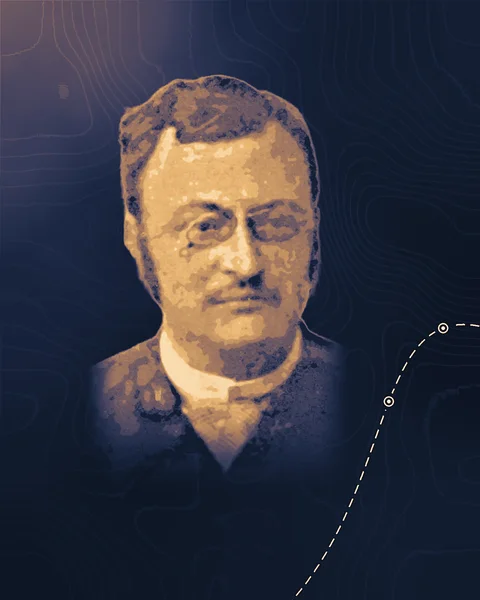
Károly Zipernowsky
1853–1942
He built up the electrical department of the Ganz Works in Budapest and, with Miksa Déri, worked out the parallel connection of transformers that lets one high-voltage AC line feed many customers who each switch on and off without upsetting the rest.
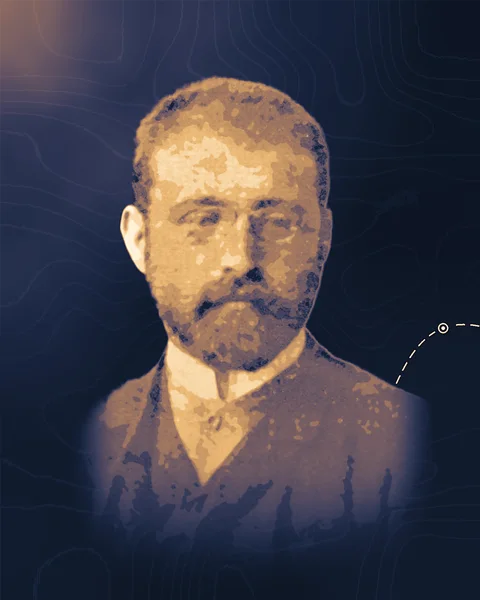
Miksa Déri
1854–1938
At the Ganz Works he did most of the experiments behind the 1885 transformer system and built its first central stations, and he later designed the repulsion motor that carries his name.
Advances to build with
1 research note

Open in transformers and switchgear
3 of 12 open deliverables
Open · Cores and windings
An open core-loss atlas
A public set of measured losses for grain-oriented and amorphous core steels at 50 and 60 Hz, including the distorted waveforms that inverters and data-center loads put on the grid, measured along and across the rolling direction, with a model trained on it that predicts the loss for a new waveform.
Built with what exists
An Epstein frame or single-sheet tester, the standard benches for measuring loss in strips of electrical steel; a programmable power amplifier to make distorted waveforms; a data-acquisition card; MagNet's data format and published method as a template; a small neural network for the model.
Open · Insulation and oil
An open paper-aging test
A repeatable public test of how fast transformer paper ages in mineral oil, natural ester and synthetic ester, at several temperatures, with every raw measurement and the analysis code published, ending in a measured ratio of paper life between the fluids.
Built with what exists
A university or commercial oil-testing laboratory with ovens and sealed steel aging vessels; kraft and thermally upgraded paper; mineral oil, a natural ester and a synthetic ester; the standard viscometer method for measuring DP; a tensile tester; Python for fitting aging rates against temperature.
Open · Breakers and switchgear
A public SF6-free product register
An open table of every breaker and switchgear product sold without SF6, one row per rating, giving the maker, product, voltage, short-circuit current, the gas or vacuum it uses and that gas's global warming potential, the laboratory and certificate for its type tests where published, its first energization, and a link for each fact.
Built with what exists
Makers' product pages and catalogs; summaries of CIGRE papers on e-cigre.org; type-test certificates that makers publish; a language model that drafts each row and cites the sentence it came from (see the Note "Findings that cite notes"); a second person who checks every row.