Industries / Energy, water and waste / Electric transmission and distribution
Microgrids
Microgrids are small local power systems, from a single building to a town or an island, with their own generators and storage, that can run connected to the main grid or on their own.
2002
In April 2002 a white paper from the Consortium for Electric Reliability Technology Solutions (CERTS), a group of US national laboratories, universities and companies led on this work by Robert Lasseter, proposed organising small generators, storage and loads into "MicroGrids" that would "seamlessly separate or island from the grid" when trouble came and reconnect once it was resolved, at a time when the draft US standard required small generators to shut down.
37
Milestones achieved across 6 domains.
10
To watch for: announced, not yet confirmed outside.
13
Open deliverables. Nobody has shipped them.
In one minute
Where it started
Islands and remote towns have long run their own small grids, usually on diesel. In 2002 the CERTS group of US laboratories proposed a different kind: a local grid that normally runs connected to the utility but can cut loose and carry itself when the main grid fails, then reconnect. A full-scale test bed in Ohio showed in 2008 that it worked.
Where it stands
The US Department of Energy counted 461 operating microgrids in the United States in 2021, with 3.1 GW of generation, and the World Bank's energy programme counted 21,500 mini-grids serving 48 million people worldwide in 2022. Microgrids carried two university campuses through Hurricane Sandy in 2012 and a North Carolina town through Hurricane Helene in 2024, and Kodiak, Alaska, gets 99% of its power from hydro and wind. Standards now cover planning, controllers and planned islands, but most performance figures still come from the companies and utilities that built the systems.
What is open
No one keeps a public record across sites of how microgrids perform in outages, what they cost, or how their measured results compare with what their designs promised. Open tools such as NREL's REopt.jl and MIT Lincoln Laboratory's Banshee test model, used with AI agents that can read reports and run simulations, put those records and new controller tests within reach of a small team.
Domains
AchievedWatch forOpen
Domain
Progress
Last achieved
Watch for
Open
Design
Design is deciding what goes into a microgrid, how big each part should be and where its electrical boundary lies, before anything is bought.
7 · 2 · 3
Last achievedShort tests, long promises2024
Watch forAI sizing in days
3
openGeneration and storage
This is the choice and running of the machines inside a microgrid that make or store electricity: engines and turbines, fuel cells, solar panels, batteries and, increasingly, vehicles.
5 · 2 · 2
Last achievedA bus depot's own grid2022
Watch forHydrogen backs up a town
2
openControls
The controller is the software and hardware that decides, second by second, which generators and batteries run, how much each produces, which loads to drop, and when the microgrid leaves or rejoins the main grid.
5 · 1 · 2
Last achievedA standard for controllers2017
Watch forAI steadies a microgrid's voltage
2
openDisconnecting and reconnecting
A microgrid has to sense when the main grid fails, cut itself loose in a fraction of a second, carry its own load, and later match the grid's voltage, frequency and phase again before it closes the breaker that rejoins them.
7 · 1 · 2
Last achievedA week on sun and batteries2024
Watch forA town on batteries alone
2
openEconomics
Economics is the work of pricing a microgrid, deciding who pays for it, and setting the rules under which it may sell power to its neighbours.
6 · 2 · 2
Last achievedOutage costs re-surveyed2025
Watch forCalifornia's grant microgrids
2
openRemote and island sites
Remote and island sites are places with no main grid to fall back on, where a local grid has to supply every hour of the year, usually starting from diesel generators.
7 · 2 · 2
Last achievedWind powers a gold mine2021
Watch forFifty million new connections
2
open
Advances to build with
5 research notes
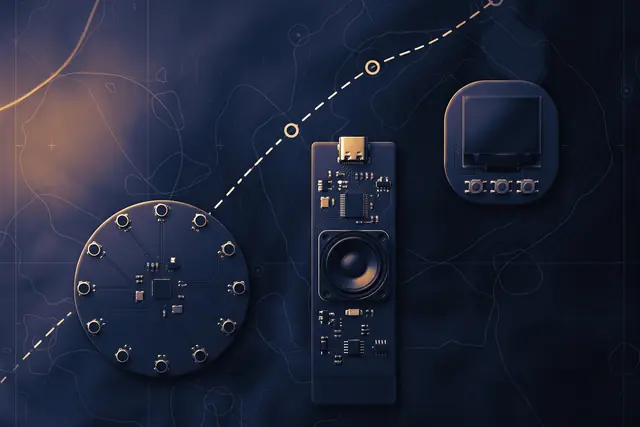
Claude Fable 5.2
Three working devices
Anthropic says its AI model Claude Fable 5.2 designed three prototype devices that worked without electrical modifications, with no outside test reported.
Gemini 4 Carbon
Cyber defenders first
Google says cyber defenders got Gemini 4 Carbon first, and its 88.2% flaw-finding score is Google's own run on a 183-task subset with guardrails off.
Mistral Large 4
A trillion open parameters
Mistral published its Large 4 AI model, a trillion numbers by its count, free to download and sell, though firms that rent out models need a separate license.

Muse Ember
The jobs agents repeat
Meta's Muse Ember matched Claude Haiku 5.5 on an outside firm's tests at a third of the cost per task, though both list the same prices for text in and out.

Agentic robotics
Readable robot programs
A UC Berkeley lab has AI agents write readable robot programs, which scored below human-written ones in all twelve of its own test conditions on one simulator.
Open in microgrids
3 of 13 open deliverables
Open · Design
Predicted against delivered
A public table that pairs, for at least 30 built microgrids, what the design study predicted (bill savings, renewable share, hours the essential load can run on island) with what was later measured, each figure linked to its report.
Built with what exists
The Energy Commission's EPIC final reports (the CEC-500 series), the National Laboratory of the Rockies' REopt study reports on osti.gov, utility filings, pdftotext, and a document-reading model such as Meta's Muse Ember (see the Note "The jobs agents repeat") to pull figures, each checked by a person; Python with pandas.
Open · Generation and storage
Planning defaults against meters
For the engine-driven CHP systems in NYSERDA's public performance database, a table of measured electric efficiency at each level of load, hours spent shut down, and the lowest load each unit actually ran at, set beside the defaults that NREL's REopt planning model assumes for the same kind and size of engine: full-load electric efficiency, minimum turndown (the lowest share of full power it may run at) and unavailable periods.
Built with what exists
CSV downloads from the NYSERDA DER Integrated Data System; REopt.jl's chp_defaults.json; Python with pandas. Data only; nobody visits or touches a plant.
Open · Controls
Agent-written island transitions
Give an AI coding agent the Banshee microgrid model and Lincoln Laboratory's 2017 test sequence (grid lost, black start, resynchronise, disconnect, hold a set power flow across the connection point, ride through faults). Have it write the controller logic for each transition in readable form, run it in simulation, read the results and revise until it passes, then compare it with a controller written by a person.
Built with what exists
The Banshee model files in the EPHCC repository on GitHub (the full model for MATLAB/Simulink and RTDS, Feeder 1 for Typhoon HIL); Typhoon HIL Control Center with its free Virtual HIL emulator; an AI coding agent such as Claude Fable 5.2 (see the Note "Three working devices") or the open-weight Mistral Large 4. The Note "Readable robot programs" describes the same write, simulate and revise loop for robot arms. Simulation only; no real switchgear.