Industries / Mining and materials
Steel and metals
Steel and metals is the industry that turns ore concentrates and scrap into iron, steel, aluminum, copper and other metals, and forms them into basic products such as slabs, sheet, bar and wire.
1709
Abraham Darby ran the Old Furnace at Coalbrookdale, England, on coke instead of charcoal, the change the Institution of Mechanical Engineers says marked the beginning of the industrial age.
30
Milestones achieved across 7 domains.
7
To watch for: announced, not yet confirmed outside.
9
Open deliverables. Nobody has shipped them.
In one minute
Where it started
Metal-making is ancient, but the modern industry dates from 1709, when Abraham Darby smelted iron with coke, a fuel baked from coal, in place of charcoal made from wood. In 1856 Henry Bessemer showed a way to make steel, iron with a small and controlled amount of carbon, by blowing air through molten iron.
Where it stands
The world made 1,849 million tonnes of crude steel in 2025, by the World Steel Association's (worldsteel's) count. About 69% came from oxygen converters fed by blast furnaces, and 30% from electric furnaces that melt mostly scrap. By worldsteel's averages, the first route releases 2.34 tonnes of carbon dioxide per tonne of steel and the scrap route 0.69 tonnes, so most plans to cut emissions change the route.
What is open
Much of the unfinished work is checking and sharing, not new furnaces. Plant records are almost never published, so there are no public benchmarks for furnace data, casting breakouts, scrap contamination or mill certificates. Claims about robot-cleaned scrap and low-carbon steel labels still lack independent tests and a public register.
Domains
AchievedWatch forOpen
Domain
Progress
Last achieved
Watch for
Open
Ironmaking
Ironmaking removes the oxygen from iron ore to leave metallic iron, either in a blast furnace burning coke or in a shaft furnace fed with gas.
4 · 1 · 1
Last achievedHydrogen-made steel delivered2021
Watch forHybrit demonstration plant
1
openSteelmaking
Steelmaking turns molten iron, sponge iron and scrap into steel by burning off excess carbon and impurities and then adjusting the chemistry.
5 · 1 · 1
Last achievedScrap-based mini mill1969
Watch forSteel by electrolysis
1
openCasting and rolling
Casting and rolling turn liquid steel into solid slabs, billets or strip, then press it between rolls, hot or cold, into plate, sheet, bar and wire.
5 · 1 · 1
Last achievedEndless casting and rolling2009
Watch forA faster endless line
1
openAluminum and other metals
This domain covers making aluminum, copper, titanium and other non-ferrous metals, meaning metals other than iron, from ore concentrates, and refining them.
4 · 1 · 1
Last achievedCopper by solvent extraction1968
Watch forSmelting cell without carbon
1
openIn depthAluminum smelting
Recycling scrap
Recycling scrap collects, sorts and prepares used and offcut metal so furnaces can melt it again.
4 · 1 · 2
Last achievedRobots pick copper from shred2024
Watch forCamera grading of scrap
2
openCutting emissions
Cutting emissions means reducing the carbon dioxide released in making metals, mainly by changing how iron is made or by capturing the gas.
4 · 1 · 1
Last achievedGerman hydrogen plans suspended2025
Watch forStegra plant start
1
openQuality and testing
Quality and testing checks that metal has the chemistry, inner structure and strength it is sold as.
4 · 1 · 2
Last achievedLiberty ship fractures1941
Watch forAI reads microstructures
2
open
Other narrower industries
Foundries and castingForgingPrecious metals refiningMachine shopsTool and dieOilfield pipe and tubeMetal finishingMetal stamping
Figureheads
10 people
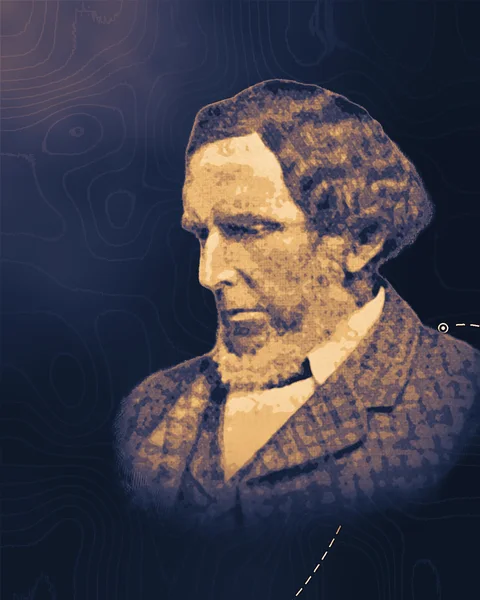
Robert Forester Mushet
1811–1891
He patented the dose of manganese that made converter steel sound, rolled an early steel rail, and made the first tool steel that hardens in air.
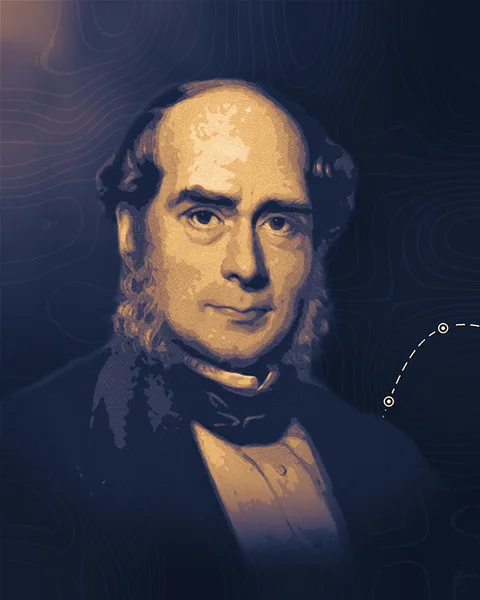
Henry Bessemer
1813–1898
He showed that air blown through molten pig iron turns it into steel in minutes with no added fuel, and built the business that made steel cheap.
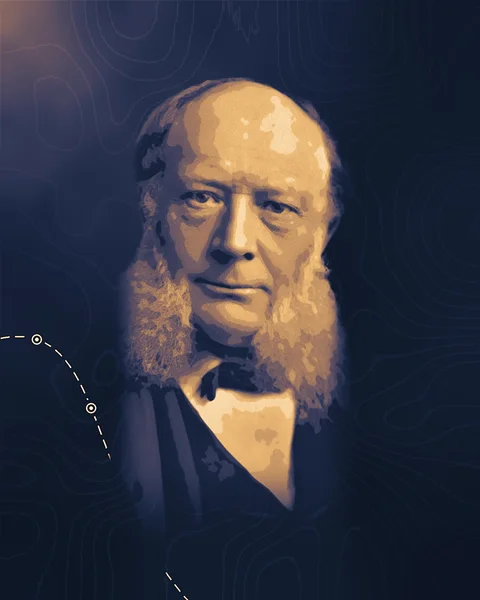
William Siemens
1823–1883
He and his brother Friedrich built the furnace that reuses its own waste heat, and he turned it to melting steel on an open hearth, the method that made most of the world's steel by 1913.
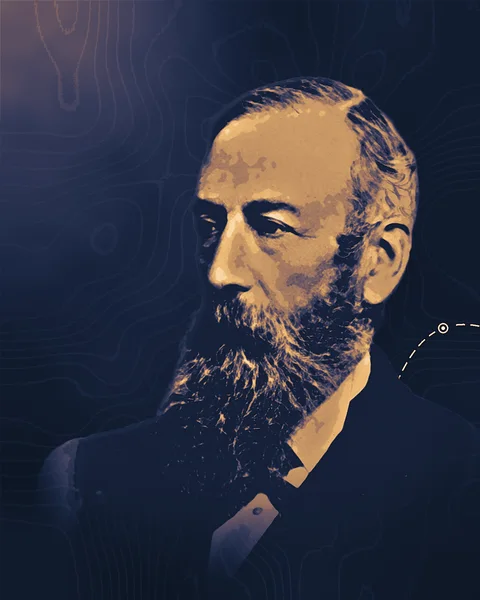
Henry Clifton Sorby
1826–1908
He ground, polished and etched steel and looked at it under a microscope, which is how the inner structure of metals has been examined ever since.
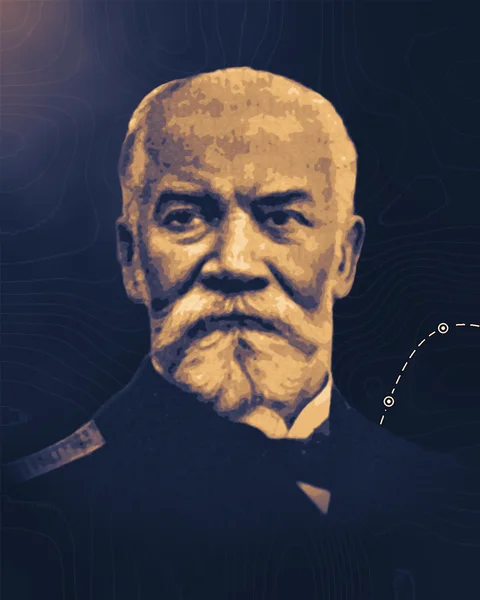
Dmitry Chernov
1839–1921
He showed in 1868 that steel changes its inner structure at set temperatures, so that forging and hardening could be done by rule and not by guess.
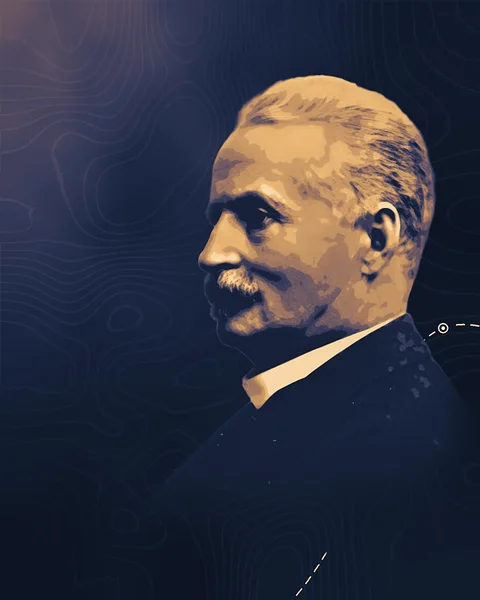
Johan August Brinell
1849–1925
He gave metal hardness a number, by pressing a steel ball into the surface under a known load and measuring the dent.
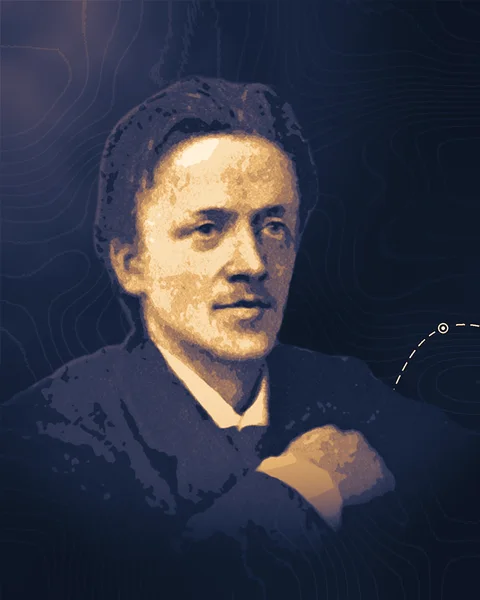
Sidney Gilchrist Thomas
1850–1885
A police-court clerk who worked out, with his cousin Percy Gilchrist, how to take phosphorus out of iron in the converter, so that the common phosphoric ores could be made into steel.
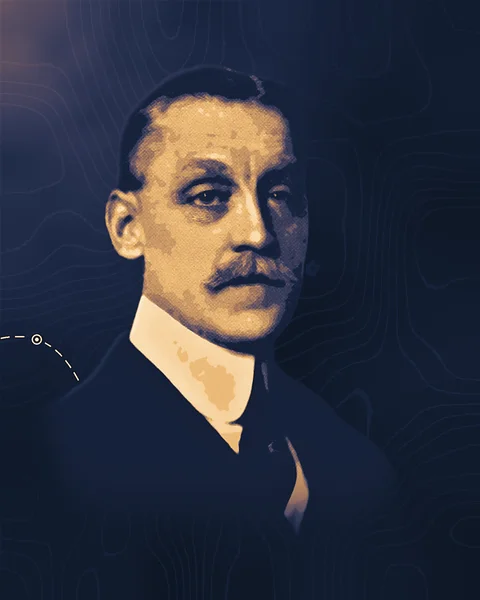
Robert Hadfield
1858–1940
He made manganese steel in 1882 and silicon steel soon after, the first steels designed by adding a second metal in quantity, and showed by measurement what such additions do.
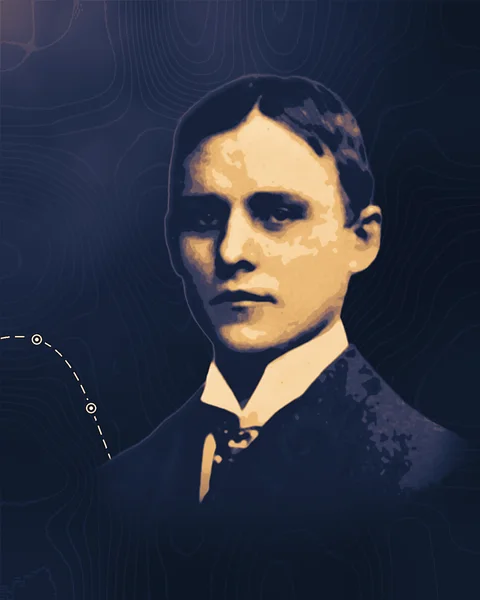
Charles Martin Hall
1863–1914
He found, at 22, how to make aluminum by passing electric current through alumina dissolved in molten cryolite, and built the first company to do it at scale.
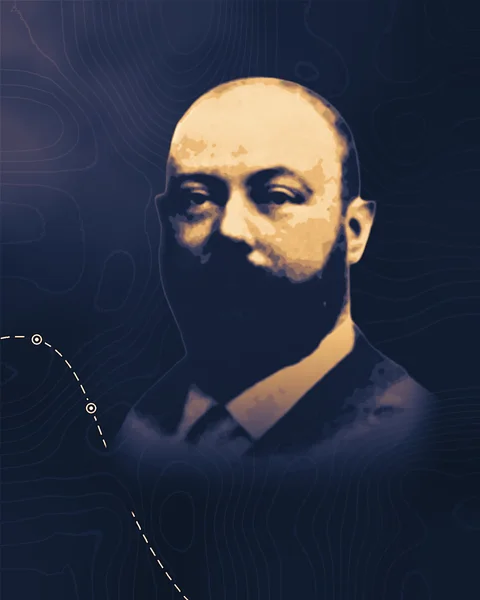
Paul Héroult
1863–1914
He found the electrolytic way to make aluminum in the same year as Charles Martin Hall, and then built the electric arc furnace that melts scrap into steel.
Open in steel and metals
3 of 9 open deliverables
Open · Ironmaking
Test a reduction model elsewhere
A test set of published hydrogen reduction curves from laboratories other than the Max Planck group. Each curve shows how much of a pellet's oxygen is removed over time, with its temperature, hydrogen pressure, pellet size and ore type recorded. Run the group's open model on every curve and publish where it holds and where it fails.
Built with what exists
The group's code and data on GitHub (github.com/bajpaianurag/Hydrogen_Reduction_Reaction_Transition_ML); a plot digitizer to read curves from published figures; Python. An AI model can draft the table of test conditions from each paper for a person to check; the Note "Seven more flagged" covers an AI reviewer of long documents.
Open · Steelmaking
Open arc furnace heat records
A public, anonymized record of several thousand electric arc furnace heats (one heat is one furnace load from charge to tap). Each record holds the charge by scrap grade and weight, electricity and oxygen used, tap temperature, final chemistry and time, plus a baseline model that predicts electricity per tonne.
Built with what exists
Records from a partner mill; standard anonymization; Python with pandas and scikit-learn for the baseline; Zenodo for open hosting.
Open · Casting and rolling
Open breakout warning benchmark
A public set of mould temperature records from continuous casters, labelled with sticker breakouts and false alarms, and a scoring rule. A breakout happens when the thin solid shell of a strand tears below the mould and liquid steel runs out; thermocouples in the mould walls are watched for the warning pattern.
Built with what exists
Anonymized thermocouple logs from partner casters; Python time-series tools; Zenodo for hosting.