Industries / Mining and materials / Steel and metals
Foundries and casting
Foundries make metal parts by melting metal and pouring it into a mold, a hollow in sand, ceramic or steel shaped like the part, where it freezes into shape.
c. 4500 BCE
The oldest known objects cast by the lost-wax method, in which a wax model is coated in clay and melted out to leave a hollow for the metal, are gold pieces from the cemetery at Varna, Bulgaria, from the mid-fifth millennium BCE, by the account of Thomas Rose, Peter Fabian and Yuval Goren (2023); copper amulets from Mehrgarh, Pakistan, are of about the same age.
32
Milestones achieved across 6 domains.
7
To watch for: announced, not yet confirmed outside.
12
Open deliverables. Nobody has shipped them.
In one minute
Where it started
Metalworkers at Varna, in Bulgaria, and Mehrgarh, in Pakistan, were casting gold and copper in clay molds by about 4500 BCE. The trade became an industry in 18th-century Britain, when Abraham Darby patented casting iron pots in damp "green" sand in 1707 and small furnaces let founders remelt iron away from the blast furnace. Through the 20th century, induction furnaces, resin-bonded sands, molding machines and ductile iron, an iron that bends instead of snapping, turned it into the mass production of engine blocks, pipe and machine parts.
Where it stands
By the count of M. S. Soiński and A. Jakubus in Archives of Foundry Engineering (2026), the world made about 120 million metric tons of castings in 2023, the most in the 60 years they reviewed, and over the last 20 years output has shifted from Europe and the US to Asia, mainly China and India. Ductile iron and aluminum keep gaining share from gray iron and steel. Sand cores are now printed straight from a computer model by the thousand a day, and foundries are replacing coke-fired cupolas with electric induction furnaces.
What is open
Much of what a foundry knows stays inside it: its sand tests, cooling curves, shot records and scrap logs, so studies that predict defects use private data and cannot be checked. The open work is mostly public data sets and tests built from such records, among them X-ray images matched to CT scans, filmed water pours to test filling simulations, and software graded the way human radiographers have been. Beyond those are agents that design gating and test it in simulation, robots that learn to grind replica castings, and outside checks of what furnace and machine makers claim.
Domains
AchievedWatch forOpen
Domain
Progress
Last achieved
Watch for
Open
Patterns and molds
Patterns and molds is the work of making the shape the metal fills: a pattern, a copy of the part, is pressed into packed sand or another material to leave a hollow, and cores, separate shaped pieces of bonded sand, are set inside to form holes and passages.
6 · 1 · 2
Last achievedMolds printed from sand1998
Watch forPrinted molds for wind castings
2
openMelting
Melting turns solid metal, from pig iron and scrap to returned gates and risers, into liquid of the right chemistry and temperature for pouring.
5 · 1 · 2
Last achievedMelting's energy measured2004
Watch forCupola out, induction in
2
openPouring and solidification
Pouring and solidification is the work of getting molten metal from the furnace into the mold, and of designing the channels and reservoirs so that the metal fills the mold cleanly and freezes without holes.
6 · 1 · 2
Last achievedCameras steer the pour2005
Watch forPouring that learns from pours
2
openDie casting
Die casting forces molten metal, mostly aluminum, zinc or magnesium, into a reusable steel mold called a die under high pressure, making precise, thin-walled parts in seconds.
5 · 2 · 2
Last achievedBig presses spread in China2023
Watch for16,000-tonne machines in production
2
openCleaning and finishing
Cleaning and finishing is the work of knocking a casting out of its mold, cutting off the gates and feeders, blasting away burnt-on sand and grinding the casting to its final shape.
5 · 1 · 2
Last achievedEurope's silica dust limit2017
Watch forGrinding cell that plans itself
2
openInspection
Inspection is checking finished castings for hidden flaws, such as gas holes, shrinkage cavities, trapped sand and cracks, mostly with X-rays and without cutting the part open.
5 · 1 · 2
Last achievedInspection data falsified2017
Watch forRobots carry the X-ray tube
2
open
Advances to build with
2 research notes
Claude Fable 5.2
Three working devices
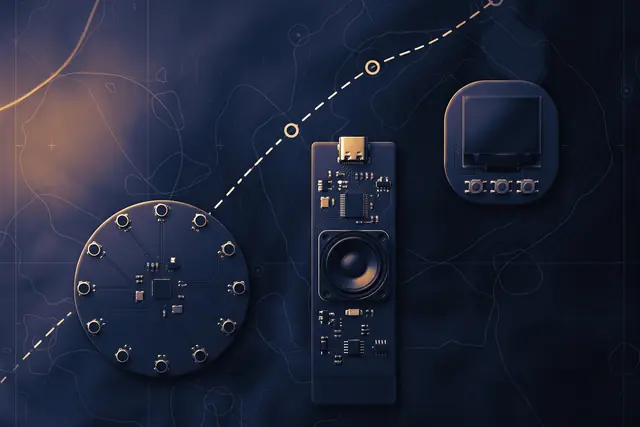
Anthropic says its AI model Claude Fable 5.2 designed three prototype devices that worked without electrical modifications, with no outside test reported.

NVIDIA GR00T 2
Five demonstrations per task
By NVIDIA's own test, its robot model GR00T 2 averages 95% success after five demonstrations of a task, on 50 tasks picked from those it learns that way.
Open in foundries and casting
3 of 12 open deliverables
Open · Patterns and molds
Parting lines chosen by software
An open benchmark of at least 100 sand-cast part models, each with the parting line (where the two mold halves meet), the cores and the draft angles that a foundry engineer actually chose, plus a baseline tool that proposes them from the bare part model.
Built with what exists
Open CAD libraries that read STEP files (FreeCAD, CadQuery, Open CASCADE); the five criteria from the Bandung paper (projected area, undercuts, draw distance, dimensional stability, cope and drag volume) as a first rule set; an AI model such as Claude Fable 5.2 to propose and explain choices (see the Note "Three working devices").
Open · Melting
Cooling curves with nodularity
An open data set of thermal analysis curves from ductile iron melts (the temperature trace of a small sample cup as it freezes), each paired with the melt's chemistry and with the nodularity and nodule count measured on a test casting from the same ladle, plus a baseline model that predicts nodularity from the curve.
Built with what exists
The thermal analysis cups and readers foundries already use; a metallography lab, or image analysis of polished test bars, for nodularity rated to ASTM A247, for which the open-source nodularity.py program on GitHub (repositoryfiles/Nodularity) already rates micrographs by the ISO and JIS methods; Python with scikit-learn; Zenodo for publishing.
Open · Pouring and solidification
Open water-filling benchmark
A public set of videos of water filling clear acrylic copies of published gating systems, with the geometry files, the pouring head and flow rate for each, and ready-to-run cases for an open simulation code, so anyone can test a filling simulation against the same filmed flow.
Built with what exists
Laser-cut clear acrylic; a constant-head water tank; a phone or camera filming at 240 frames a second or faster; OpenFOAM's interFoam free-surface solver; GitHub and Zenodo for files and videos.
Where it sits
Broader