Industries / Construction and property
Commercial and residential construction
Commercial and residential construction puts up homes, offices and shops: it prices and schedules the work, builds the structure, installs the wiring, pipes and air systems, finishes the surfaces, keeps the workers safe, and hands the building over once inspectors have checked it.
About 1750 BCE
The laws of King Hammurabi of Babylon set rules for a builder who built a house for someone else: a fee of two shekels for each sar (a unit of area) of house, rebuilding at his own cost if the house fell, and death if the collapse killed the owner. The Louvre, which holds the stone the laws are carved on, dates it to Hammurabi's reign, 1792 to 1750 BCE.
43
Milestones achieved across 7 domains.
12
To watch for: announced, not yet confirmed outside.
14
Open deliverables. Nobody has shipped them.
In one minute
Where it started
People have built houses for others under written rules for almost 3,800 years: Hammurabi's laws already set a builder's fee and punished a builder whose house fell. For most of that time buildings were measured, priced and put up by hand in timber, brick and stone. Portland cement (patented 1824), reinforced concrete (1892), gypsum board (1894) and the critical path schedule (1959) set the methods most sites still use.
Where it stands
In mid-2025 Oxford Economics forecast that the world would spend about US$3.7 trillion on homes and US$2.6 trillion on other buildings that year, in 2023 prices. Output per worker has lagged: Austan Goolsbee and Chad Syverson find US construction's value added per worker about 40% lower in 2020 than in 1970, and the US Bureau of Labor Statistics measured productivity in single-family home building falling 4.5% in 2025. Falls are still the main killer, causing 389 of 1,034 US construction deaths in 2024 by the Bureau's data. Robots now lay blocks, print walls, finish drywall and drill ceilings, on a small number of sites, and most of their speed figures come from their makers.
What is open
Many checks are still made by eye or with a tape: nail spacing in shear walls, mortar joints, drywall finish, tile edges, firestop seals, harness wear. There are no public test sets with answer keys for AI takeoff, AI plan review or handover data, so buyers cannot tell how well these tools work. Cheap cameras, open vision models, low-cost robot arms and AI models that read documents put most of these jobs within reach of a small team.
Domains
AchievedWatch forOpen
Domain
Progress
Last achieved
Watch for
Open
Estimating
Estimators measure the drawings to count every item of material and hour of labor, price them, and turn the total into a bid or a budget.
7 · 1 · 2
Last achievedAI counts reliably2026
Watch forA takeoff model beats estimators
2
openScheduling
Schedulers put every task in order, estimate how long each will take, and track the job against that plan so that trades, materials and inspections arrive when they are needed.
4 · 1 · 2
Last achievedThe last planner commits1994
Watch forAI-generated schedules
2
openFoundations and structure
This is the work of digging, setting foundations and putting up the frame, in concrete, steel, timber, masonry or factory-made parts, that carries a building's weight to the ground.
7 · 2 · 2
Last achievedPrinted barracks are occupied2025
Watch forBricklaying robots for hire
2
openIn depthConcreteSteel erection
Electrical, plumbing and air
This trade installs the systems inside a building, the electrical wiring, the water and drain pipes, and the heating, ventilation and air conditioning, together often called MEP, for mechanical, electrical and plumbing.
7 · 2 · 2
Last achievedA robot drills ceiling anchors2024
Watch forLayout robots cut labor hours
2
openIn depthElectrical contractingPlumbing
Finishes
This is the work that closes in and finishes a building's surfaces: wallboard and plaster, paint, tile, floors, ceilings, and the cladding on the outside.
5 · 2 · 2
Last achievedDrywall robot on paying jobs2021
Watch forDrywall robots on lifts
2
openSite safety
This work keeps construction workers alive and unhurt, through protective gear, laws and regulators, fall protection, limits on dust and heat, and equipment that watches for hazards.
7 · 2 · 2
Last achievedA measured heat limit2021
Watch forA US heat standard
2
openInspection and handover
Inspectors check that a building matches its approved plans and the building code, and at handover the builder gives the owner the keys, the certificates and the information needed to run the building.
6 · 2 · 2
Last achievedOne digital permit desk2025
Watch forAI checks rebuild plans
2
open
Other narrower industries
RoofingDemolitionGlazingModular and prefab buildingConTechFencingPool constructionHVAC contractingFoundation repairExcavation and site workMasonryCabinets and countertops
Figureheads
2 people
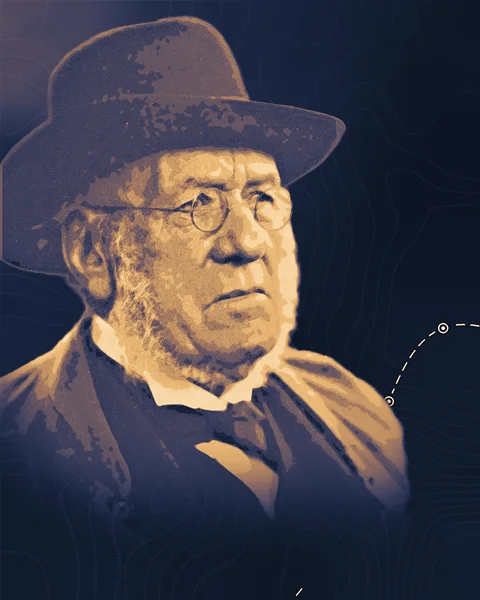
John Clutton
1809–1896
A London land agent who valued and managed the estates of the Church and the Crown, he was the first president of the body that became the Royal Institution of Chartered Surveyors, which still sets the rules its members follow when they value property.

James Stephens
1821–1889
A stonemason in Melbourne, he led the building workers who in 1856 began working eight hours a day for the pay of ten, the start of the eight-hour day in Victoria's building trades.
Advances to build with
1 research note

Open in commercial and residential construction
3 of 14 open deliverables
Open · Estimating
A public commercial takeoff test
A public set of commercial building drawings, each with a full takeoff made by two estimators and reconciled, and a script that scores any tool's takeoff against it item by item, with counts, lengths and areas scored separately.
Built with what exists
Drawing sets of finished buildings whose owners agree to publication, such as school districts or city agencies; a PDF measuring tool for the human takeoffs; Handoff's evaluation harness, which is public under the Apache-2.0 license, as a starting point; commercial AI takeoff tools and general AI models to be scored.
Open · Scheduling
Work sampling by camera
A tool that reads footage from a fixed site camera and, at random moments, records whether each worker in view is doing direct work, preparing, waiting or walking. This is work sampling, the method planners use to measure how fast crews really work, and those rates set the durations in a schedule. Publish a test of the tool against a trained human observer watching the same footage.
Built with what exists
A time-lapse or network camera; an open person detector and tracker, such as a YOLO-family model with ByteTrack; a vision-language model to label activity; a script that draws random sampling moments.
Open · Foundations and structure
Shear-wall nailing checker
A phone tool that finds the nail heads on a sheathed wall panel and reports their spacing at the panel edges and in the field against the engineer's nailing schedule. A shear wall is a wall sheathed in plywood or oriented strand board (OSB) that holds a building up against wind and earthquakes, and it works only if the nails are close enough together.
Built with what exists
Mock panels nailed by hand with a hammer; a phone camera and a printed scale target; an open object-detection model; a tape measure for the true spacing.