Industries / Figureheads
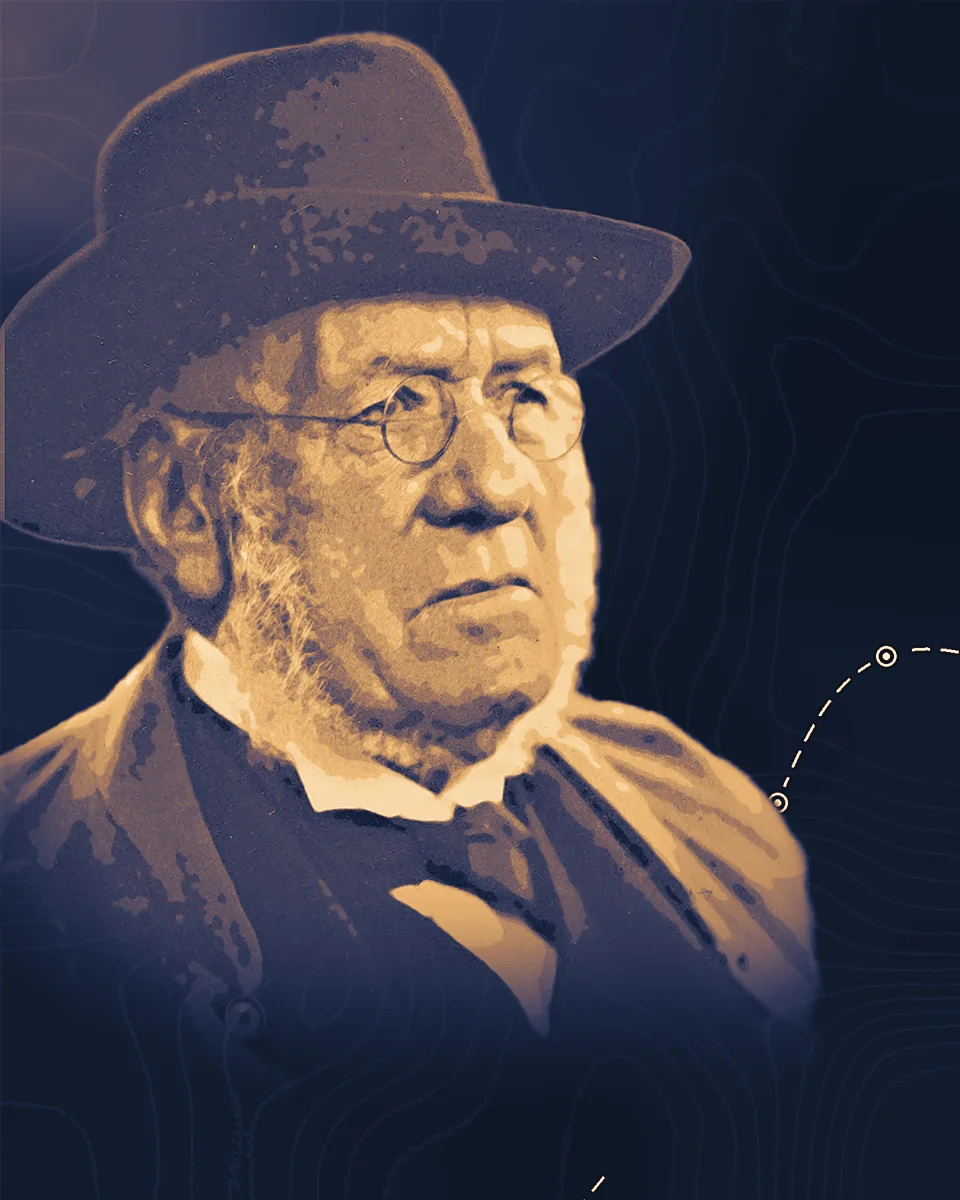
John Clutton
A London land agent who valued and managed the estates of the Church and the Crown, he was the first president of the body that became the Royal Institution of Chartered Surveyors, which still sets the rules its members follow when they value property.
1809–1896
What they changed
1837
Land for the railways
Clutton came to London in 1837 and for his first years there was mainly occupied in buying land for sections of the South Eastern Railway, valuing and buying it from its owners so that the line could be built.
1845
Valuing the Church's estates
The Ecclesiastical Commissioners, who were taking over the estates of cathedral prebends and deaneries, knew little about the extent or value of what they held. About 1845 they gave the work of surveying, valuing and reporting on these lands across the southern half of England and Wales to Robert and John Clutton. In his own words the business took on "a gigantic character".
1851
Managing the Crown's land
After his evidence to the parliamentary inquiry of 1848–49 into the Department of Woods, Clutton became Crown Receiver for Surrey and, in 1851, for all the Midland and Southern counties of England except the royal forests, a post he held until 1889. On his advice the Crown sold scattered holdings, bought compact estates and laid out building estates at Richmond, Eltham and Windsor.
1868
Surveyors form a profession
Clutton chaired the meetings at the Westminster Palace Hotel at which surveyors drew up the rules of a professional body. On 15 June 1868 its 49 members approved them and elected a council, and he was its first president, for two years. The body is now the Royal Institution of Chartered Surveyors (RICS), with more than 130,000 members and candidates in more than 140 countries, and its Red Book sets out practices that are mandatory for members who value property.
Life
John Clutton was born on 29 August 1809 at Hartswood, in the parish of Buckland, Surrey, where his father, William Clutton, ran a large business as a land agent, managing estates for their owners. He went to a grammar school at Cuckfield and a preparatory school at Clapham. He was meant for the law, but his father wanted his help, and he spent ten years at Hartswood learning the business, farming and forestry.
In 1837 he married and moved to London. His practice grew with the railways and with the Church's estates, and in 1844 he moved to 8 Whitehall Place, near the Ecclesiastical Commissioners' offices. His brother Robert worked with him, and about 1856 his brother Henry joined the firm to run its agencies for the Commissioners. He became a member of the Institution of Civil Engineers in 1840.
Surveyors had met in clubs before: in his opening address as president, on 9 November 1868, Clutton traced the line back to a Land Surveyors' Club of 1834, and RICS traces a Surveyors Club to 1792. He said the profession's standing had suffered from "the absence of a common centre of association, to which the public might look as some guarantee of the trustworthiness of its Members". The railways had made such a body possible, he said, by letting surveyors from distant places meet.
The Institution of Civil Engineers' obituary describes a man who "neither wrote nor spoke with ease" and found the wording of Acts of Parliament "a perfect bugbear", but who ran a very large practice by handing whole departments to trusted heads. It records that surveyors acting for the other side in a deal sometimes left the price to his decision.
He gave up the Crown receiverships in August 1889 and retired from business that year, though in April 1890 he gave evidence again to a parliamentary committee on the Crown estates. He spent his last years near Reigate and died there on 1 March 1896, aged 86.
Read more
4 accounts
Opening address, as President, John Clutton, Transactions of the Institution of Surveyors, volume 1, 1868.
His own account of why surveyors needed a professional body, given at its first ordinary meeting.
archive.org
John Clutton, obituary, Institution of Civil Engineers, 1896, as reproduced by Grace's Guide.
The engineers' memoir of his railway, Church and Crown work.
gracesguide.co.uk
Memoir of John Clutton, Transactions of the Surveyors' Institution, volume 28, 1896.
The institution's memoir of its first president, with the portrait plate.
archive.org
About RICS: our history, Royal Institution of Chartered Surveyors, undated. The institution's account of its founding meetings and its reach today.
rics.org