Industries / Transport and vehicles
Automotive
The automotive industry designs and builds cars, trucks and other motor vehicles, together with the parts, electronics and software that go into them.
1886
On 29 January 1886 Carl Benz filed German patent DRP 37435 for a "vehicle with gas engine operation", a document UNESCO added to its Memory of the World Register in 2011.
45
Milestones achieved across 7 domains.
15
To watch for: announced, not yet confirmed outside.
15
Open deliverables. Nobody has shipped them.
In one minute
Where it started
On 29 January 1886 Carl Benz filed a patent for a three-wheeled vehicle driven by a gas engine. For the next quarter century, cars were built one at a time by skilled workers. In 1913 Ford's moving line at Highland Park cut the labor in a Model T from about 12½ hours to about 1½, and from 1914 Dodge bought car bodies pressed entirely from steel.
Where it stands
The world built 96.4 million motor vehicles in 2025, and China built 34.53 million of them, by the count of OICA, the international association of vehicle makers. One in four new cars sold in 2025 was electric, by the International Energy Agency's count, and Chinese makers supplied nearly 60% of those. Final assembly is still mostly hand work: one consultant puts its automation in Western Europe at 20 to 35 percent.
What is open
The open jobs sit where parts are soft or vary, and where data has never been published. Fitting wiring harnesses, filling parts trays and taking battery packs apart are still mostly done by hand. This research found no public, measured datasets for stamping and paint defects, current pack layouts, magnet supplier links or software recall fixes. Low-cost robot arms, open robot models and AI agents now put that work within reach of small teams.
Domains
AchievedWatch forOpen
Domain
Progress
Last achieved
Watch for
Open
Stamping and body
Presses squeeze flat steel or aluminum sheet between shaped steel tools called dies to make panels, and the body shop joins those panels, and now large castings, into the bare car body, called the body-in-white.
7 · 1 · 2
Last achievedOne casting replaces welded floor2020
Watch forFord's two-casting pickup
2
openPaint
The paint shop cleans the bare body, dips it in a primer bath that is laid on by electric current, then sprays a color layer and a clear top layer, baking the body between steps.
7 · 2 · 2
Last achievedRobots fix paint defects2022
Watch forPaint booths instead of lines
2
openPowertrain and batteries
This is the work of designing and making what moves the car: the engine or electric motor, the transmission that carries their turning force to the wheels, and the battery that stores the energy.
7 · 3 · 2
Last achievedPacks must not catch fire2026
Watch forSodium-ion cells at volume
2
openFinal assembly
Final assembly fits the painted body with its powertrain, wiring, interior, glass, wheels and fluids while it moves down a line, and the stations along the line are fed the right parts in the right order.
5 · 3 · 2
Last achievedTesla scales back automation2018
Watch forHumanoid kitting at Mercedes-Benz
2
openQuality
Quality is the work of checking parts and finished cars against their specifications, running the shared rulebooks that car makers and suppliers follow, and recalling cars when a defect reaches customers.
6 · 2 · 2
Last achievedAI cameras in every plant2024
Watch forGlue check steers the robot
2
openParts supply
A car maker buys most of a car's parts from outside firms arranged in tiers, where tier 1 sells to the car maker and tier 2 sells to tier 1, and this work plans, tracks and protects those flows of parts.
6 · 2 · 2
Last achievedSingle sources become pressure points2025
Watch forCatena-X opens in China
2
openSoftware in the car
This work writes and approves the code and electronics inside a vehicle: engine computers, in-car networks, software updates, driver assistance and protection against hacking.
7 · 2 · 3
Last achievedIn-house software falls short2024
Watch forEU-wide approval for Tesla FSD
3
open
Narrower industries
Auto dealershipsAuto repairCollision repairRV manufacturingMotorcycle manufacturingTowingCar washesCar rentalAutonomous vehiclesTrailers and truck upfittingAuto salvage
Figureheads
6 people
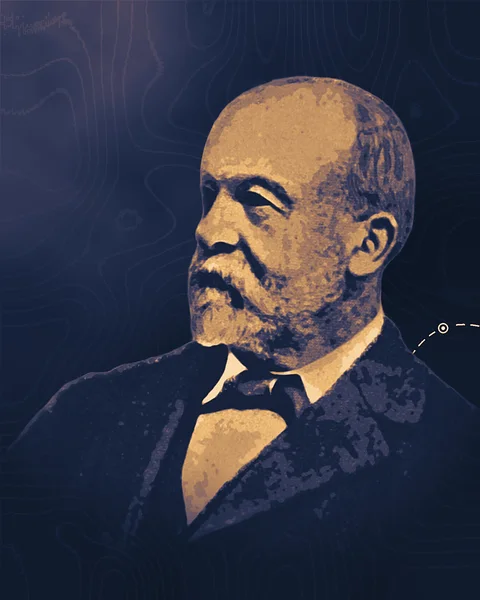
Gottlieb Daimler
1834–1900
He made the petrol engine small, light and fast enough to drive a vehicle, and put it into a cycle, a carriage and a boat.
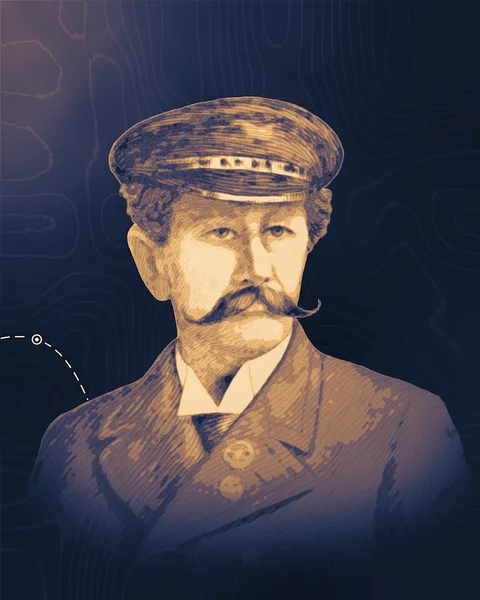
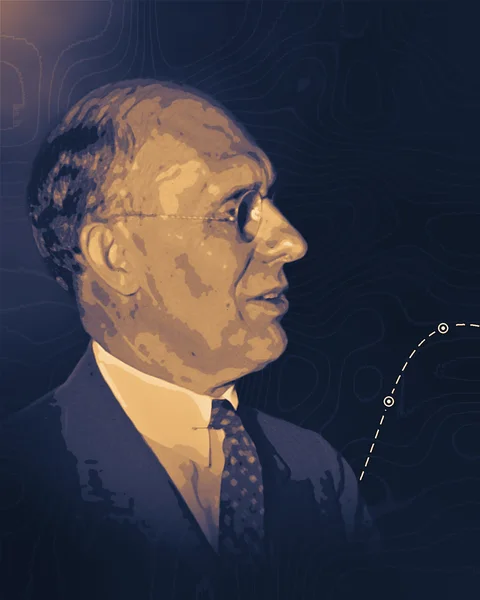
Carl Benz
1844–1929
He designed a motor car as one machine, engine and chassis together, patented it in 1886 and built it for sale.
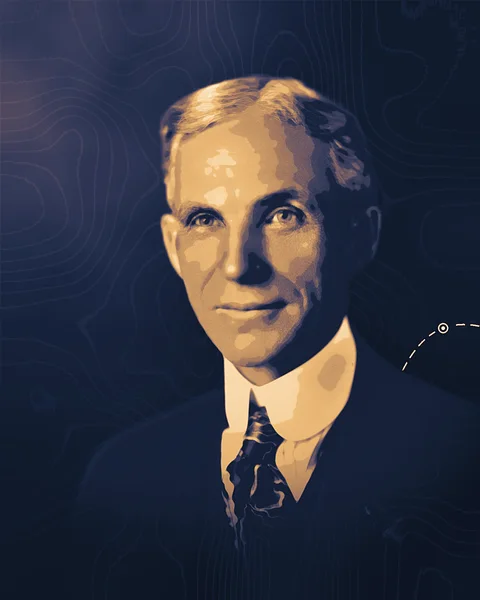
Henry Ford
1863–1947
He built one cheap car in huge numbers on a moving line, and paid the wage that kept workers on it.
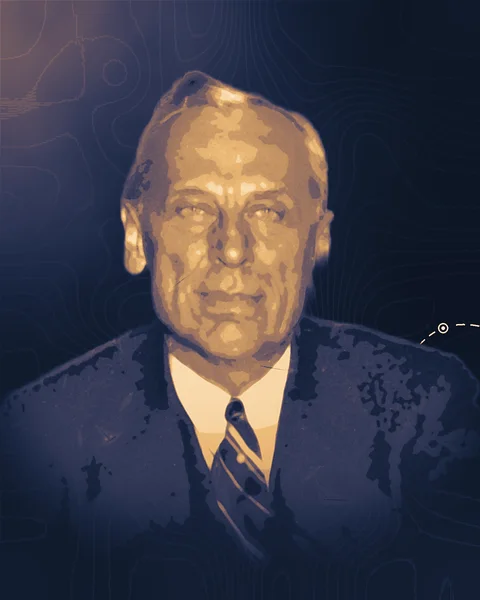
Alfred P. Sloan
1875–1966
He organized General Motors as separate divisions under one central office, each with its own price class of car, a pattern large car makers still follow.
Charles F. Kettering
1876–1958
He gave the car its electric starter, built General Motors' research laboratory, and put lead in gasoline.

Ralph Nader
born 1934
His book and testimony of 1965 and 1966 led the United States to set safety standards for every new car and to make makers recall defects.
Advances to build with
4 research notes
Claude Fable 5.2
Three working devices
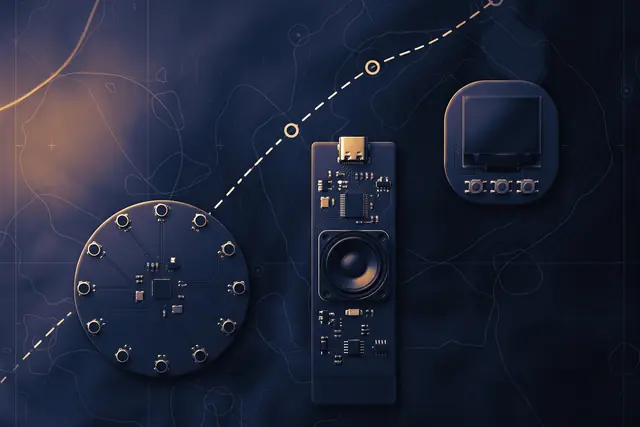
Anthropic says its AI model Claude Fable 5.2 designed three prototype devices that worked without electrical modifications, with no outside test reported.

NVIDIA GR00T 2
Five demonstrations per task
By NVIDIA's own test, its robot model GR00T 2 averages 95% success after five demonstrations of a task, on 50 tasks picked from those it learns that way.
Cursor Agent SDK
Findings that cite notes
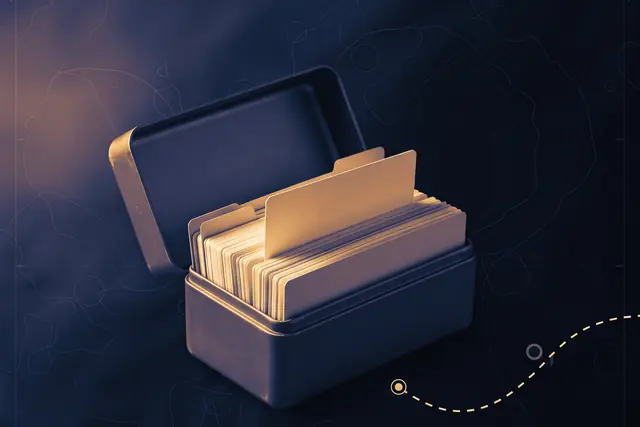
Cursor released a kit for building AI agents, and its example, a code reviewer that cites the note behind each finding, is known only from Cursor's account.
Agentic robotics
Readable robot programs
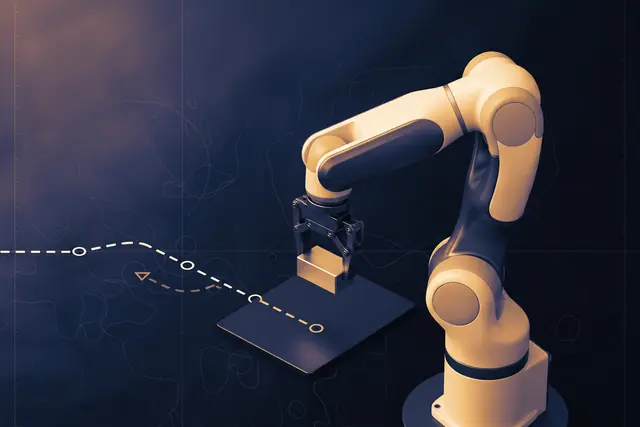
A UC Berkeley lab has AI agents write readable robot programs, which scored below human-written ones in all twelve of its own test conditions on one simulator.
Open in automotive
3 of 15 open deliverables
Open · Stamping and body
Read the die spotting print
An open tool that turns a photo of a spotting print into a contact map lined up with the part's CAD model, with the percentage of surface in contact. A spotting print is the blue mark left where the upper and lower die touch the panel; toolmakers read it by eye and grind the die by hand until contact is even. Make the prints on a bench rig, not a press: two mating blocks, thin aluminum sheet, engineer's blue, a bench vise, and pressure-indicating film as a second record. Shims of 0, 0.05 and 0.1 mm create known gaps.
Built with what exists
A phone or machine-vision camera with a color reference card; OpenCV for image alignment and color thresholds; the Mondragon method as a baseline; pressure-indicating film; optionally a 3D scanner. No new robot or AI model is needed.
Open · Paint
Measured paint-defect benchmark
A public dataset of paint flaws (dirt specks, craters, runs, orange peel, scratches) on real painted panels. Photograph each flaw under fixed light, measure its diameter with a USB microscope and its height or depth with a dial gauge, and label its type. Report how well a detector trained on panels from one source works on panels from another. Panels come from salvage yards and body-shop scrap, so no spraying is needed.
Built with what exists
A monitor-and-camera deflectometry rig; a USB microscope; a dial gauge; an open labeling tool such as CVAT; an open-source object detector.
Open · Powertrain and batteries
Disassembly maps for current packs
Add battery packs from Tesla, BYD and Volkswagen's MEB cars to the open dataset that the Karlsruhe Institute of Technology (KIT) published in August 2026, in its format and under its CC BY 4.0 license. Record every part and fastener, the order of removal and what is visible at each step, and link each entry to a public teardown photo or a video timestamp. This is desk work only.
Built with what exists
KIT's dataset and format; public teardown photos and videos; a vision-language model such as Claude Fable 5.2 (see the Note "Three working devices") to draft entries from photos, with a person checking each one.