Industries / Transport and vehicles
Aerospace and defense
Aerospace and defense is the industry that designs and builds aircraft, aircraft engines, spacecraft and military equipment, and proves to regulators and customers that they are safe to use.
1903
Orville and Wilbur Wright made the first successful flights of a powered airplane with a pilot aboard, at Kitty Hawk, North Carolina, on 17 December 1903, in the Smithsonian's words.
36
Milestones achieved across 6 domains.
12
To watch for: announced, not yet confirmed outside.
14
Open deliverables. Nobody has shipped them.
In one minute
Where it started
The first flight on 17 December 1903 covered 36 m in 12 seconds, by the Smithsonian's account. Within four decades the work had split into the trades this page follows: all-metal structures (1915), government type certificates (1927), jet engines (1937 to 1939) and factory lines that finished a bomber every 63 minutes (1944). Rockets took a parallel path, from Robert Goddard's first liquid-fuel flight in 1926 to the first satellite, Sputnik 1, in 1957.
Where it stands
Airbus delivered 793 airliners in 2025 and ended the year with a record 8,754 on order, by its own count. World military spending reached 2,887 billion US dollars in 2025, the eleventh year of growth in a row, by the Stockholm International Peace Research Institute's count. In space, boosters that land and fly again are routine, and one company has launched more than 13,000 internet satellites. Recent lessons have come from the factory floor as often as from the design office: four missing bolts on a new 737 in 2024, and a flaw in the metal powder of engine disks in 2023.
What is open
Much of the work between drawing and delivery is still done by hand or checked by eye. Wiring harnesses are built manually, composites for complex parts are laid up by hand, inspection scans and borescope videos are read by people, and regulators' records sit in PDF files. Robot models that learn a task from a few demonstrations, and AI models that read documents and write test code, now let a small team attempt these jobs. Every open deliverable below is scoped to data, prototypes, ground tests and software.
Domains
AchievedWatch forOpen
Domain
Progress
Last achieved
Watch for
Open
Airframes and materials
This is the work of designing and building an aircraft's structure, meaning its wings, body and tail, and choosing the metals and composites it is made of.
4 · 1 · 2
Last achievedHalf the structure in composites2011
Watch forA blended-wing airliner
2
openEngines
This is the work of designing, building, inspecting and repairing the gas-turbine engines that push aircraft through the air, from the metal in a single turbine blade to the checks that decide when an engine must come off the wing.
7 · 3 · 2
Last achievedA flaw in the powder2023
Watch forAI reads borescope video
2
openAvionics and flight control
This is the work of designing, building and proving the sensors, computers and software that measure how an aircraft is moving and move its controls, either to help the pilot or to fly the aircraft outright.
7 · 3 · 3
Last achievedAutoland for small aircraft2020
Watch forAutoland for helicopters
3
openAssembly and inspection
This is the work of joining parts into a finished aircraft, from drilling and fastening to wiring, and checking that every step was done.
6 · 1 · 2
Last achievedFour bolts never fitted2024
Watch forHumanoid robots in aircraft plants
2
openSpace launch and satellites
This is the work of designing, building and testing rockets and their engines, and the crewed spacecraft and satellites that rockets carry to orbit.
7 · 3 · 3
Last achievedSatellites made by thousands2019
Watch forCatching an orbital upper stage
3
openIn depthSpace and satellites
Certification and testing
This is the work of proving to a government regulator, through analysis, ground tests and flight tests, that a design meets the safety rules, so that it can be approved and built.
5 · 1 · 2
Last achievedReform after two crashes2020
Watch forAn air taxi's type certificate
2
open
Other narrower industries
Figureheads
6 people
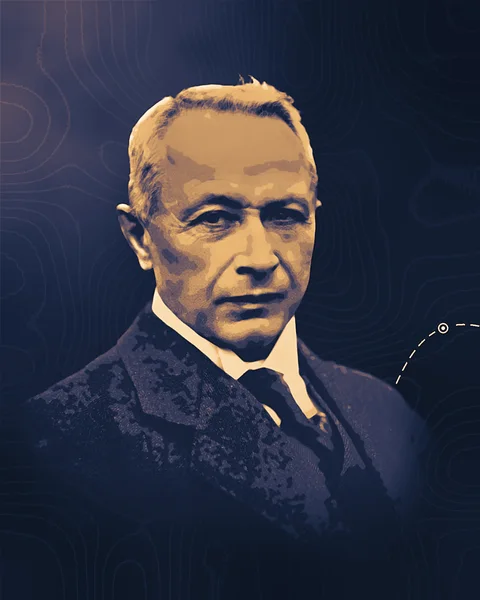
Hugo Junkers
1859–1935
He built the first airworthy all-metal airplane with thick wings that needed no bracing wires, and the metal airliner that later ones were modelled on.
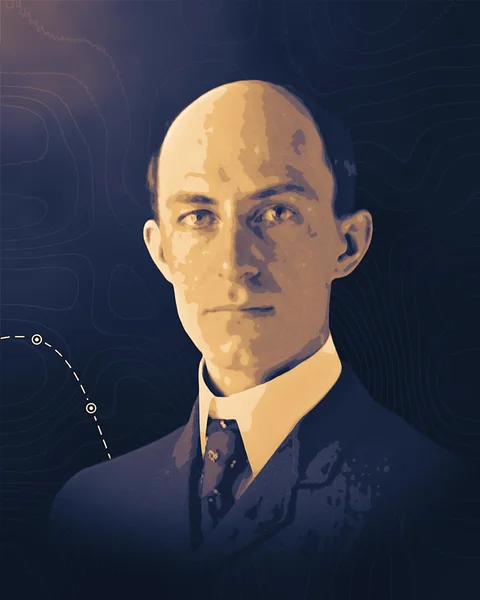
Wilbur Wright
1867–1912
With his brother Orville he made the airplane steerable about three axes and designed it from wind-tunnel measurements, which is still how aircraft are engineered.
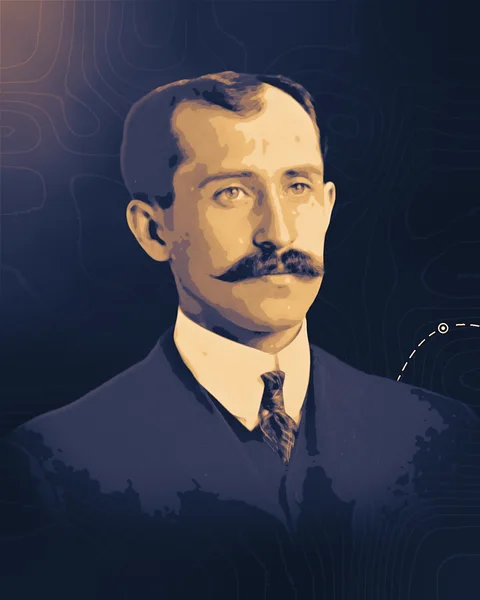
Orville Wright
1871–1948
He piloted the first powered flight in 1903 and, with his brother Wilbur, worked out the test methods and three-axis control that aircraft design still uses.
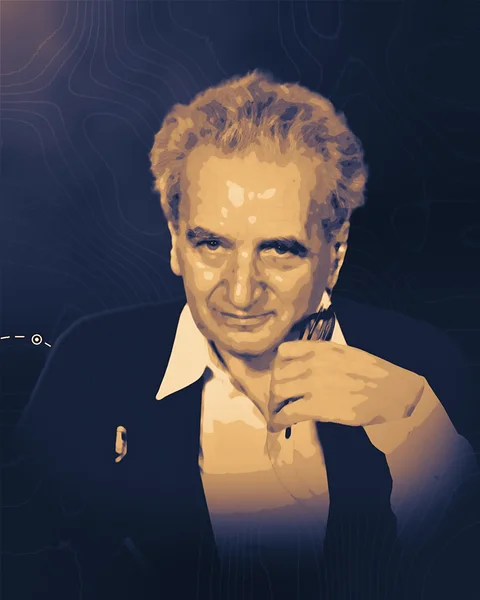
Theodore von Kármán
1881–1963
He made a university laboratory the place where aircraft makers tested their designs, and from it started American rocket engineering and the body that advises NATO on aeronautics.
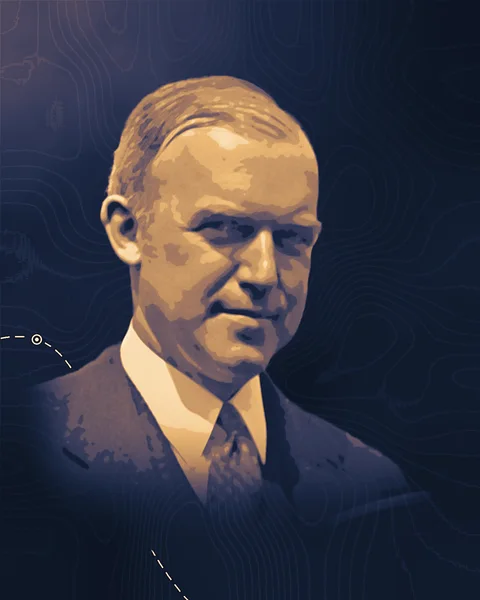
William P. MacCracken Jr.
1888–1969
He helped write the law that made the US government certify aircraft and license pilots, and as its first administrator issued the first rules and the first type certificate.
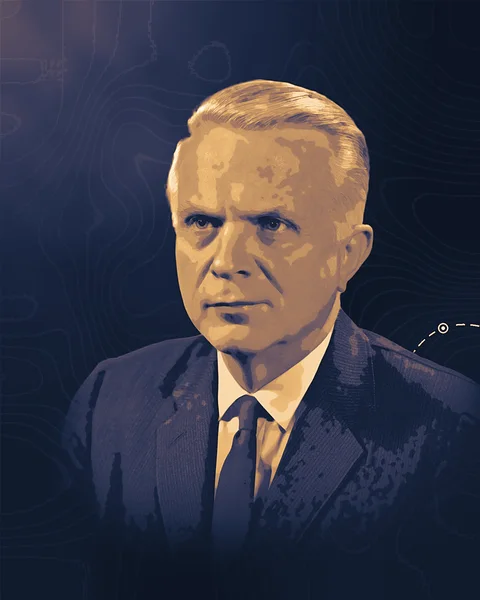
Richard T. Whitcomb
1921–2009
Working in one wind tunnel, he found three shapes that cut the drag of fast aircraft: the area rule, the supercritical wing and the winglet.
Advances to build with
2 research notes
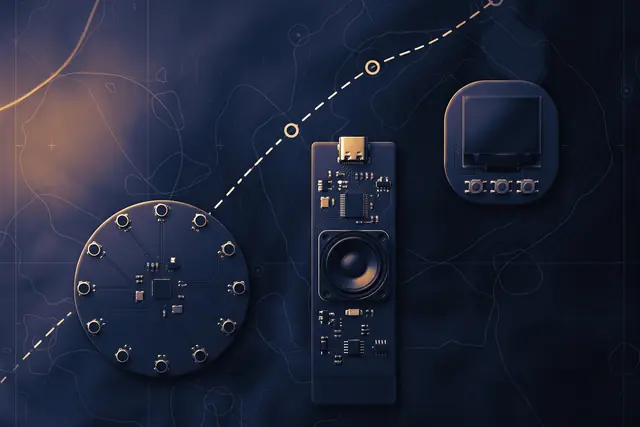
Claude Fable 5.2
Three working devices
Anthropic says its AI model Claude Fable 5.2 designed three prototype devices that worked without electrical modifications, with no outside test reported.

NVIDIA GR00T 2
Five demonstrations per task
By NVIDIA's own test, its robot model GR00T 2 averages 95% success after five demonstrations of a task, on 50 tasks picked from those it learns that way.
Open in aerospace and defense
3 of 14 open deliverables
Open · Airframes and materials
Public scans of composite flaws
An open, labelled collection of ultrasonic scans of carbon-fibre panels with flaws planted at known places and depths, such as delaminations (layers coming apart), porosity and impact damage, with a baseline model that marks the flaws and a script that scores any model. An ultrasonic C-scan is a map of the echoes that come back when sound is sent into a panel, and it is the standard way to find flaws hidden inside composites.
Built with what exists
Panels laid up with planted flaws; a university or service-lab ultrasonic scanner; open segmentation models such as U-Net or Meta's Segment Anything; Python; Zenodo or Hugging Face Datasets to host the files under an open licence.
Open · Engines
Measured damage on scrap blades
A public set of photos of retired civil-engine compressor and turbine blades taken through an ordinary articulating borescope, with every nick, dent, crack and burn also measured on the real part in millimetres, and a baseline AI model that finds each defect and estimates its size. The set is for research and teaching, never for deciding whether a part may fly.
Built with what exists
Civil scrap blades sold as display pieces; a USB articulating borescope; a printed millimetre scale; digital calipers, a dial depth gauge and a USB microscope; Label Studio for labelling; Meta's Segment Anything (SAM 2) to speed up outlines; Ultralytics YOLO as the baseline detector; Hugging Face to host the set. Optionally, a low-cost arm driven through Hugging Face LeRobot holds the probe at the same angles every time (the Note "No download" covers LeRobot).
Open · Avionics and flight control
Open coupling checks for cFS
An open-source tool for NASA's core Flight System (cFS), free flight software used on NASA missions, that maps data coupling (one software part depending on data another writes) and control coupling (one part deciding when another runs) across the cFS core modules, then reports which of those links the existing functional tests actually exercise.
Built with what exists
Clang/libclang or CodeQL to list the couplings from source; GCC's -finstrument-functions or LLVM XRay to record calls at run time; cFS built in its native Linux simulation; Python for the report; an AI coding agent to draft the parsers, with a person checking the output against a hand-built list.