Industries / Figureheads
William P. MacCracken Jr.
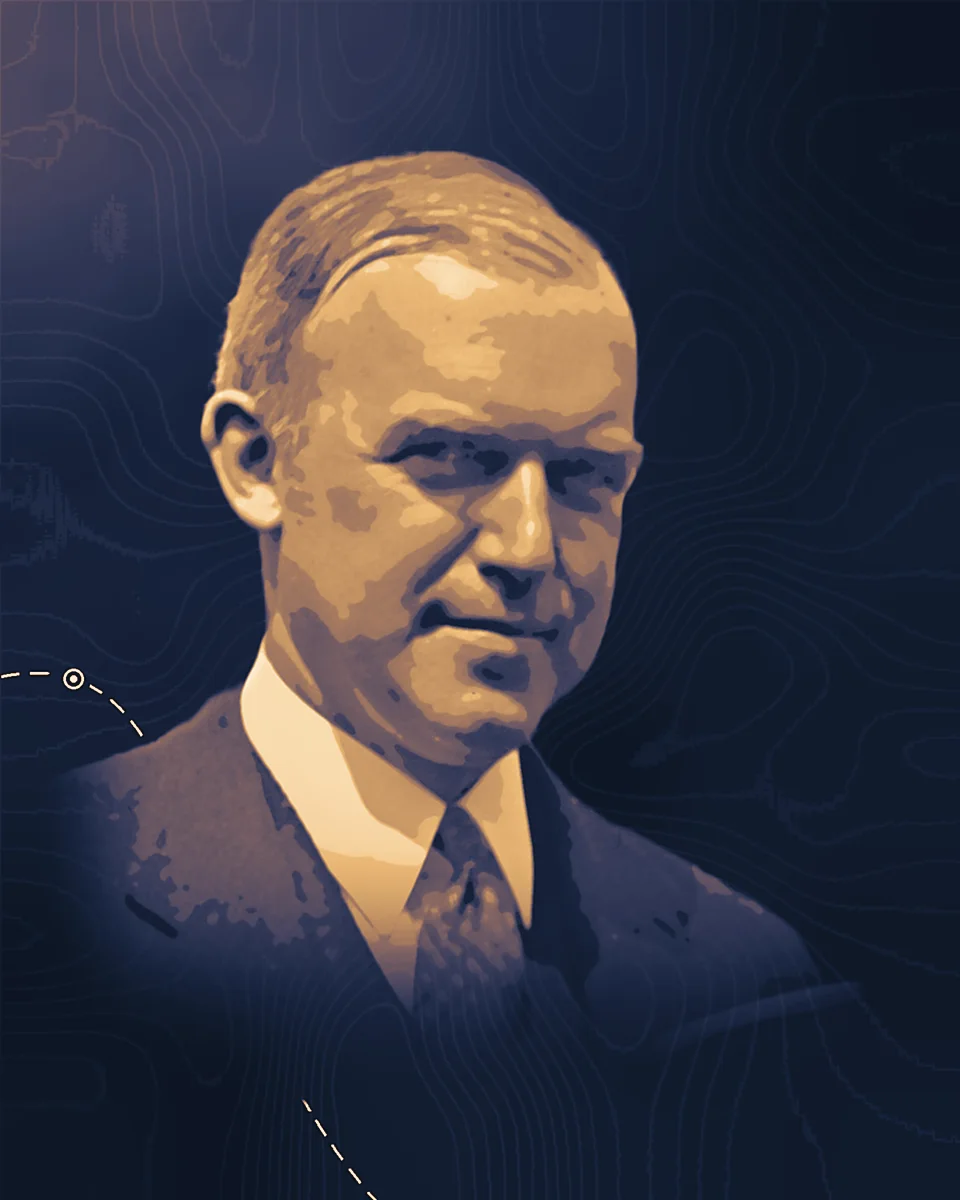
He helped write the law that made the US government certify aircraft and license pilots, and as its first administrator issued the first rules and the first type certificate.
1888–1969
What they changed
1926
A law for civil flying
The Air Commerce Act, signed on 20 May 1926, told the Secretary of Commerce to license pilots, issue airworthiness certificates for aircraft, set up airways and investigate accidents. MacCracken, a lawyer, helped draft it. The US Centennial of Flight Commission says he had a key role in convincing Congress that federal rules were needed. On 11 August 1926 he became the first Assistant Secretary of Commerce for Aeronautics.
1926
The first federal air rules
The first Air Commerce Regulations took effect on 31 December 1926, after conferences with pilots, operators, makers, the Army, the Navy and the Post Office. Every aircraft in interstate or foreign commerce had to be licensed and marked with a number. Its pilot had to hold a licence, and so did the mechanics who repaired it.
1927
Type certificate No. 1
On 29 March 1927 his Aeronautics Branch issued Aircraft Type Certificate No. 1 to the Buhl Airster, a three-seat open biplane. A type certificate approves a design, so that each aircraft built to it is covered. The government had issued 9 by 30 June 1927 and 287 by 15 January 1930.
1927
Pilot licence No. 1
The first federal pilot licence was issued on 6 April 1927. MacCracken offered it to Orville Wright, who declined, and then to Charles Lindbergh, who said MacCracken should have it. He took it himself. A doctor he had appointed in November 1926, Louis Bauer, set up the medical examinations for pilots.
Life
William Patterson MacCracken Jr. was born in Chicago on 17 September 1888, the son of a physician. He took a bachelor's degree at the University of Chicago in 1909 and a law degree there in 1911, and practised law in Chicago. In 1917 and 1918 he served in the Army's Air Service, where he learned to fly and worked as a flight instructor.
He came to the 1926 post from the industry he was to regulate. He had chaired the American Bar Association's committee on aviation law, and he was general counsel of National Air Transport, a company carrying air mail under contract, which he had helped to organize in 1925.
Herbert Hoover, then Secretary of Commerce, set up the Aeronautics Branch inside his department and spread its work over existing bureaus. Under MacCracken it lit airways with beacons, published air maps, sent weather reports by teletype and set a standard radio beacon for marking a course. The Branch received the Collier Trophy for 1928 for its airways and navigation aids. He resigned on 1 October 1929 and opened a law practice in Washington, where his clients included airlines.
That practice led to the worst episode of his career. In 1930 the Postmaster General, Walter Brown, asked him to chair the meetings at which airlines were given air mail routes, which critics named the Spoils Conference. Most contracts went to three large airlines. A Senate committee under Hugo Black investigated from 1933. Served with a subpoena for his files on 31 January 1934, MacCracken held some back as lawyer's confidences, and in the next days clients' representatives took papers out of his office. The Senate cited him for contempt on 5 February 1934 and had him arrested a week later. On 4 February 1935 the Supreme Court ruled, in Jurney v. MacCracken, that the Senate had the power to punish him.
The Hoover Presidential Library, which holds his papers, says the investigators "found no evidence of collusion or conspiracy in the files or elsewhere". He died on 20 September 1969.
Read more
5 accounts
The First Federal Aviation Regulator, Federal Aviation Administration history office, read in 2026.
The regulator's own three-page account of his term and of the air mail affair.
faa.gov
William P. MacCracken Jr. Papers, Herbert Hoover Presidential Library and Museum, US National Archives, read in 2026.
A dated outline of his life and a note on the files the Senate seized.
hoover.archives.gov
Jurney v. MacCracken, 294 U.S. 125, US Supreme Court, 1935.
The opinion by Justice Brandeis, which sets out day by day what happened to the subpoenaed papers.
law.cornell.edu
The Federal Aviation Administration and Its Predecessor Agencies, Edmund Preston, US Centennial of Flight Commission, read in 2026.
How the 1926 Act began federal air safety regulation.
centennialofflight.net
The First U.S. Federal Pilot License, Federal Aviation Administration history office, read in 2026.
The first licences, with the regulations of 31 December 1926.
faa.gov