Industries / Transport and vehicles
Rail
The rail industry moves freight and passengers in vehicles that run on steel rails, and builds and runs the track, trains, signals and yards that this takes.
1825
On 27 September 1825 the Stockton and Darlington Railway opened in north-east England, which Historic England calls "the world's first standard-gauge, steam-hauled public railway".
31
Milestones achieved across 6 domains.
8
To watch for: announced, not yet confirmed outside.
13
Open deliverables. Nobody has shipped them.
In one minute
Where it started
Steam locomotives had run in South Wales in 1804, but Historic England dates the modern public railway to 27 September 1825, when Stephenson's engine Locomotion hauled the opening train of the Stockton and Darlington Railway. In 1830 the Liverpool and Manchester Railway ran the first intercity trains, hauled only by steam and run to a timetable. Steel rails, signals, air brakes and laws written after deadly crashes followed in the decades after.
Where it stands
China's high-speed network passed 50,000 km in December 2025, by China Daily's count. In the United States, positive train control, which brakes a train automatically before certain human errors cause a crash, has run on all 57,536 required route miles since December 2020, by the Federal Railroad Administration's (FRA's) count. Much checking is still done by eye: in December 2025 US regulators let railroads that check track by machine at least monthly cut visual inspections from two a week to one.
What is open
The open jobs sit where data is kept private and where hands still do the work. This research found no public set of rail ultrasound scans, freight-car defect photos or measured wheel defects, and no robot that joins freight-car brake hoses or swaps brake shoes. Public records that nobody has joined up, such as delay causes, punctuality figures, weekly service data and accident reports, are another kind of open job. Robot models that learn a task from a few demonstrations, and AI models that read long documents, put this work within reach of small teams.
Domains
AchievedWatch forOpen
Domain
Progress
Last achieved
Watch for
Open
Track and inspection
This is the work of building and keeping the track (the rails, the ties under them, which the British call sleepers, and the crushed stone, or ballast, that holds the ties in place) and of checking it for cracks and for rails that have moved out of line.
5 · 1 · 2
Last achievedMachines replace one inspection2025
Watch forFewer visual checks, safer track
2
openLocomotives and cars
This is the work of designing, building and keeping in repair the vehicles: the locomotives that pull trains, the passenger and freight cars they pull, and parts such as wheels, bearings and brakes.
7 · 2 · 3
Last achievedEast Palestine bearing failure2023
Watch forBattery locomotives in the Pilbara
3
openSignals and train control
This work keeps trains apart and within safe speeds: track circuits detect where trains are, interlockings stop conflicting routes from being set, and train protection systems brake a train whose driver misses a limit.
6 · 1 · 2
Last achievedAutomatic braking on US lines2020
Watch forSignal sighting from a desk
2
openYards and scheduling
Freight cars travel in groups called blocks, which are sorted in classification yards, often by pushing cars over a small hill, the hump, so that each rolls into its own track; scheduling decides which cars ride which trains and when.
4 · 2 · 2
Last achievedThin crews, slow freight2022
Watch forDigital couplers in Europe
2
openPassenger service
This is the work of carrying people: timetables, high-speed and city lines, and the information passengers get when things go wrong.
5 · 1 · 2
Last achievedA timetable change collapses2018
Watch for400 km/h in service
2
openSafety
Safety work studies how trains hurt people, from collisions and derailments to runaways and fires, and turns what investigators find into rules, equipment and training.
4 · 1 · 2
Last achievedLessons fade at Waterloo2018
Watch forLow-cost crossing warnings
2
open
Figureheads
4 people
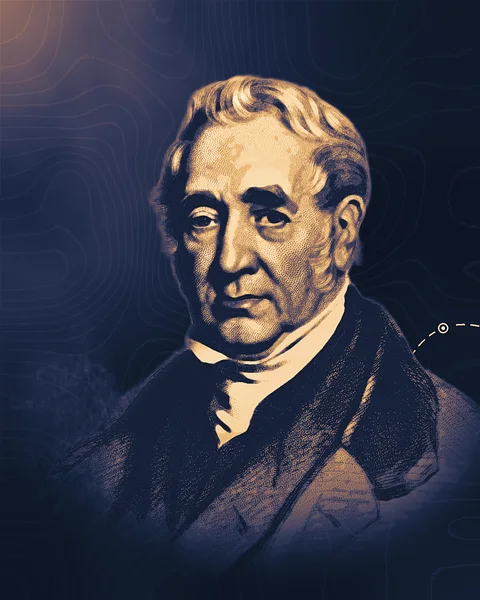
George Stephenson
1781–1848
A colliery engineman who taught himself to read, he built the Stockton and Darlington and the Liverpool and Manchester railways, and his 4 ft 8½ in gauge became the standard for railways.
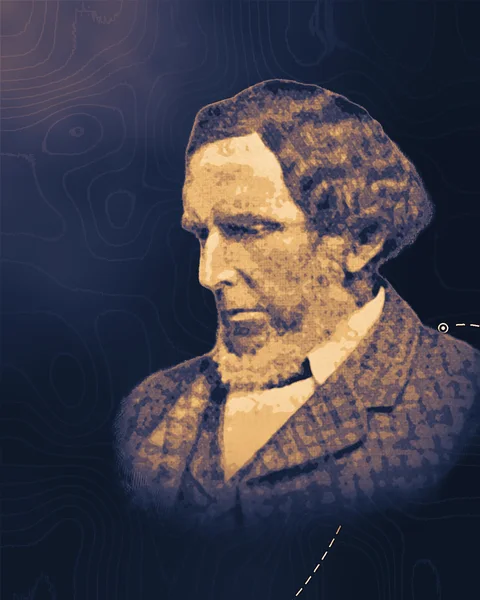
Robert Forester Mushet
1811–1891
He patented the dose of manganese that made converter steel sound, rolled an early steel rail, and made the first tool steel that hardens in air.
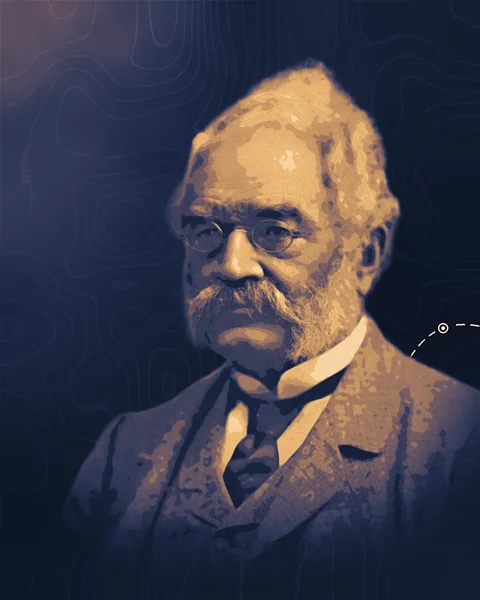
Werner von Siemens
1816–1892
He showed that a generator can raise its own magnetic field from the current it makes, which freed electric machines from weak permanent magnets and from batteries.
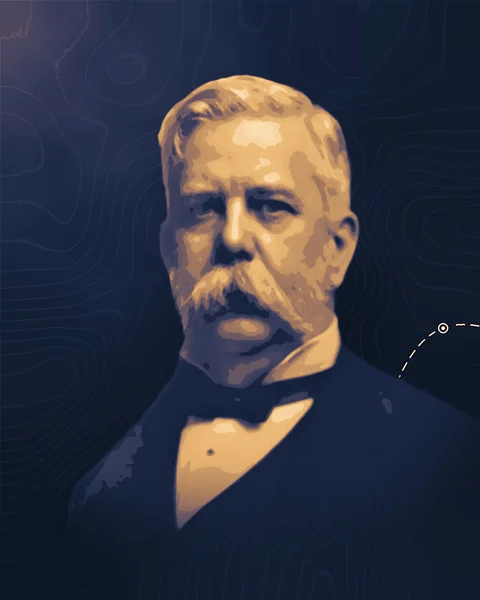
George Westinghouse
1846–1914
He put his company behind alternating current when American stations ran on direct current, and built the generators at Niagara Falls that settled the question.
Advances to build with
3 research notes
Claude Fable 5.2
Three working devices
Anthropic says its AI model Claude Fable 5.2 designed three prototype devices that worked without electrical modifications, with no outside test reported.
NVIDIA GR00T 2
Five demonstrations per task
By NVIDIA's own test, its robot model GR00T 2 averages 95% success after five demonstrations of a task, on 50 tasks picked from those it learns that way.
Agentic robotics
Readable robot programs
A UC Berkeley lab has AI agents write readable robot programs, which scored below human-written ones in all twelve of its own test conditions on one simulator.
Open in rail
3 of 13 open deliverables
Open · Track and inspection
Open rail ultrasound benchmark
A public set of ultrasonic scans of rail with flaws of known size, and a baseline detector. Ultrasonic testing sends sound pulses into the rail and records the echoes from cracks; a B-scan is the picture built from those echoes as the probe moves. Use offcuts of scrap rail with reference flaws machined at measured sizes and depths, such as drilled holes and saw cuts, and, where they can be had, pieces of rail taken out of service with real defects.
Built with what exists
Scrap rail offcuts; a machine shop for the reference flaws; a portable ultrasonic flaw detector with standard angle probes, bought used or rented; Python and an open-source object detector.
Open · Locomotives and cars
Robot swaps a brake shoe
A bench rig that holds a real freight-car brake head, the part that presses the brake shoe against the wheel, at the height it sits on a car. A robot arm pulls the key that holds the shoe, removes the worn shoe, seats a new one and drives the key home. There is no car, no air pressure and no track.
Built with what exists
A brake head, composition brake shoes and keys from a rail parts supplier; a collaborative arm whose payload exceeds a shoe's weight, such as a Universal Robots UR10e; a color-and-depth camera; a robot model that learns from a few demonstrations, such as NVIDIA GR00T 2 (see the Note "Five demonstrations per task") or Runway Praxis-1 (see the Note "Open robot model weights"); AI agents that write robot programs a person can read (see the Note "Readable robot programs").
Open · Signals and train control
Read relay drawings by machine
Older interlockings are built from relays, and their record is a set of circuit drawings. Build a tool that reads scanned relay circuit drawings, turns each sheet into a netlist (a list of every connection), and reports every difference between two versions of a sheet. Test it on sheets drawn for the purpose to a signaling convention, with changes seeded at known places, and on historic drawings from public archives.
Built with what exists
SINA; a vision-language model to read relay and contact labels (see the Note "Three working devices"); KiCad, an open circuit-drawing editor, to draw test sheets; scans of historic signaling drawings from public archives.