Industries / Mining and materials / Chemicals and petrochemicals
Refining
Refining turns crude oil into fuels such as gasoline, diesel and jet fuel, and into raw materials for chemical plants, by splitting it by boiling point and reshaping its molecules.
1856
Ignacy Łukasiewicz, a pharmacist who had first made lamp kerosene from crude oil in Lwów, opened an oil distillery at Ulaszowice, near Jasło in what is now Poland. The Bóbrka oil museum calls it the first oil distillery on Polish land.
32
Milestones achieved across 6 domains.
8
To watch for: announced, not yet confirmed outside.
12
Open deliverables. Nobody has shipped them.
In one minute
Where it started
Refining began in the 1850s with batch stills that boiled lamp kerosene out of crude oil. When cars made gasoline the main product, refiners learned to crack heavy oil into lighter fuel, first with heat in 1913 and then with catalysts, including the fluid catalytic cracker of 1942. From the 1970s, computers and model-based control took over much of the minute-by-minute running of the units.
Where it stands
The world had about 103.8 million barrels a day of refining capacity in 2025 and ran about 83.1 million barrels a day of crude through it, according to the Energy Institute; China and the US each held about 18% of the capacity. Rules for cleaner fuel have cut the sulfur in road fuel to 10 to 15 parts per million in the US, the EU and India, and some refineries have been converted to make diesel from fats and vegetable oils. After conflict began in the Middle East in late February 2026 and shipping through the Strait of Hormuz was cut, the world's refineries ran 4.8 million barrels a day less crude in the second quarter, a 6% drop, by the US Energy Information Administration's count.
What is open
Much of what the industry knows about crude oils, units and accidents sits in company models, paid databases and long investigation reports. The open jobs here turn public records into checked data, build open models of crudes and units that anyone can test, and set fair tests for AI tools before refiners rely on them. None of them needs access to a running plant.
Domains
AchievedWatch forOpen
Domain
Progress
Last achieved
Watch for
Open
Distillation
Distillation heats crude oil and splits it by boiling point into gases, gasoline, kerosene, diesel, heavier gas oils and a residue, and it is the first step at every refinery.
4 · 1 · 2
Last achievedLight oil, heavy-oil plants2015
Watch forDangote at full rate
2
openCracking and conversion
Cracking and conversion break large, heavy molecules into smaller ones or reshape them, so that a refinery gets more gasoline, diesel, jet fuel and chemical feedstock from each barrel.
7 · 1 · 2
Last achievedCo-processing stops2024
Watch forA refinery built for chemicals
2
openCleaning and blending fuels
Treating removes sulfur and other unwanted parts of each fuel stream, often by reacting it with hydrogen over a catalyst, and blending mixes the treated streams into gasoline (petrol), diesel and jet fuel that meet the legal specification.
5 · 1 · 2
Last achievedIndia skips a fuel grade2020
Watch forHydrogen from sulfur gas
2
openProcess control
Process control keeps each unit at its targets minute by minute, and planning decides what those targets should be; most of both is now done by software that operators supervise.
4 · 2 · 2
Last achievedTargets for alarm rates1999
Watch forReinforcement learning on hydrocrackers
2
openProcess safety
Process safety is the work of keeping flammable and toxic material inside a refinery's pipes and vessels, so that it does not leak, burn or explode.
6 · 1 · 2
Last achievedAlkylation without HF2021
Watch forHF rule may be withdrawn
2
openPlanned shutdowns
A planned shutdown, called a turnaround, stops a refinery unit for weeks so that equipment that cannot be reached while it runs can be inspected, cleaned, repaired and given fresh catalyst.
6 · 2 · 2
Last achievedTurnarounds reported to the state2024
Watch forCalifornia's resupply rule
2
open
Narrower industries
Figureheads
3 people
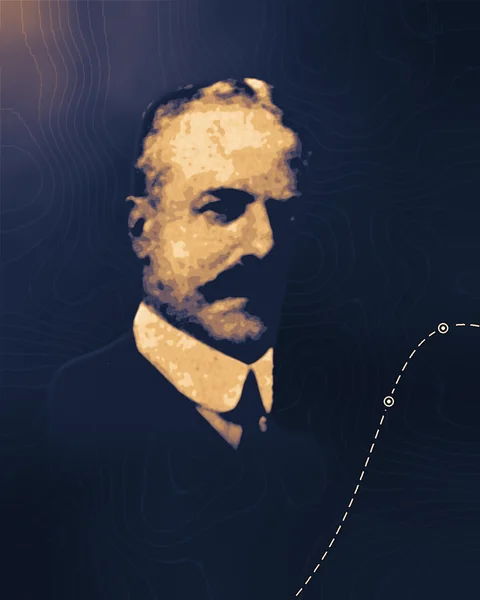
William M. Burton
1865–1954
He made cracking heavy oil into gasoline work at refinery scale, in pressure stills at Standard Oil of Indiana's Whiting refinery from 1913.
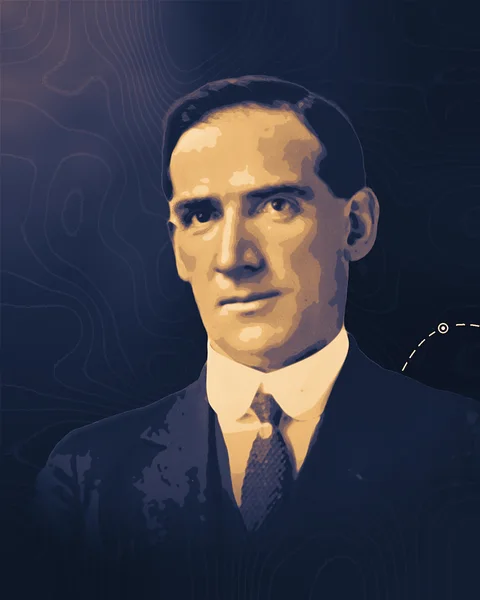
Frederick Gardner Cottrell
1877–1948
With James Speed he found that an electric field draws water out of crude oil, the principle of the refinery's electrostatic desalter, and he gave his smoke precipitator's patents to fund science.
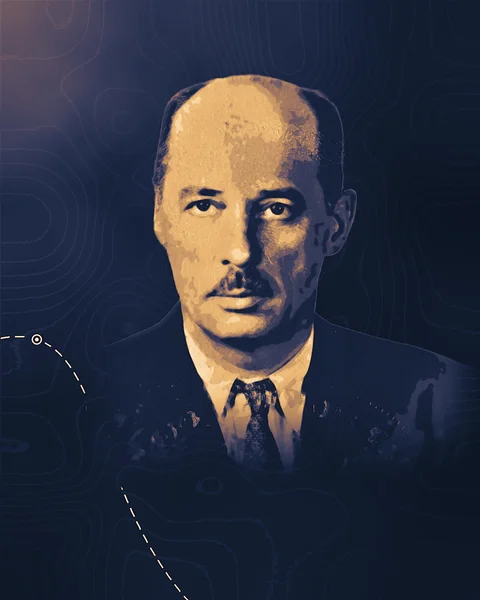
Eugène Houdry
1892–1962
He built the first catalytic cracker to run at full scale in a refinery, and showed that a catalyst fouled with carbon could be burned clean and used again.
Advances to build with
4 research notes

Mistral Large 4
A trillion open parameters
Mistral published its Large 4 AI model, a trillion numbers by its count, free to download and sell, though firms that rent out models need a separate license.

Cursor Agent SDK
Findings that cite notes
Cursor released a kit for building AI agents, and its example, a code reviewer that cites the note behind each finding, is known only from Cursor's account.
Microsoft ThinkingBox
All twenty times
By Microsoft's own count, 50 steps of training took an AI model from passing 38 of 507 test tasks on all 20 tries to passing 107.

Inkling 2 Small
Checked without being asked
The maker of Inkling 2 Small, Thinking Machines, says the AI model checks its work without being asked, a habit that no published test measures.
Open in refining
3 of 12 open deliverables
Open · Distillation
Which crudes fit which refinery
An open screening model that takes a public crude assay and one US refinery's published unit capacities, and reports whether that refinery could run the crude without overloading any unit, such as the vacuum tower, coker, hydrotreaters or sulfur plant. It is run for every US refinery against a library of public assays. An assay is the laboratory breakdown of a crude into boiling-range cuts, with the yield and sulfur of each.
Built with what exists
EIA's refinery capacity report for the size of each unit; public assays from Equinor, ExxonMobil and NOAA's ADIOS database; PRELIM's documented unit relations as a starting point; Python with Pyomo and the open-source HiGHS solver; a coding agent that tests its own work, such as one built on Inkling 2 Small (see the Note "Checked without being asked").
Open · Cracking and conversion
Conversion units, openly listed
A free table of the world's refineries giving, for each, the capacity of its crude unit and of its main conversion units (fluid catalytic cracker, hydrocracker, coker and reformer), its status (running, idled, closed or converted to biofuels), and a source for every number.
Built with what exists
EIA's refinery capacity report as a checked US base; company annual reports, licensors' press releases and government statistics; a web agent to find the pages, such as Browser Use 1.0 (see the Note "Deleting 80% to start over"); a language model that drafts each row and quotes the sentence each number came from (see the Note "Findings that cite notes"); two people who check a sample; CSV files on GitHub.
Open · Cleaning and blending fuels
Sulfur plants, refinery by refinery
A public table that pairs each US refinery's sulfur recovery capacity with the sulfur dioxide (SO2) its sulfur plant reports to the US EPA, works out SO2 per short ton of sulfur, and flags plants far above what EPA figures say plants with tail-gas units achieve.
Built with what exists
The EIA's refinery capacity file, which lists each refinery's sulfur capacity in short tons a day and its desulfurization capacity by product; the point-source files of the EPA's 2020 National Emissions Inventory; Python with pandas; a language model that reads state permits for the outliers and quotes the page each figure came from (see the Note "Findings that cite notes").