Industries / Mining and materials
Chemicals and petrochemicals
The chemicals and petrochemicals industry turns crude oil, natural gas, air, salt and minerals into fuels, fertilizers, industrial gases, plastic resins and the thousands of basic chemicals that other industries use.
1791
Nicolas Leblanc opened what the Science History Institute calls the world's first soda-ash factory, making soda ash (sodium carbonate) from salt, sulfuric acid, limestone and charcoal.
28
Milestones achieved across 6 domains.
9
To watch for: announced, not yet confirmed outside.
12
Open deliverables. Nobody has shipped them.
In one minute
Where it started
The industry began with bulk chemicals made from salt and minerals. In 1791 Nicolas Leblanc opened a factory making soda ash from salt, and in 1913 BASF began making ammonia from the nitrogen in air, which made factory-made fertilizer possible. Oil refiners then learned to crack heavy oil into petrol, and their by-products became the raw material for petrochemicals and for plastic resins such as polyethylene and polypropylene.
Where it stands
Most of the main processes are decades old, and the work now is to run them with less energy, fewer emissions and fewer accidents. In 2024 BASF, SABIC and Linde started what BASF calls the world's first demonstration plant for large electrically heated steam-cracking furnaces, and from 2026 EU importers of fertilizers and hydrogen must buy certificates covering the carbon emitted in making them. AI has reached the control room: in 2023 a chemical maker in Japan formally adopted a reinforcement-learning controller to run a distillation column.
What is open
Much of what the industry knows sits in documents that people read one at a time: accident investigations, hazard studies, emission reports and research papers. Many open jobs turn those records into checked, searchable data, using AI models that read documents and cite their sources. Others test new claims in public, with free simulators and published data, so that a measured result can be told apart from a promise.
Domains
AchievedWatch forOpen
Domain
Progress
Last achieved
Watch for
Open
Refining
Refining splits crude oil into fuels and petrochemical raw materials, and reshapes its molecules to make more of the products people want.
5 · 1 · 2
Last achievedThe end of leaded petrol2021
Watch forAI yield models at Aramco
2
openIn depthRefining
Reactions and catalysts
This is the work of turning one set of molecules into another at scale, usually with a catalyst, a material that speeds a reaction without being used up.
5 · 1 · 2
Last achievedOpen catalyst data2020
Watch forAn AI-run lab screens catalysts
2
openSeparation
Separation splits mixtures into pure products, mostly by distillation, which boils a liquid and condenses the vapour in stages, and also by absorption, adsorption and membranes.
4 · 2 · 2
Last achievedWalls without welding1996
Watch forMembranes before crude distillation
2
openProcess control
Process control keeps a plant's temperatures, pressures, flows and levels where they should be, using instruments, controllers and software.
5 · 2 · 2
Last achievedAn open control system runs2025
Watch forAI models at Evonik Oxeno
2
openProcess safety
Process safety keeps hazardous materials inside pipes and vessels, so that fires, explosions and toxic releases do not happen.
5 · 1 · 2
Last achievedWest Fertilizer explosion2013
Watch forAI drafts of hazard studies
2
openEnergy and emissions
This is the work of cutting the fuel, power and steam the industry uses and the gases it releases.
4 · 2 · 2
Last achievedCarbon priced at the border2026
Watch forGreen ammonia at NEOM
2
open
Other narrower industries
Fertilizers and agrochemicalsIndustrial gasesSpecialty chemicalsBiofuelsHydrogen productionCarbon black
Figureheads
5 people
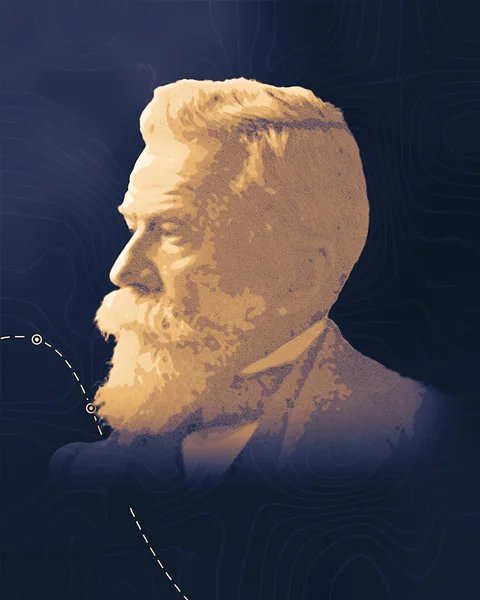
Ernest Solvay
1838–1922
He made the ammonia-soda process work at factory scale, and soda ash made from salt and limestone is still about two-thirds of world output.
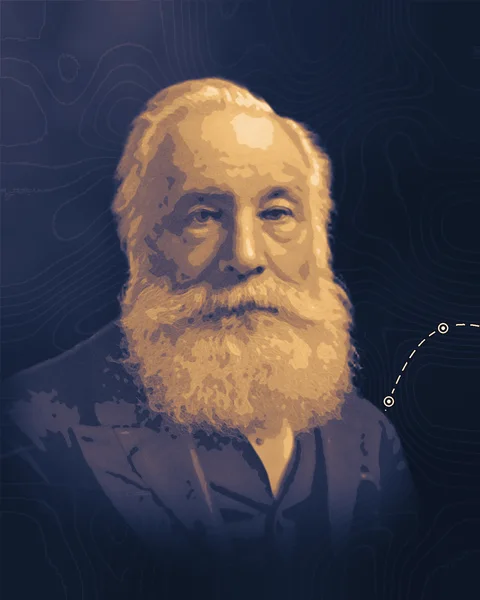
William Henry Perkin
1838–1907
He made the first synthetic dye to be sold, from coal tar, and built the factory that showed chemistry could be an industry of its own.
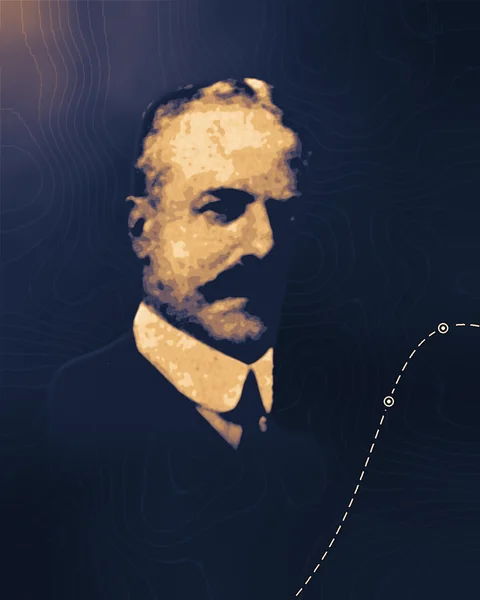
William M. Burton
1865–1954
He made cracking heavy oil into gasoline work at refinery scale, in pressure stills at Standard Oil of Indiana's Whiting refinery from 1913.
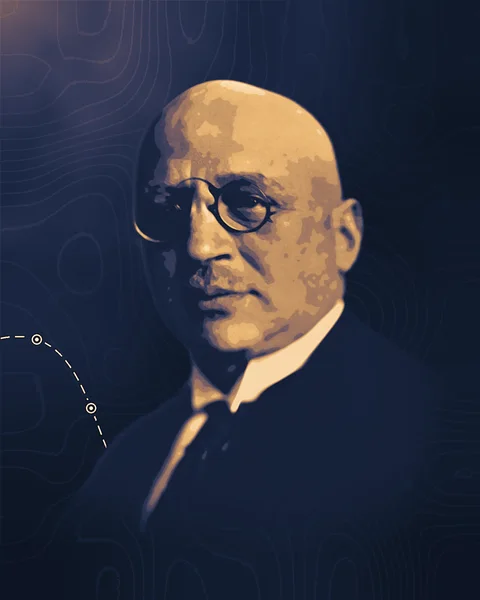
Fritz Haber
1868–1934
He found how to make ammonia from the nitrogen in air, the starting point for synthetic fertilizer.
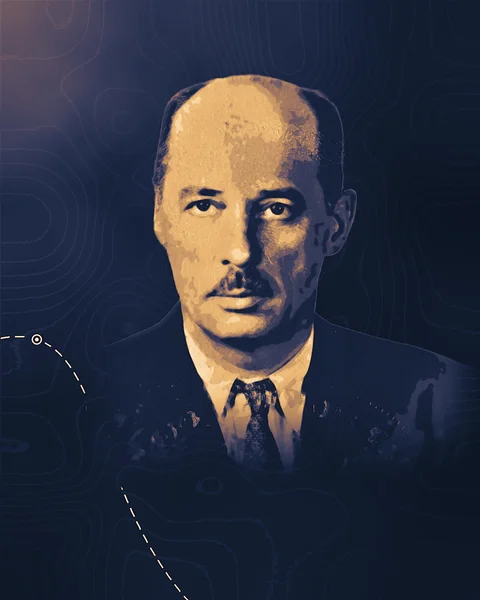
Eugène Houdry
1892–1962
He built the first catalytic cracker to run at full scale in a refinery, and showed that a catalyst fouled with carbon could be burned clean and used again.
Advances to build with
3 research notes

Muse Ember
The jobs agents repeat
Meta's Muse Ember matched Claude Haiku 5.5 on an outside firm's tests at a third of the cost per task, though both list the same prices for text in and out.
Cursor Agent SDK
Findings that cite notes
Cursor released a kit for building AI agents, and its example, a code reviewer that cites the note behind each finding, is known only from Cursor's account.

Inkling 2 Small
Checked without being asked
The maker of Inkling 2 Small, Thinking Machines, says the AI model checks its work without being asked, a habit that no published test measures.
Open in chemicals and petrochemicals
3 of 12 open deliverables
Open · Refining
Read every emission-event report
A public dataset that gives every "emissions event" reported in Texas by refineries and chemical plants a cause (for example power loss, compressor trip, leak or maintenance) and the equipment involved, and then lists the failures that repeat at each plant. In Texas law an emissions event is an upset, or an unscheduled startup, shutdown or maintenance job, that releases air pollution the plant's permit does not allow.
Built with what exists
The emission-event records the Texas Commission on Environmental Quality keeps in its STEERS database; a model that answers fixed-choice questions about each report, such as Google's Gemini Decision 1, or a small open model fine-tuned on one graphics card, such as Liquid AI's LFM3.
Open · Reactions and catalysts
Turn catalyst papers into data
An open table of measured results for one industrial reaction, such as propane dehydrogenation (making propylene from propane), taken from published papers by a document-reading model and checked by people. Each row gives the catalyst, the conditions, how much feed was converted and how much became the wanted product, with a link to the page it came from.
Built with what exists
A model built for extraction and long-document parsing, such as Meta's Muse Ember (Notes: "The jobs agents repeat"); open-access papers; CatTestHub's data layout.
Open · Separation
Test set for flowsheet agents
A public set of 50 solved separation problems (flash drums, distillation columns, absorbers), each with a reference answer and a scoring script, so that any AI agent can be run against them in a free simulator. A flowsheet is the model of how a plant's units and streams connect.
Built with what exists
DWSIM and its automation interface; a coding agent that tests its own work, such as one built on Inkling 2 Small (Notes: "Checked without being asked"); problems written for the set or used with permission.