Industries / Energy, water and waste
Pipelines and midstream
Pipelines and midstream is the work of moving and storing oil, natural gas and fuels between the fields where they are produced and the refineries, power plants, ports and towns that use them.
1865
Samuel Van Syckel's two-inch iron pipeline began pumping oil about five miles from the Pithole field to the Miller Farm railroad station in Pennsylvania on 10 October 1865; OilHistory.com, linked to the Drake Well Foundation, calls it "the first successful oil pipeline.".
37
Milestones achieved across 7 domains.
7
To watch for: announced, not yet confirmed outside.
14
Open deliverables. Nobody has shipped them.
In one minute
Where it started
In 1865 Samuel Van Syckel laid about five miles of two-inch iron pipe from an oil field to a railroad station and charged $1 a barrel, where teamsters had charged $4 or more. Lines grew longer and wider, and in 1943 the 24-inch Big Inch carried Texas crude to the East Coast, out of reach of the submarines that were sinking tankers.
Where it stands
Pipelines, compressor stations, gas plants, liquefied gas terminals and storage caverns are now run from control rooms and checked by tools that travel inside the pipe. The worst accidents of the last 30 years, at Bellingham, San Bruno, Marshall and Aliso Canyon, came from records, inspection results or alarms that were wrong or not acted on, according to the official investigations. Satellites now see large methane releases, but the UN Environment Programme says nearly 90% of its alerts get no answer.
What is open
Much of what the industry has learned sits in accident reports, regulator files and permits that no one has turned into data others can check. Public test sets for leak detection and inspection barely exist; a large public set of inspection images released in 2026, which its authors call the first of its scale, covers finding defects, not measuring them. Simulation software and AI models that read documents now let a small team build those records and tests without touching a live line.
Domains
AchievedWatch forOpen
Domain
Progress
Last achieved
Watch for
Open
Building a pipeline
Building a pipeline means choosing a route, laying and joining steel pipe in a trench or under rivers and roads, testing it, and keeping a record of what went into the ground.
6 · 1 · 2
Last achievedThe records were wrong2010
Watch forGas lines converted to hydrogen
2
openPumps and compressors
Pumps push liquids and compressors push gas along a line; stations every so often restore the pressure lost to friction.
5 · 1 · 2
Last achievedGas-driven stations keep running2021
Watch forCompressors for pure hydrogen
2
openIn depthCompression services
Finding leaks
Leak detection is how operators, the public and instruments notice that oil or gas is escaping, from smell to software that balances flow in and out, to satellites.
5 · 1 · 2
Last achievedAlerts sent, mostly unanswered2025
Watch forAerial patrol with AI
2
openInspecting from inside the pipe
In-line inspection sends a tool called a pig, a plug pushed along by the flow, through the pipe to measure the wall for corrosion, dents and cracks.
5 · 1 · 2
Last achievedA public inspection dataset2026
Watch forInspection without a pig
2
openGas processing and liquefied gas
Gas processing removes water, acid gases and heavier liquids from raw gas so it can go into pipelines; liquefaction chills the gas into a liquid, liquefied natural gas (LNG), so ships can carry it.
7 · 1 · 2
Last achievedSatellites count LNG flaring2025
Watch forA net zero LNG plant
2
openIn depthLNG
Storage and terminals
Storage holds oil, fuels and gas between production and use, in tanks at terminals and underground in salt caverns and old gas fields.
4 · 1 · 2
Last achievedAliso Canyon blows out2015
Watch forHydrogen in salt caverns
2
openControl rooms
Control rooms watch and run a pipeline system from one place, using SCADA (supervisory control and data acquisition), software that gathers readings and sends commands to distant pumps and valves.
5 · 1 · 2
Last achievedRansomware stops a pipeline2021
Watch forAn AI aid for operators
2
open
Figureheads
3 people
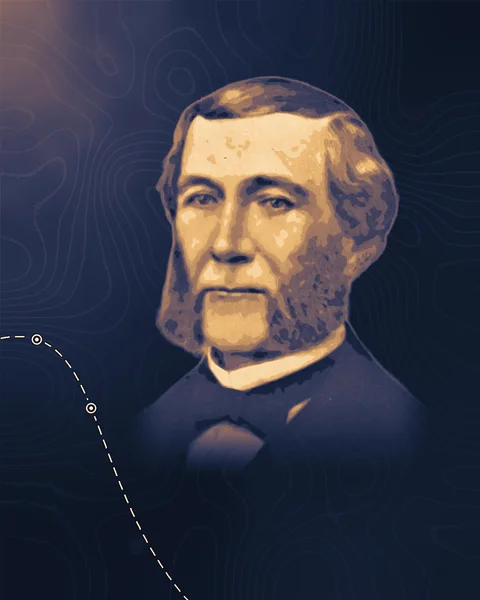
Samuel Van Syckel
1813–1894
He laid what historians of the oil region call the first successful oil pipeline, about five miles of two-inch iron pipe from the Pithole field to a railroad, and showed that pumping oil cost a fraction of hauling it by wagon.

Ludvig Nobel
1831–1888
He paid for the first oil pipeline at Baku and then moved Russia's oil in bulk by tank ship, tank car and a chain of storage depots, so kerosene no longer travelled in barrels.
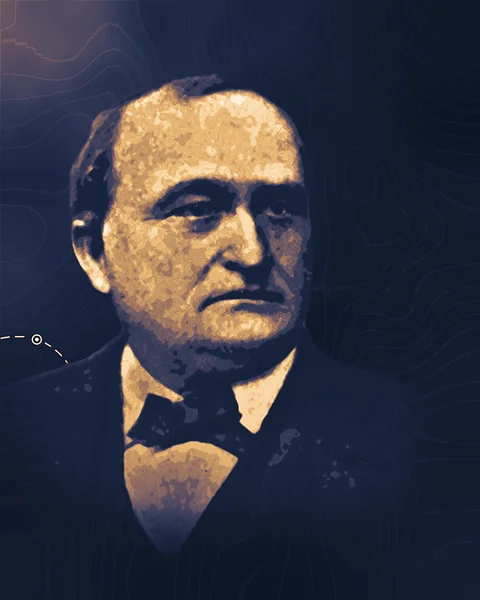
Byron D. Benson
1832–1888
He led the Tidewater Pipe Company, whose six-inch line of 1879 was the first to pump oil over the Allegheny Mountains, and so showed that pipelines rather than railroads would carry crude oil long distances.
Advances to build with
4 research notes
Mistral Large 4
A trillion open parameters
Mistral published its Large 4 AI model, a trillion numbers by its count, free to download and sell, though firms that rent out models need a separate license.

Muse Ember
The jobs agents repeat
Meta's Muse Ember matched Claude Haiku 5.5 on an outside firm's tests at a third of the cost per task, though both list the same prices for text in and out.
Cursor Agent SDK
Findings that cite notes
Cursor released a kit for building AI agents, and its example, a code reviewer that cites the note behind each finding, is known only from Cursor's account.
Inkling 2 Small
Checked without being asked
The maker of Inkling 2 Small, Thinking Machines, says the AI model checks its work without being asked, a habit that no published test measures.
Open in pipelines and midstream
3 of 14 open deliverables
Open · Building a pipeline
Map where drilling fluid escapes
A public table of every inadvertent return on one large project. An inadvertent return is when the drilling mud used in horizontal drilling breaks out to the surface or into a stream. Record its place, the depth of the bore, the rock type and what followed, then test whether a few simple factors predict where returns happen.
Built with what exists
AI models that read long documents and pull out facts (Note: "Seven more flagged"; Note: "A trillion open parameters"); Pennsylvania's public geologic maps; Python and QGIS.
Open · Pumps and compressors
Rebuild the station counts
One clean public table of US interstate compressor stations and compressor units for reporting years 2021 onward, built from the individual FERC Form 2 filings that large interstate gas companies submit each year.
Built with what exists
FERC's machine-readable filings; Python; Catalyst's PUDL code as a model; a coding agent to write and test the parsers (Note: "Code no person read").
Open · Finding leaks
A software leak test bench
A public set of simulated pipeline runs, with and without leaks of known size, place and time, plus scoring code. It must include shutdowns, restarts and column separation, which happens when a line is not full and the liquid column breaks, giving readings that can look like a leak, or hide one.
Built with what exists
TSNet, an open-source Python package for simulating pressure surges, adapted to oil properties; Python; a coding agent to write the scenarios.