Industries / Finance and business services
Finance and banking
Finance and banking holds people's and firms' money, lends it, moves it as payments, and runs the markets and funds through which savings are invested.
About 1750 BCE
Hammurabi, king of Babylon, had his laws carved on a stone pillar that the Louvre dates to his reign, about 1792 to 1750 BCE; among them are rules for loans at interest, for merchants' agents, and for grain left with a keeper under a written contract made before a witness.
49
Milestones achieved across 7 domains.
14
To watch for: announced, not yet confirmed outside.
14
Open deliverables. Nobody has shipped them.
In one minute
Where it started
The laws of Hammurabi, carved in Babylon about 1750 BCE, already set rules for loans at interest and for goods left with a keeper under a written contract. In the 1600s Amsterdam's exchange bank turned merchants' payments into transfers between accounts, shares of the Dutch East India Company began to trade in Amsterdam, and a Stockholm bank issued Europe's first banknotes. After the bank failures of the Great Depression, the United States began insuring deposits and set up the Securities and Exchange Commission, both in 1934.
Where it stands
In 2025, 79% of adults worldwide had an account, by the World Bank's count, and phone-based instant payments are in daily use: India's UPI handled more than 15 billion transactions a month by November 2024, by a Bank for International Settlements count. At the end of 2023, index funds in the United States held more assets than actively managed funds for the first time, on Morningstar data. Behind the screens much work is still done by hand: in a 2024 survey that the US securities depository DTCC co-sponsored, only 50% to 70% of asset servicing, the work that includes paying dividends and other corporate actions, ran with no person stepping in.
What is open
Most open jobs are public tests and datasets that nobody has built: full payment addresses, bank fee schedules, loan covenants, letter-of-credit documents, sanctions names across alphabets, corporate action notices, fund costs and holdings, and the comment letters the SEC sends companies. Each can be built from public filings or invented test data, with AI models that read long documents and agents that browse and test, and none needs real money to move. Another group tests the AI agents themselves, such as a guard that stops a shopping agent paying for something its owner did not approve.
Domains
AchievedWatch forOpen
Domain
Progress
Last achieved
Watch for
Open
Payments
Payments is the work of moving money from one person or firm to another, by notes, cards, transfers between banks at home and abroad, and the messaging and settlement systems behind them.
7 · 3 · 2
Last achievedInstant payments for a nation2016
Watch forInstant payments across borders
2
openIn depthPayments processing
Accounts and deposits
This is the work of holding people's and firms' money safely: deposit and savings accounts, the insurance that protects deposits when a bank fails, and the branches, machines and apps people use to reach their money.
7 · 1 · 2
Last achievedA run at phone speed2023
Watch forBank deposits on a blockchain
2
openLending and credit
Lending is the work of deciding who may borrow, on what terms, and collecting the money back, from small personal loans and mortgages to company loans and the bank promises that pay for goods shipped across borders.
7 · 2 · 2
Last achievedA second mortgage score2026
Watch forNewer FICO score for mortgages
2
openIn depthMortgage lending
Fraud and financial crime
This work keeps criminals from stealing through the financial system or using it to hide money, from card fraud and scams to money laundering, which disguises where criminal money came from.
7 · 2 · 2
Last achievedTD Bank pleads guilty2024
Watch forBanks pool fraud models
2
openTrading and markets
Markets are the places, now mostly computer systems, where shares, bonds and contracts based on them are bought and sold, and where each trade is then settled, meaning the cash and the securities change hands.
7 · 2 · 2
Last achievedSettling in one day2023
Watch forEU moves to T+1
2
openInvesting
Investing is the work of putting savings into shares, bonds and other assets for a return, and of building and running the funds that pool many people's money to do it.
7 · 2 · 2
Last achievedFund fees at a low2025
Watch forTargeted support in the UK
2
openIn depthWealth management
Compliance and reporting
This work keeps the books, files the reports that regulators and investors rely on, and shows that a bank holds enough capital and follows the rules.
7 · 2 · 2
Last achievedRisk data still falls short2023
Watch forAudits run with AI agents
2
open
Other narrower industries
Private equity and venture capitalFintechCredit unionsDebt collectionEnergy tradingEquipment leasing and factoringAsset management and hedge fundsBrokerages and exchangesInvestment bankingConsumer and auto lendingMoney transfer and remittancesCredit bureausLitigation financeBusiness brokers
Figureheads
6 people

Luca Pacioli
c. 1445–1517
An Italian friar and mathematician, he put the Venetian merchants' double-entry bookkeeping into print in 1494, and his account became the model for bookkeeping manuals across Europe.
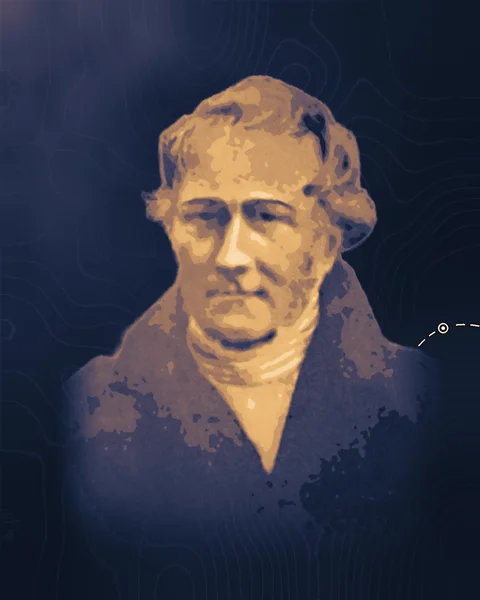
Henry Duncan
1774–1846
A Scottish parish minister, he opened a bank for his poorest parishioners' savings in 1810 and campaigned until savings banks spread across Britain under their own law.
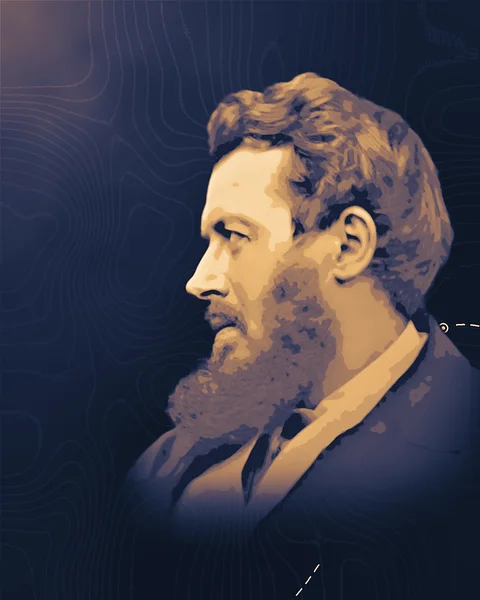
Walter Bagehot
1826–1877
An English banker and editor of The Economist, he set out in Lombard Street (1873) the rule that a central bank in a panic should lend freely, at a high rate, against good security.
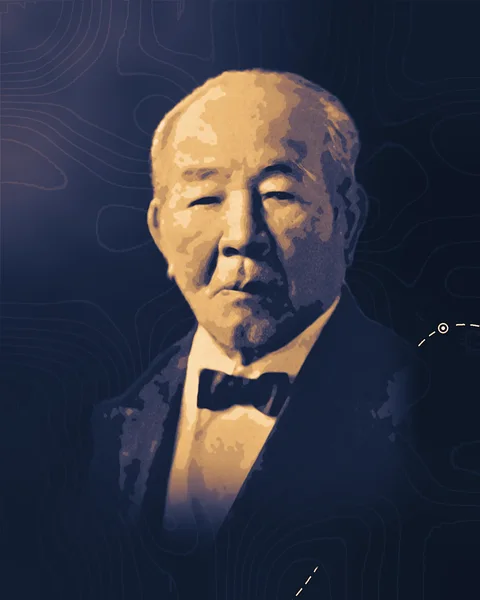
Shibusawa Eiichi
1840–1931
A Japanese finance official turned banker, he ran Japan's first bank from 1873 and used it and the joint-stock company to gather small savings into capital for hundreds of new firms.
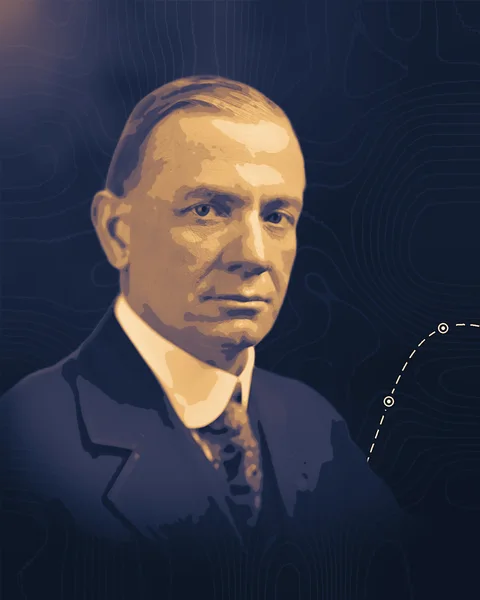
Henry B. Steagall
1873–1943
An Alabama congressman who chaired the House banking committee, he led the fight in 1933 that wrote federal deposit insurance into US law over the opposition of the president's own Treasury and the big banks.
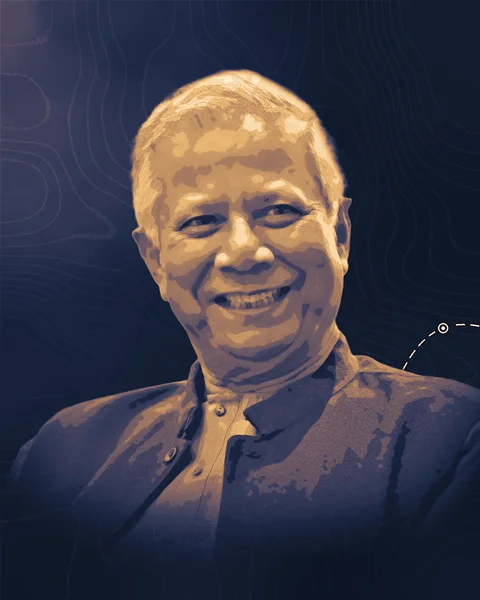
Muhammad Yunus
born 1940
A Bangladeshi economist, he built the Grameen Bank's way of lending small sums to poor village women in groups without collateral, which was copied around the world as microcredit.
Advances to build with
3 research notes

Claude Fable 5.2
Three working devices
Anthropic says its AI model Claude Fable 5.2 designed three prototype devices that worked without electrical modifications, with no outside test reported.

Mistral Large 4
A trillion open parameters
Mistral published its Large 4 AI model, a trillion numbers by its count, free to download and sell, though firms that rent out models need a separate license.

Cursor Agent SDK
Findings that cite notes
Cursor released a kit for building AI agents, and its example, a code reviewer that cites the note behind each finding, is known only from Cursor's account.
Open in finance and banking
3 of 14 open deliverables
Open · Payments
Full addresses, measured
A public test set of payment-style addresses with every ISO 20022 address field labeled, and a scored comparison of tools that fill those fields from free text. ISO 20022 is the message standard for bank payments, and its address fields include street name, building number, post code, town and country. Build the test set from open map data, written the way old payment messages carry addresses: short free-text lines with names, "care of" notes and abbreviations mixed in. Score Swift's open-source model, libpostal and at least one general AI model on it.
Built with what exists
SWIFT's address structuring model and its public test files on GitHub; libpostal; OpenStreetMap data; a general AI model such as Claude Fable 5.2 (see the Note "Three working devices") or Mistral Large 4, whose weights a bank can run on its own machines (see the Note "A trillion open parameters").
Open · Accounts and deposits
Every fee schedule, one table
An open, checked table of the fees on everyday checking accounts at US banks and credit unions, taken from the fee schedules each one publishes in its own layout, with the source file and capture date kept for every number.
Built with what exists
A web agent to find and download schedules, such as Browser Use (see the Note "Deleting 80% to start over"); an AI model that reads PDFs and tables, such as Claude Fable 5.2 (see the Note "Three working devices"); a reviewer that cites the line behind each number (see the Note "Findings that cite notes"); CSV files on GitHub.
Open · Lending and credit
An open table of covenants
A free public table of the financial covenants in company loan agreements that US public companies file with the Securities and Exchange Commission (SEC). A financial covenant is a promise in a loan agreement, such as keeping debt below a set multiple of yearly earnings, tested every quarter; breaking it lets the lender demand changes. For each covenant, record the test, the threshold, how often it is tested, the definitions it relies on, and a link to the clause in the filed document.
Built with what exists
The Material Contracts Corpus bulk download; the SEC's EDGAR filing search; a model that reads long documents, such as Claude Fable 5.2 (see the Note "Three working devices") or the open-weight Mistral Large 4 (see the Note "A trillion open parameters"), to draft each entry; a second model that flags doubtful entries for a person to check (see the Note "Seven more flagged"); CSV files on GitHub.