Industries / Finance and business services / Finance and banking
Payments processing
Payments processing moves money from buyers to sellers, and between people and firms, by card, bank transfer and phone, through the networks, terminals and settlement systems that carry each payment and square the banks' accounts afterward.
1950
In February 1950 Frank McNamara paid for dinner at Major's Cabin Grill in New York with a small cardboard card from Diners Club, which the company calls the world's first multipurpose charge card. A company now stood between buyers and many sellers: in its first year 28 restaurants and two hotels accepted monthly billing for the club's 10,000 members, by Diners Club's account.
36
Milestones achieved across 6 domains.
10
To watch for: announced, not yet confirmed outside.
12
Open deliverables. Nobody has shipped them.
In one minute
Where it started
Banks began processing payments together in 1853, when most New York banks set up a clearinghouse to swap checks and settle what they owed each other in one place. In 1950 Diners Club put a card between diners and restaurants, and from 1958 banks built the card networks that became Visa and Mastercard. From the late 1960s banks in the UK and the US sent bulk payments between accounts as computer files instead of paper.
Where it stands
In 2024 people in advanced economies made 579 cashless payments each, 361 of them by card, and in emerging and developing economies fast payments, which reach the payee within seconds, made up 49% of all cashless payments, by the count of the Bank for International Settlements (BIS). In the European Economic Area, card payments made without strong customer authentication, a check with two separate proofs such as a phone and a fingerprint, had twice the fraud rate of those with it in 2024, by EU supervisors' figures. Sending money abroad is still slow and costly: in November 2026 the Financial Stability Board found no measurable progress since 2023 in the average cost of retail payments across borders.
What is open
Many open jobs are public tables that nobody has assembled from what card networks, banks and regulators publish: interchange fees country by country, prices for instant transfers, the days and hours payment systems run, payment purpose codes, card fraud rates and payment outages. Others are public tests: payee name checks, matching bank statement lines to invoices, tap-to-pay on cheap phones, alarms that watch checkout pages for skimmers, and AI models on card network rules. Web agents, AI models that read tables in PDFs, and payment sandboxes, where test payments move no money, put each one within reach of a small team.
Domains
AchievedWatch forOpen
Domain
Progress
Last achieved
Watch for
Open
Card networks
The card networks, such as Visa, Mastercard and UnionPay, set the rules and carry the messages that let a card issued by one bank pay a shop that banks with another.
7 · 2 · 2
Last achievedA backup switch fails2018
Watch forA US fee settlement
2
openCheckout and terminals
Checkout is where the buyer pays: the terminal or phone at a shop's counter, or the payment page of an online shop, which reads the card or wallet and sends the payment on for approval.
5 · 2 · 2
Last achievedRival wallets get iPhone tap2024
Watch forPhones as terminals for sellers
2
openBank transfers and instant payments
This is the work of moving money straight from one bank account to another, such as wages, bills and transfers between people, either in bulk batches or one payment at a time within seconds.
7 · 1 · 2
Last achievedInstant transfers and name checks2025
Watch forA bank-owned European wallet
2
openFraud and chargebacks
This work stops payments made with stolen card details or by trickery, and settles disputes when a cardholder says a charge is wrong.
5 · 2 · 2
Last achievedStrong checks shown to work2025
Watch forRefunds for bank impersonation scams
2
openCross-border payments
This is the work of moving money between countries and currencies, from migrants' remittances to their families to payments between companies and between banks.
7 · 2 · 2
Last achievedStablecoin transfers put to test2026
Watch forA shared ledger at Swift
2
openSettlement and matching records
This work moves the money behind payments between banks and payment firms, and matches each payment to the invoice or order it pays.
5 · 1 · 2
Last achievedEuro settlement in ISO 200222023
Watch forCard settlement in stablecoins
2
open
Advances to build with
3 research notes
Claude Fable 5.2
Three working devices
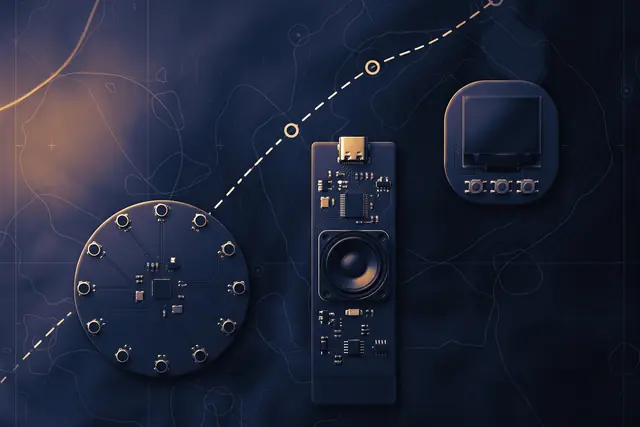
Anthropic says its AI model Claude Fable 5.2 designed three prototype devices that worked without electrical modifications, with no outside test reported.

Mistral Large 4
A trillion open parameters
Mistral published its Large 4 AI model, a trillion numbers by its count, free to download and sell, though firms that rent out models need a separate license.

Cursor Agent SDK
Findings that cite notes
Cursor released a kit for building AI agents, and its example, a code reviewer that cites the note behind each finding, is known only from Cursor's account.
Open in payments processing
3 of 12 open deliverables
Open · Card networks
Map interchange fees worldwide
An open, dated table of the interchange fees that card networks publish, country by country, with each rate tied to its card type (consumer debit, consumer credit, business), the way the card was used (chip, contactless, online) and the file it came from. Start with the schedules Visa publishes for European countries, then add other networks' published rates and the caps set by regulators.
Built with what exists
pdftotext and Camelot to pull tables out of PDFs; an AI model that reads tables, such as Claude Fable 5.2 (see the Note "Three working devices"), with a second pass that cites the line behind each value (see the Note "Findings that cite notes"); CSV files on GitHub.
Open · Checkout and terminals
Test tap-to-pay on cheap phones
A public test of how reliably low-cost Android phones read contactless cards when a seller uses the phone as the shop's terminal. Run a tap-to-pay app in a payment processor's test mode on at least 30 phone models, tap test cards on each many times, and record whether the first tap works and how long approval takes.
Built with what exists
Stripe Terminal's Tap to Pay on Android SDK in a sandbox, where no money moves, or another processor's tap-to-pay SDK; physical test cards, such as Stripe's or those from B2 Payment Solutions, which Stripe's testing guide names, after confirming which ones the processor's tap-to-pay sandbox accepts; a 3D-printed jig that holds each card at set distances and angles from the phone.
Open · Bank transfers and instant payments
Test payee name checks
A public test set for the name checks that banks now run before a transfer: pairs of the name a payer types and the name the bank holds, each labeled match, close match or no match under the European Payments Council's published recommendations. Cover misspellings, swapped letters, initials, company names in a different order, trading names, accents and names in other scripts. Then score open matching methods against it and publish where they disagree.
Built with what exists
The Council's matching recommendations; company names from GLEIF's free Golden Copy of legal entity identifiers; the open RapidFuzz library for spelling distance and jellyfish for sound-alike codes; a general AI model as a comparison, such as Claude Fable 5.2 (see the Note "Three working devices") or Mistral Large 4, whose weights a bank can run on its own machines (see the Note "A trillion open parameters"); a model that returns probabilities for fixed-answer questions such as "same name or not" (see the Note "A thousand questions, one pass").
Where it sits
Broader
In outline