Industries / Figureheads
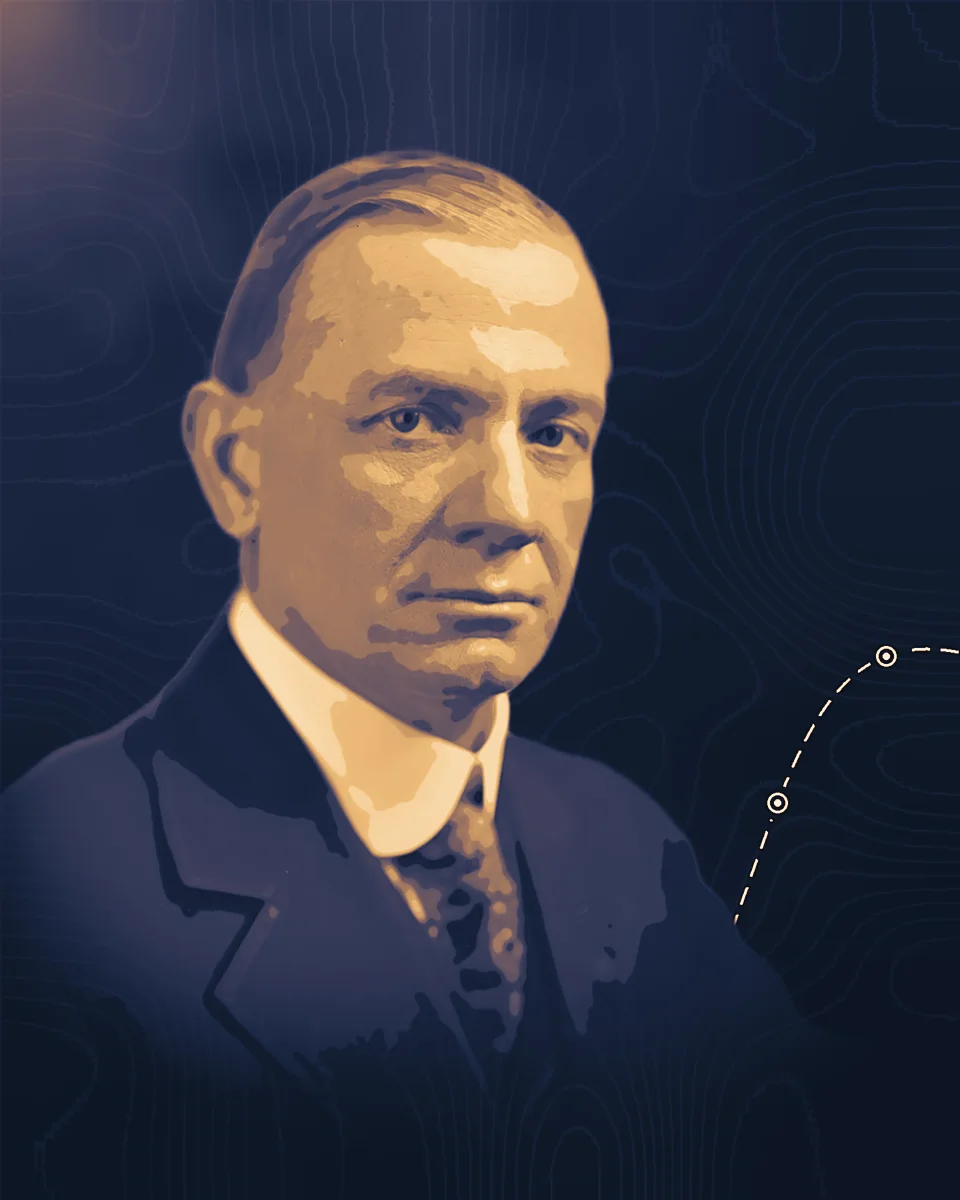
Henry B. Steagall
An Alabama congressman who chaired the House banking committee, he led the fight in 1933 that wrote federal deposit insurance into US law over the opposition of the president's own Treasury and the big banks.
1873–1943
What they changed
1931
Chair of House banking
Steagall became chairman of the House Committee on Banking and Currency in 1931, early in the Great Depression, after years in which thousands of banks had failed. In February 1932 he and Senator Carter Glass passed an act that let member banks borrow from the Federal Reserve on a wider range of assets.
1933
"Here's the bill."
On 9 March 1933, during the national bank holiday, the House met to pass the new administration's Emergency Banking Act. The FDIC's history says Steagall "purportedly had the only copy of the bill in the House", waved it over his head and shouted, "Here's the bill. Let's pass it." The House passed it after 40 minutes of debate, with no amendments allowed.
1933
Deposit insurance by law
Steagall was "one of the chief proponents" of federal deposit insurance, and the FDIC's history credits him with proposing the law that created the Federal Deposit Insurance Corporation, leading the fight for it in the House and helping to reach a compromise when it seemed doomed. Glass opposed deposit insurance; the Encyclopedia of Alabama says Steagall agreed to back Glass's banking bill only if it included it. Roosevelt signed the Banking Act on 16 June 1933, with Glass and Steagall beside him.
1934
Runs stop
Federal deposit insurance took effect on 1 January 1934, covering each depositor up to $2,500. Only nine banks failed in 1934, against more than 9,000 in the four years before, by the FDIC's count.
Life
Henry Bascom Steagall was born on 19 May 1873 in Clopton, Dale County, Alabama, the youngest of four children of a doctor who also sat in the state senate. He studied at the Southeast Alabama Agricultural School at Abbeville and took a law degree at the University of Alabama in 1893. He practised law in Ozark and served as Dale County's solicitor from 1898 to 1906, in the state legislature and as a district prosecutor. He was elected to Congress in 1914, took his seat on 4 March 1915 and was re-elected fourteen times.
The idea he carried into law was old. The FDIC dates the first American scheme to 1829, when New York adopted a plan devised by the Syracuse businessman Joshua Forman, which he drew from the rules of the Hong merchants of Canton, who were liable for one another's debts. Eight states adopted deposit insurance between 1908 and 1917, and 150 proposals for it were made in Congress between 1886 and 1933.
The opposition was strong. Treasury Secretary Woodin was firmly against it, accounts differ on how far President Roosevelt opposed it, and the president of the American Bankers Association called it "unsound, unscientific and dangerous". Others in Washington shared the work, by the FDIC's account: Vice President John Nance Garner had pressed for it, and Senator Arthur Vandenberg's amendment created the temporary insurance fund that opened in January 1934.
The Banking Act of 1933 also separated investment banking from commercial banking. That part was repealed by the Gramm-Leach-Bliley Act in 1999, and the Encyclopedia of Alabama notes the debate over whether the repeal helped bring on the financial crisis of the late 2000s. Deposit insurance stayed: in 1998 the FDIC wrote that it "remains an integral part of the nation's financial system".
In 1937 Steagall co-sponsored the Wagner-Steagall National Housing Act, which created the United States Housing Authority for low-income housing. He stayed chairman of the banking committee into the Second World War and worked for Alabama's farmers. He died of a heart attack in Washington, D.C., on 22 November 1943, still in office.
Read more
3 accounts
A Brief History of Deposit Insurance in the United States, Federal Deposit Insurance Corporation, 1998.
The FDIC's history of deposit insurance from New York's Safety Fund to the 1990s, with the fight of 1933 in detail.
fdic.gov
Henry B. Steagall, Larry Powell, Encyclopedia of Alabama, 2012.
A short life, with the bank bills of 1932 and 1933 and the housing act of 1937.
encyclopediaofalabama.org
A funny business, Harris & Ewing, Library of Congress, 1935.
A press photograph of Roosevelt joking with Steagall at the signing of a later banking bill, with Glass, Morgenthau and Eccles.
loc.gov