Industries / Figureheads
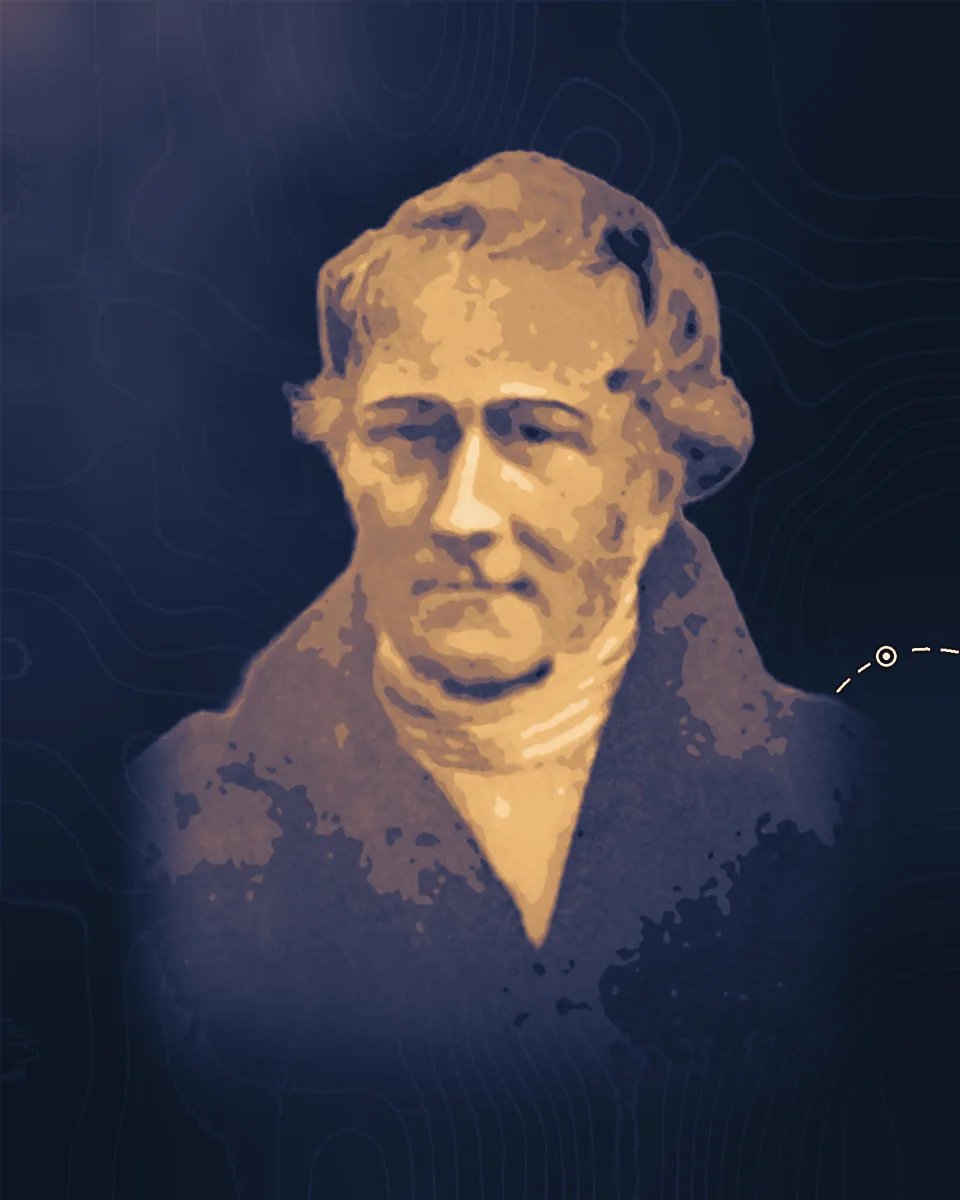
Henry Duncan
A Scottish parish minister, he opened a bank for his poorest parishioners' savings in 1810 and campaigned until savings banks spread across Britain under their own law.
1774–1846
What they changed
1810
A bank for poor savers
In May 1810 Duncan opened the Ruthwell Parish Bank in the rooms of the Ruthwell Friendly Society in Dumfriesshire, to help labourers save and keep them off poor relief. Savers could put in from one shilling to ten pounds and were paid interest and bonuses, and the bank earned that interest by lending the savings to a commercial bank. NatWest Group's archive says it is "generally regarded as the first savings bank in the world run on business principles".
1810
Savers in charge
Duncan was the bank's governor, but trustees, a court of directors and a committee of elected members ran it, and the annual meeting of members could veto any decision. The 1860 Encyclopaedia Britannica records his rule that the people "should themselves take a share in the management", and that in about four years the fund reached £1,160, earning 5 per cent.
1815
A plan for every parish
He published An Essay on the Nature and Advantages of Parish Banks in 1815, with a second edition in 1816, and pressed the cause in speeches, lectures and pamphlets, by the Dictionary of National Biography's account. His son's memoir says the system spread from Ruthwell to Kelso and Hawick in 1814 and then grew quickly.
1819
Savings protected by law
The parish bank's legal standing rested on the Friendly Societies Act of 1793, which Duncan thought unsatisfactory. He helped draft an Act for the protection of banks for savings in Scotland, which was passed in 1819, two years after a similar act for England.
Life
Henry Duncan was born in 1774 at Lochrutton in Kirkcudbrightshire, where his father, George Duncan, was the minister. After two sessions at the University of St Andrews he was sent to Liverpool to go into business, but he left to study for the ministry of the Church of Scotland at Edinburgh and Glasgow. In 1798 he was ordained minister of Ruthwell in Dumfriesshire, where he spent the rest of his life.
He did more for his parish than preach. In a time of scarcity he brought Indian corn from Liverpool, and when a French invasion was feared he raised a company of volunteers and captained it. He wrote cheap tracts for working people and started a newspaper, the Dumfries and Galloway Courier, which he edited for seven years. His son's memoir says the idea of the bank came to him early in 1810 from a scheme called "Tranquillity", by the London writer John Bone, for doing away with the poor rates, which included a bank for the savings of the industrious.
He was not the first to run a savings bank. The 1860 Britannica dates the earliest to Hamburg in 1778 and Berne about nine years later, and names Priscilla Wakefield's children's bank at Tottenham, near London, in 1798 and the Rev. John Muckersy's West Calder Friendly Bank of October 1807. It still calls Duncan "the virtual founder of savings banks in the British empire", because his experiment at Ruthwell "placed the value and success of savings banks beyond question". The claim was argued at the time. In 1817 the Quarterly Review called Ruthwell's bank the "Parent Society" of the movement, and gave the title of the original to Wakefield's bank at Tottenham.
The Dictionary of National Biography says he never received any reward for the work beyond the esteem of those who valued it. The Ruthwell bank itself stayed small. Its deposits peaked at £3,326 in 1835, and in 1875 its last 29 accounts were moved to Annan Savings Bank. The cottage where it began became the Henry Duncan Savings Banks Museum, set up by the Trustee Savings Bank in the early 1970s.
He had other lives too. He found and restored the Ruthwell Cross, a carved runic cross in his parish, and found fossil footprints of four-footed animals in the sandstone of Corncockle Muir, near Lochmaben. He was moderator of the Church of Scotland's General Assembly in 1839, and in 1843 he joined the Free Church when it broke away, leaving his manse. He died of a stroke on 19 February 1846, while leading a service in the cottage of one of his elders.
Read more
5 accounts
Memoir of the Rev. Henry Duncan, D.D., Minister of Ruthwell, George John C. Duncan, 1848.
The full life, by his son, with his letters on the parish bank and the savings bank bills.
archive.org
Dr Duncan of Ruthwell, Founder of Savings Banks, Sophy Hall, 1910.
A short life by his great-granddaughter, written for the centenary of Scottish savings banks.
archive.org
Minister of Money: Henry Duncan, Founder of the Savings Bank Movement, Charles W. Munn, John Donald, 2017.
A modern biography by a historian of Scottish banking.
archive.org
Savings Banks, Encyclopaedia Britannica, eighth edition, 1860.
A history of the early savings banks in Europe and Britain, with the rival claims to be first.
jimclifford.ca
Duncan, Henry, William Garden Blaikie, Dictionary of National Biography, volume 16, 1888.
The national biography's entry, with a full list of his writings.
en.wikisource.org