Industries / Mining and materials / Chemicals and petrochemicals
Fertilizers and agrochemicals
The fertilizers and agrochemicals industry makes the nitrogen, phosphate and potash fertilizers that feed crops and the herbicides, insecticides and fungicides that protect them, from natural gas, air, phosphate rock, potash ore and other chemicals.
1842
John Bennet Lawes was granted patent No. 9353 in November 1842 for making superphosphate fertilizer by treating bones or mineral phosphates with sulfuric acid, and opened his first factory, at Deptford Creek in London, in 1843.
37
Milestones achieved across 6 domains.
9
To watch for: announced, not yet confirmed outside.
12
Open deliverables. Nobody has shipped them.
In one minute
Where it started
In 1842 John Bennet Lawes patented superphosphate, made by dissolving bones or phosphate rock in sulfuric acid, and the next year he opened a factory in London to make it. Nitrogen fertilizer came from Norway's electric-arc plants from 1905 and, from 1913, from BASF's Haber-Bosch process, which makes ammonia from the nitrogen in air and had won out over the arc by the late 1920s. The first US pesticide law, in 1910, policed the purity of arsenic insecticides; synthetic weedkillers, insecticides and fungicides came later in the century.
Where it stands
FAO counts 208 million tonnes of fertilizer nutrients made in 2023, 58% of them nitrogen, and 3.73 million tonnes of pesticide active ingredients used on farms that year, twice the 1990 amount. Ammonia plants take their hydrogen from natural gas or coal, so cutting carbon is the main work at the plant: a plant at Enid, Oklahoma has piped its carbon dioxide to oil fields since 1982, and Envision says its plant in Inner Mongolia runs on its own wind and solar power. In 2025 Peru approved a herbicide that HRAC, the industry body that sorts herbicides by how they work, places in a group of its own.
What is open
Much of what the industry knows is scattered: accident reports across national databases, storage rules in each country's law, fertilizer inspection results in state PDFs, the reasons for pesticide bans in regulation texts, and plant emissions that satellite measurements now dispute. Most open jobs gather such records into checked public tables, using AI models that read long documents and quote their source, and free satellite data. None of them requires handling the chemicals.
Domains
AchievedWatch forOpen
Domain
Progress
Last achieved
Watch for
Open
Ammonia and nitrogen fertilizer
This work fixes nitrogen from the air into ammonia, then turns the ammonia into nitric acid, urea and ammonium nitrate, the main nitrogen fertilizers.
6 · 2 · 2
Last achievedA test for ammonia claims2019
Watch forOff-grid ammonia at scale
2
openPhosphate and potash
This work turns mined phosphate rock into fertilizer that crops can take up, usually by dissolving the rock in acid, refines potash ore into potassium fertilizer, and deals with the gypsum waste that phosphate making leaves behind.
6 · 1 · 2
Last achievedA cadmium cap in Europe2022
Watch forA test road on phosphogypsum
2
openCrop protection chemicals
Crop protection chemicals are the herbicides, insecticides and fungicides that kill weeds, insects and plant diseases; this work is finding new ones, proving to regulators that they are safe enough to sell, and making them.
7 · 2 · 2
Last achievedA new herbicide group2025
Watch forIcafolin's claimed new action
2
openFormulation and packaging
Formulation turns fertilizer and pesticide chemicals into the granules, liquids and coated products that are sold, and packaging puts them in labeled containers that can be traced and taken back.
5 · 1 · 2
Last achievedPolice hunt fake pesticides2015
Watch forCoatings that break down
2
openStorage and transport safety
This work keeps fertilizers and crop protection chemicals from burning, exploding or leaking while they sit in warehouses and tanks or travel by ship, rail and road.
7 · 1 · 2
Last achievedBeirut port explosion2020
Watch forUS accident rules rolled back
2
openEmissions
This work measures and cuts what fertilizer and agrochemical plants release to the air: carbon dioxide and methane from making ammonia, nitrous oxide from nitric acid, ammonia itself, and fluorides from phosphate plants.
6 · 2 · 2
Last achievedMethane from fertilizer plants2019
Watch forStored carbon at Donaldsonville
2
open
Figureheads
4 people
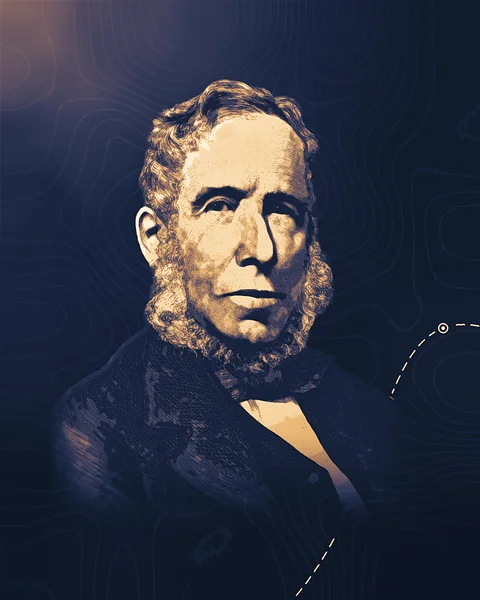
John Bennet Lawes
1814–1900
He patented superphosphate fertilizer and began the field trials at Rothamsted that still run.
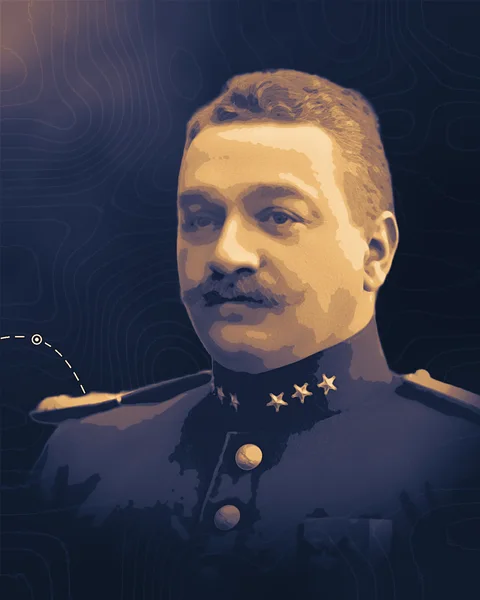
Sam Eyde
1866–1940
He raised the money, bought the waterfalls and built the company, Norsk Hydro, that made fertilizer from the nitrogen in the air at Notodden and Rjukan.
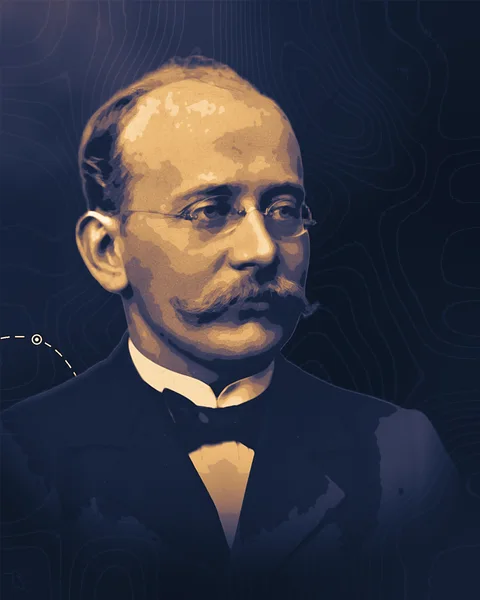
Kristian Birkeland
1867–1917
He invented the electric-arc method that first fixed nitrogen from the air for fertilizer on a factory scale, the method Norsk Hydro was founded to run.
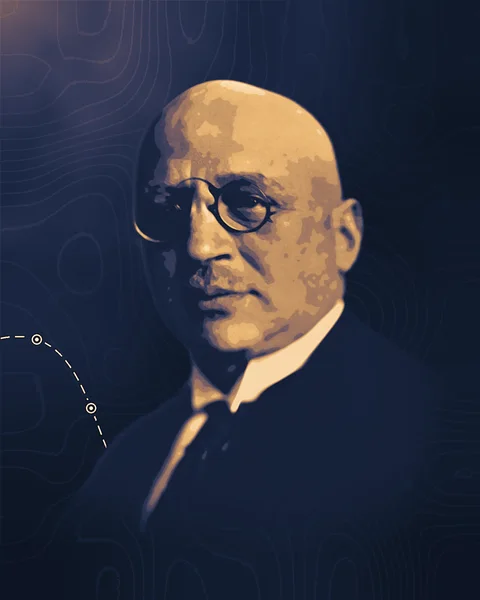
Fritz Haber
1868–1934
He found how to make ammonia from the nitrogen in air, the starting point for synthetic fertilizer.
Advances to build with
3 research notes

Mistral Large 4
A trillion open parameters
Mistral published its Large 4 AI model, a trillion numbers by its count, free to download and sell, though firms that rent out models need a separate license.

Muse Ember
The jobs agents repeat
Meta's Muse Ember matched Claude Haiku 5.5 on an outside firm's tests at a third of the cost per task, though both list the same prices for text in and out.

Cursor Agent SDK
Findings that cite notes
Cursor released a kit for building AI agents, and its example, a code reviewer that cites the note behind each finding, is known only from Cursor's account.
Open in fertilizers and agrochemicals
3 of 12 open deliverables
Open · Ammonia and nitrogen fertilizer
Scoring electrochemical ammonia claims
A public, regularly updated table of papers that claim to make ammonia from nitrogen with electricity, scoring each against the checks set out by Andersen and colleagues in 2019 and Choi and colleagues in 2020: whether the yield is large enough to matter, whether quantitative experiments with nitrogen-15 gas were run, and whether contamination from nitrogen oxides was ruled out. Each score links to the page of the paper it rests on.
Built with what exists
Crossref and OpenAlex to list papers; Choi and colleagues' Supplementary Table 1 as the starting set and scoring guide; an AI model that reads long documents and returns quoted evidence, such as Muse Ember (see the Note "The jobs agents repeat"); a spreadsheet or small database with a public web page.
Open · Phosphate and potash
Phosphogypsum stacks from space
A public inventory of the world's phosphogypsum stacks, the hills of acidic gypsum, holding natural toxic and radioactive elements, that phosphoric acid plants leave behind. For each stack: its outline, its area every year from free satellite images (Landsat from 1985, Sentinel-2 from 2016), the area of process water ponded on top, the nearest river, bay or coast, and, for the largest stacks, ground movement measured by radar.
Built with what exists
Landsat and Sentinel-2 images through Google Earth Engine or Microsoft Planetary Computer; Sentinel-1 radar processed on ESA's Geohazards Exploitation Platform or the Alaska Satellite Facility's HyP3 service; Meta's Segment Anything Model 2 (SAM 2) to outline stacks and ponds; company annual reports and permit documents to find candidate plants, read by a document-reading AI model (see the Note "The jobs agents repeat").
Open · Crop protection chemicals
Mode-of-action test set
A public benchmark that asks a model to predict a pesticide's mode of action, the plant, insect or fungal process it blocks, from its chemical structure. It would hold every active ingredient classified by the industry's resistance committees (HRAC for herbicides, IRAC for insecticides, FRAC for fungicides), each with its structure, and test models on ingredients classified after their training data, such as the five new herbicides HRAC added in December 2025.
Built with what exists
HRAC's herbicide master sheet and the IRAC and FRAC classification lists; PubChem's free API for structures; RDKit; Chemprop, an open model for molecular properties; a random forest like Oršolić and colleagues' as a baseline; an open-weight general model such as Mistral Large 4 as a comparison (see the Note "A trillion open parameters").
Where it sits
Broader