Industries / Transport and vehicles
Shipbuilding and repair
Shipbuilding and repair is the work of designing ships and offshore structures, cutting and welding their steel, assembling and fitting them out, proving them at sea, and later docking them for repair, repainting and conversion.
About 3000 BCE
At Abydos in Egypt, builders made wooden boats about 75 feet long from thick planks lashed together with rope, and 14 of them were buried beside the tombs of Egypt's first kings. Their excavators, David O'Connor and Matthew Adams, date the boats to early Dynasty I (2950 to 2775 BCE) and write that they "were the earliest planked vessels to survive anywhere in the world"; New York University's announcement of the find gave about 3000 BCE.
45
Milestones achieved across 7 domains.
12
To watch for: announced, not yet confirmed outside.
14
Open deliverables. Nobody has shipped them.
In one minute
Where it started
Egyptians were building boats from planks lashed with rope by about 3000 BCE, and for most of history ships were wood, built by hand and repaired in dry docks like the one Henry VII ordered at Portsmouth in 1495. Steel and welding changed the work in the 20th century: Cammell Laird launched a fully welded hull in 1920, and US yards built wartime Liberty ships from sections welded in advance. Japanese yards turned that into block building, and from 1972 to 1974 Korea's Hyundai built a yard and its first two tankers at the same time, by its own account.
Where it stands
Three countries build almost all large ships: by UNCTAD's count from Clarksons data, China built 54.6 percent of the world's merchant ship tonnage in 2024, South Korea 28.0 percent, Japan 12.6 percent and the United States 0.04 percent. China also took 74.4 percent of the tonnage ordered that year, while Finland, France and Italy still lead in cruise ships. About 348 shipyards won orders or delivered ships in 2024, roughly half as many as in 2007, and the largest yards are now testing welding, painting and inspection robots that have yet to publish measured results.
What is open
Much of the work inside a hull is still done by hand: pulling cables, brushing extra paint onto edges and welds, and standing fire watch over welding. Several numbers the industry relies on have no shared, outside measure, among them how much sprayed paint reaches the steel, how often an AI assistant reads the class rules correctly and how many repair docks are full. Most of these jobs need a robot arm, a camera or free public data and a small model, plus a yard, a school or a crew willing to help.
Domains
AchievedWatch forOpen
Domain
Progress
Last achieved
Watch for
Open
Design
Naval architects decide a ship's shape, size, structure and layout, and check by calculation, model tests and computer simulation that it will float upright, reach its speed and hold together before any steel is cut.
6 · 3 · 2
Last achievedApproval from a 3D model2023
Watch forA rules assistant that cites
2
openSteel cutting and welding
Shipyards cut steel plate into parts and weld the parts into panels and hull structures, the work that turns flat plate into a ship.
7 · 2 · 2
Last achievedLasers replace the panel line2000
Watch forHumanoid welders for shipyards
2
openBlock assembly
Yards join panels and parts into large three-dimensional sections called blocks, fit pipes and equipment into them, and then lift the blocks into place and weld them together into a hull, on a slipway, in a dry dock or on land.
7 · 1 · 2
Last achievedBuilding before design is done2024
Watch forPhilly from two to twenty
2
openOutfitting
Outfitting is fitting a hull with everything that is not structure: pipes, pumps, cables, machinery, ventilation, cabins and furniture.
6 · 1 · 2
Last achievedNo paper on Enterprise2022
Watch forRobots that check installed work
2
openPainting and coating
Painting and coating protect a ship's steel from rust and keep weed and barnacles off the hull, from blasting the steel clean in the yard to the last coat in dry dock.
6 · 2 · 2
Last achievedThe next biocide banned2023
Watch forRobots for Navy ship coatings
2
openSea trials
Before an owner accepts a new ship, the yard takes it to sea to show that it reaches the contract speed at the contract power, turns, stops and is quiet enough, while the owner and the classification society watch and record.
6 · 2 · 2
Last achievedWaves measured, not guessed2025
Watch forSpeed within 0.1 knot
2
openDry dock and repair
Repair yards lift ships out of the water, in a dock that is pumped dry, a floating dock or a ship lift, so workers can inspect, mend, repaint or convert the parts of the hull that are normally under water.
7 · 1 · 2
Last achievedNavy ships repaired in Korea2025
Watch forRemote inspection counts for surveys
2
open
Narrower industries
Figureheads
1 person
Advances to build with
3 research notes
Claude Fable 5.2
Three working devices
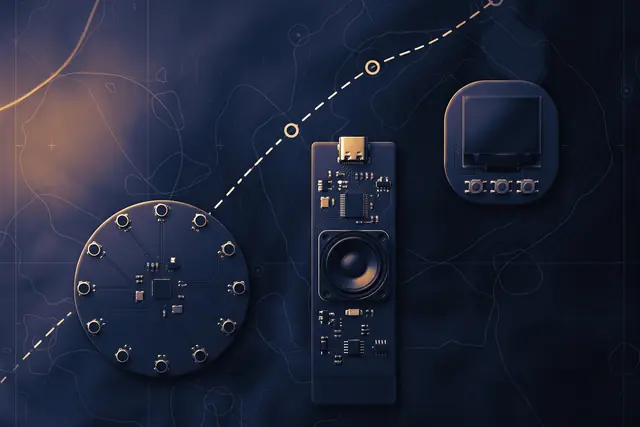
Anthropic says its AI model Claude Fable 5.2 designed three prototype devices that worked without electrical modifications, with no outside test reported.

NVIDIA GR00T 2
Five demonstrations per task
By NVIDIA's own test, its robot model GR00T 2 averages 95% success after five demonstrations of a task, on 50 tasks picked from those it learns that way.

Agentic robotics
Readable robot programs
A UC Berkeley lab has AI agents write readable robot programs, which scored below human-written ones in all twelve of its own test conditions on one simulator.
Open in shipbuilding and repair
3 of 14 open deliverables
Open · Design
Testing AI on class rules
a public set of about 300 questions taken from the IACS Unified Requirements (the minimum rules all member classification societies adopt), each with the correct answer and the clause it comes from, and a script that scores any AI assistant on correct answers and correct citations.
Built with what exists
the IACS Unified Requirements, Python, general AI models such as Claude Fable 5.2 (see the Note "Three working devices") and open-weight models, and DNV RuleAgent where access allows.
Open · Steel cutting and welding
Taught welds in mock cells
A public test of teaching a robot arm to follow the weld seams inside a ship's double-bottom cell (one of the box-like spaces between the outer and inner bottom, walled in by girders and floors), from a handful of demonstrations. Build a scale mock-up of one cell from a published midship drawing, mark its seams, and have the robot trace each seam with an unpowered torch or a pen, so no arc is struck.
Built with what exists
An open robot model such as NVIDIA GR00T 2, which by NVIDIA's own test learns many tasks from five demonstrations (see the Note "Five demonstrations per task"); Hugging Face LeRobot to record demonstrations and train (see the Note "No download"); a low-cost six-axis arm or a used industrial arm; a depth camera; the cell drawn in free CAD such as FreeCAD.
Open · Block assembly
An open block model
A public, complete block breakdown of one reference ship. Take a hull form that is already published for research, such as the KRISO Container Ship (KCS), lay out its internal structure to classification rules, divide it into construction blocks, and publish each block's weight, center of gravity, weld-joint lengths and the order in which blocks can be erected, with baseline schedules, so that block-scheduling methods can be compared on the same ship.
Built with what exists
Free CAD (FreeCAD) or Rhino; Google's open-source OR-Tools for scheduling; Python; an AI coding agent to write the export scripts.