Industries / Food, farming and forestry / Agriculture and farming
Ranching and livestock
Ranching and livestock is raising cattle, sheep, goats and other grazing animals for meat and wool, from breeding the herd and grazing it on pasture to selling the animals off the farm.
c. 9000 BCE
People in the hills between the northern Zagros mountains and southeastern Anatolia began herding and breeding wild sheep and goats between about 11,000 and 10,500 years ago, and cattle were domesticated in the upper Euphrates valley between about 11,000 and 10,000 years ago (Melinda Zeder's review, PNAS, 2008).
38
Milestones achieved across 6 domains.
11
To watch for: announced, not yet confirmed outside.
12
Open deliverables. Nobody has shipped them.
In one minute
Where it started
Herding began in the Near East about 11,000 years ago, when people started keeping sheep, goats and cattle instead of hunting them. For most of history animals grazed open land under herders. From the 1800s, ranching changed with railroads, barbed wire, written breed records and, in the 1900s, artificial insemination, grain-fed feedlots and vaccines.
Where it stands
FAO counted about 1.58 billion cattle, 1.36 billion sheep and 1.19 billion goats in 2024 (FAOSTAT, as published by Our World in Data). Rangelands, the natural grasslands animals graze, cover 54% of Earth's land, and a 2024 UN report says as much as half of them are degraded. FAO puts livestock at about 12% of all greenhouse gas emissions made by people, and cattle at 62% of the livestock share.
What is open
Much of the work is still judged by eye: wrinkle and feet scores for breeding, footrot and maggots for health, brands for ownership, grades at the sale ring and stress at the chute. Some basic numbers come from paperwork rather than measurement, such as how much grazing public land carries against what it grows, and how many cattle stand in feedlots. Phone cameras, open vision models, small computers that run them in the field and sharp satellite images now let a small team build and test tools for many of these jobs.
Domains
AchievedWatch forOpen
Domain
Progress
Last achieved
Watch for
Open
Breeding
Choosing which bulls, cows, rams and ewes become parents, recording their pedigrees and performance, and spreading their genes by insemination, embryo transfer and, lately, gene editing.
6 · 2 · 2
Last achievedGene-edited beef cattle cleared2022
Watch forBreeding sheep that burp less
2
openGrazing and feed
Finding feed for animals that live on grass: fencing and sharing range, planting and resting pasture, and measuring how much forage there is.
6 · 2 · 2
Last achievedRangeland mapped every year2018
Watch forReviving Brazil's worn-out pastures
2
openAnimal health
Keeping grazing cattle, sheep and goats free of disease, worms, flies and poisoning, from vaccines and worm drugs to controlling outbreaks.
7 · 2 · 2
Last achievedVaccine halts lumpy skin2017
Watch forPhone scores goat anemia
2
openHandling and tracking
Marking each animal so its owner and movements can be traced, and moving animals through yards and chutes with as little stress as possible.
7 · 2 · 2
Last achievedSheep and goats go electronic2025
Watch forDrones muster cattle unaided
2
openFeedlots
Finishing cattle, and some lambs, on grain-rich feed in pens for their last months before sale to a packer, often in yards that feed other people's cattle for a fee.
6 · 2 · 2
Last achievedZilmax pulled over lameness2013
Watch forBromoform additive halves methane
2
openSale and transport
Getting cattle and sheep from the ranch to a buyer: driving or hauling them, selling them at auction or by contract, and shipping them by road, rail or sea.
6 · 1 · 2
Last achievedAustralia ends sheep shipping2024
Watch forNew EU transport rules
2
open
Narrower industries
Livestock auctions
Figureheads
5 people
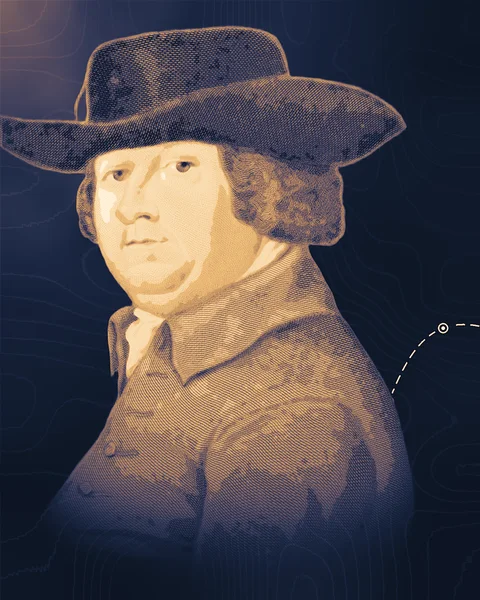
Robert Bakewell
1725–1795
He bred sheep and cattle for meat by planned matings, and made the method widely known.
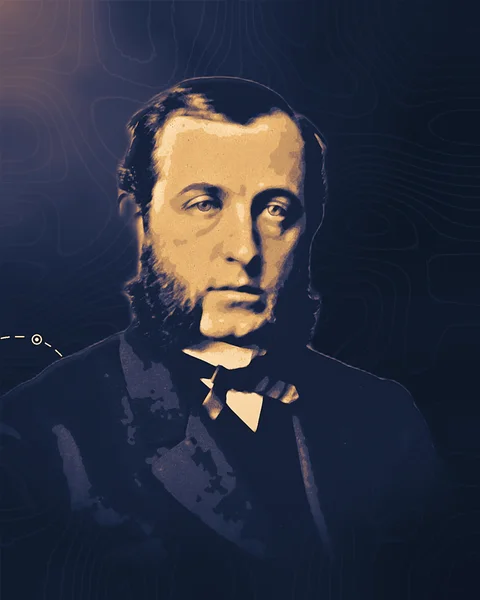
Joseph Glidden
1813–1906
He patented the barbed wire that won the market, with its barbs locked between two twisted strands, and cheap wire fences closed the open range.
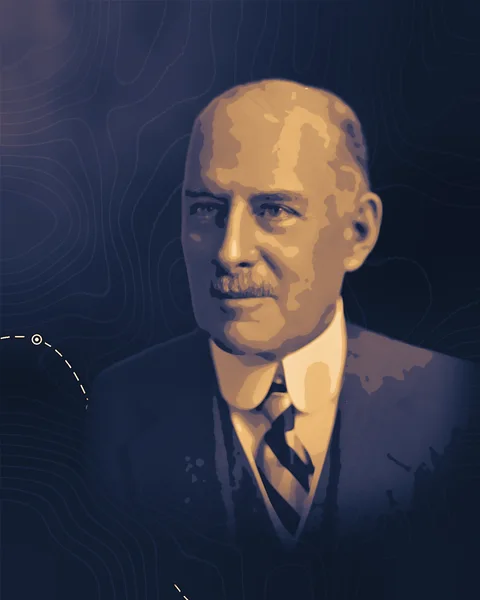
Edward T. Taylor
1858–1941
A Colorado congressman who had fought for handing federal land to the states, he carried the 1934 law that closed the open public range and set up the grazing districts, permits and fees under which western ranchers still graze it.
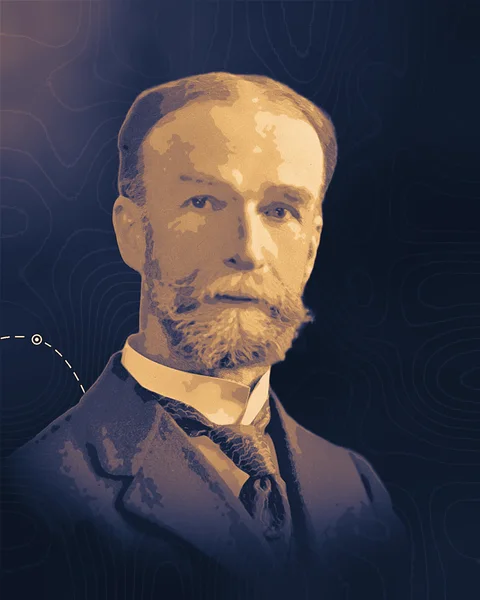
Theobald Smith
1859–1934
With his colleagues at the US Bureau of Animal Industry he showed that a tick carries Texas cattle fever, the first disease shown to be passed by an arthropod, so herds could be freed of it by dipping out the tick.
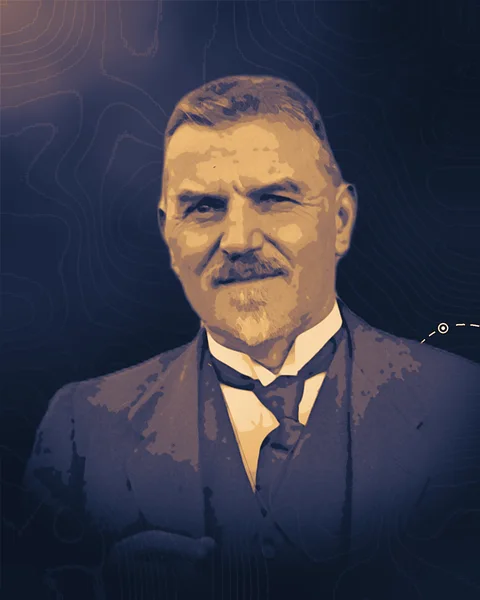
Arnold Theiler
1867–1936
A Swiss veterinarian in South Africa, he made the vaccine that helped drive out rinderpest, showed that a tick carries East Coast fever, and built the Onderstepoort laboratory that made vaccines for the region's herds.
Open in ranching and livestock
3 of 12 open deliverables
Open · Breeding
Score breech traits from photos
A phone app, or a camera over the race (the single-file lane sheep walk through), that scores breech wrinkle and dag on the 1-to-5 scales of Australia's Visual Sheep Scores, plus a public set of scored photos. Breech wrinkle is the folded skin around a Merino's tail and down its hind legs; dag is dung stuck to the wool there. Both make breech flystrike (blowfly maggots in the skin) more likely, and AWI says a sheep with dag score 4 can be up to seven times more likely to be struck than a dag score 1 sheep in the same flock. Ram breeders score these traits by eye and send the scores to Sheep Genetics, Australia's sheep evaluation, to breed sheep that need no mulesing (see Animal health); only scores on sheep that have not been mulesed are accepted.
Built with what exists
a smartphone, or a fixed camera over the race triggered by each sheep's electronic ear tag, as in AWI's pilot; Ultralytics YOLO to find the breech in each photo; an image classifier from the open timm library, or a small vision model from Liquid AI's LFM3 family fine-tuned on one graphics chip (see the Note "One GPU to fine-tune"); Label Studio for scoring photos; Zenodo or Hugging Face Datasets to publish the set.
Open · Grazing and feed
Permitted grazing against forage grown
An open table and map that sets, for each BLM grazing allotment, the grazing the BLM authorizes (in AUMs) beside the forage the land grew each year, as estimated by the Rangeland Analysis Platform, from 1991 to 2025. Publish the conversion from forage to AUMs and every assumption, such as the share of forage animals may take, so others can change them and rerun the table. Work at allotment level and leave out ranchers' names.
Built with what exists
the BLM's public Rangeland Administration System reports (Allotment Master and Authorization Use by Allotment), which give each allotment's authorized forage use; Rangeland Analysis Platform production data through Google Earth Engine or its {rapr} R package; the open code and cleaned allotment boundaries from the 2022 trends study (Andrew Kleinhesselink's BLM_rangelands repository on GitHub), which extract production by allotment but do not compare it with grazing; Python or R for the joins.
Open · Animal health
Screen screwworm larvae by photo
A phone app that looks at a photo of a maggot taken from a wound, through a clip-on macro lens, and says whether it could be New World screwworm (Cochliomyia hominivorax, a fly whose maggots eat living flesh) or is clearly another kind of fly larva, so owners and vets know which samples to rush to a laboratory. It is a sorting aid only: every suspected case is still reported and sent for official identification.
Built with what exists
a phone with a clip-on macro lens; a microscope camera for reference photos; larvae preserved in 70% ethanol, as CDC's bench aid directs, from a university insect collection or state veterinary diagnostic laboratory, including confirmed screwworm and the larvae of other flies found in wounds; Label Studio; an image classifier from the open timm library, or a small vision model fine-tuned on one graphics chip (see the Note "One GPU to fine-tune").
Where it sits
Broader
In outline