Industries / Figureheads
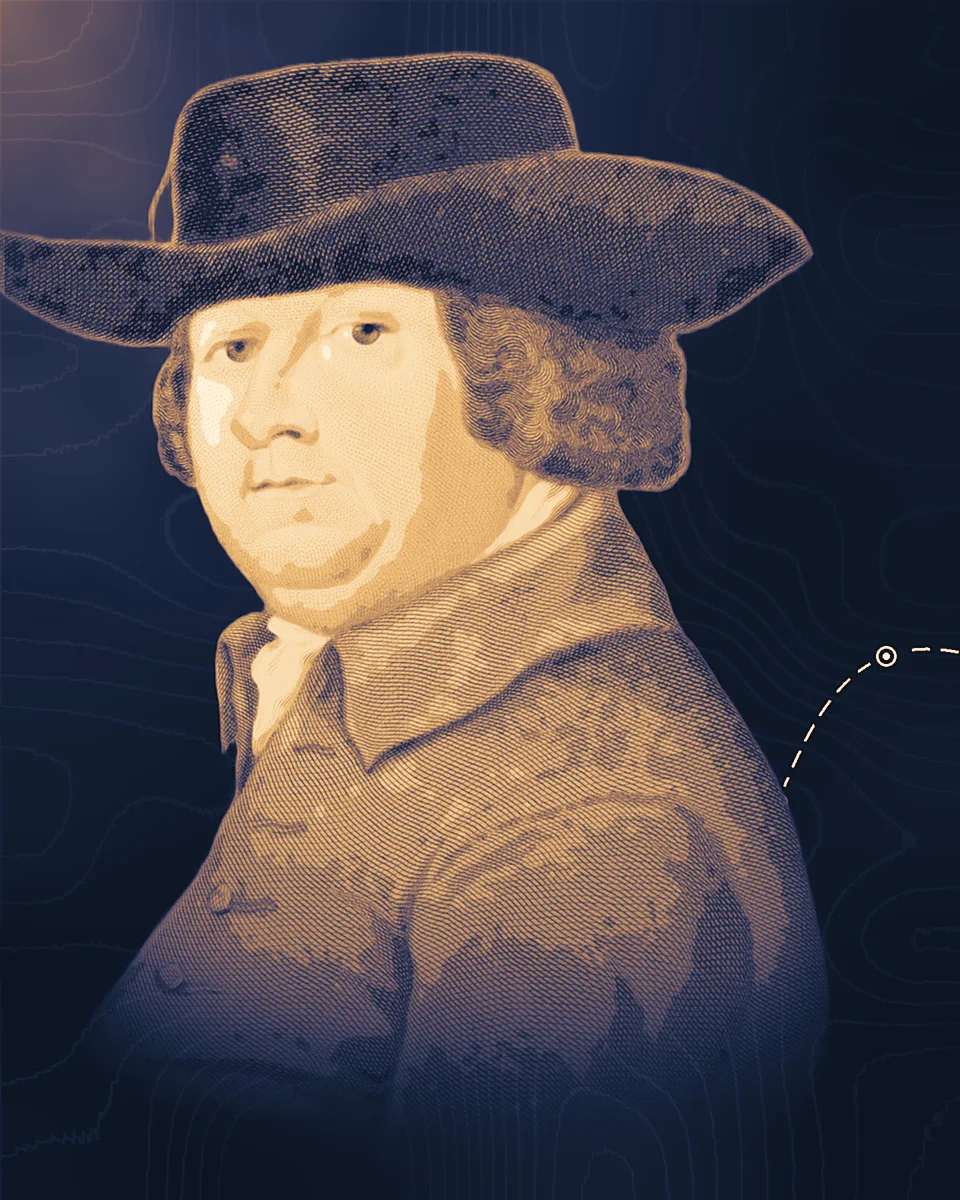
Robert Bakewell
He bred sheep and cattle for meat by planned matings, and made the method widely known.
1725–1795
What they changed
1760s
Breeding for the butcher
At Dishley in Leicestershire, Bakewell chose which animals mated and bred close relatives together, called breeding "in-and-in", to fix a meaty frame and early fattening in sheep and cattle. He did not invent inbreeding, but the historian David Wykes calls him "largely responsible for the more general acceptance of the principle".
1760s
Rams hired, not sold
He let his rams out for a season at a time instead of selling them, so his stock spread through other flocks while he kept the best sires. His first ram went for 16 shillings; in 1789 he took 3,000 guineas for the season.
1789
A society for the breed
Bakewell and his fellow breeders formed the Dishley Society for those who let New Leicester rams. The BBC says it was set up to keep the breed pure, and Iowa State University calls it the "forerunner of breed associations". Historians have also seen it as a way to hold prices up.
Life
Bakewell was born at Dishley, near Loughborough, on 23 May 1725, into a family of tenant farmers who had held Dishley Grange since 1709. The farm was about 450 acres and already well run. He toured other farming districts as a young man and was managing Dishley before his father died in 1773.
He bred for the butcher. Sheep had been kept mainly for wool and cattle for work, and he wanted animals that put on flesh young. His New Leicester sheep were ready for slaughter at about 27 months, against 39 months for the unimproved Lincoln. Visitors came from across Britain, and from 1764 he took pupils, among them George Culley of Northumberland.
He did not work alone, and he was not the first. Wykes shows that Bakewell began with stock other breeders had already improved, and that inbreeding and the hiring of rams were practiced in Lincolnshire before he took them up. His closest associates were cousins and fellow Presbyterians, chief among them Thomas Paget of Ibstock. They hired his rams, bred stock for him to work with and carried the sheep into their own districts, and Wykes writes that their part "should also be acknowledged".
The record has a hard side. Bakewell kept his methods secret and showed animals one at a time so that visitors could not compare them. He was declared bankrupt in June 1776, and creditors were still complaining seven years later. His sheep gave coarse meat and less wool, and his Longhorn cattle lost milk and fertility. The Shorthorn displaced his Longhorns, and the New Leicester no longer survives as a pure breed, though the Border Leicester descends from it.
He died at Dishley on 1 October 1795. In 1859 Charles Darwin used him as evidence of what selection can do, writing that Bakewell and others "did greatly modify, even during their own lifetimes, the forms and qualities of their cattle". The BBC's history of him says his methods "have become accepted practice world-wide".
Read more
3 accounts
Robert Bakewell (1725–1795) of Dishley: farmer and livestock improver, David L. Wykes, Agricultural History Review, 2004.
The fullest modern study, from local records and letters, and frank about what his breeds lost.
bahs.org.uk
The Farmer's Tour through the East of England, volume 1, Arthur Young, 1771.
A visitor's account of Dishley, written while Bakewell was at work.
archive.org
On the Origin of Species, Charles Darwin, 1859.
The first chapter draws on Bakewell and the breeders who followed him.
darwin-online.org.uk