Industries / Figureheads
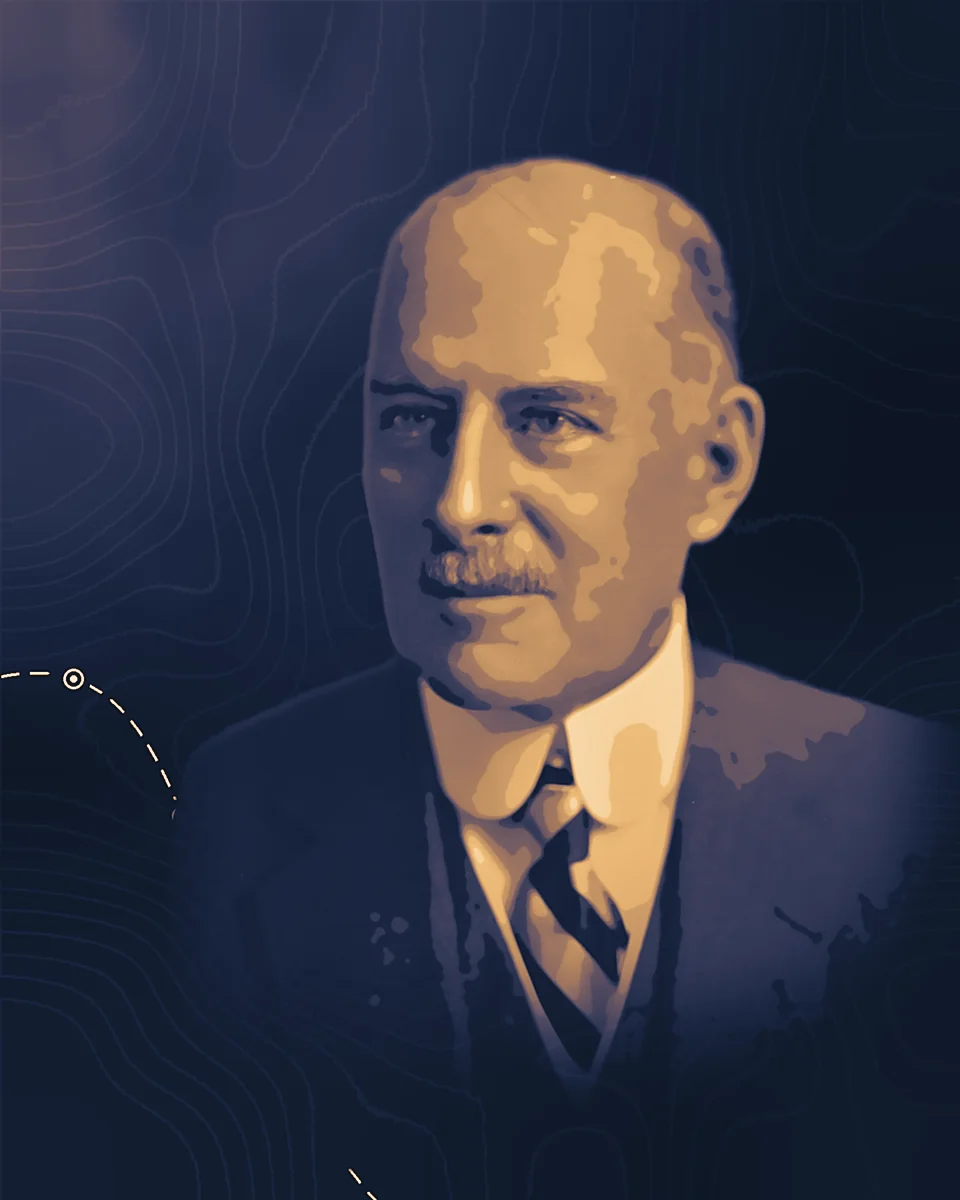
Edward T. Taylor
A Colorado congressman who had fought for handing federal land to the states, he carried the 1934 law that closed the open public range and set up the grazing districts, permits and fees under which western ranchers still graze it.
1858–1941
What they changed
1934
Grazing districts on public land
Western public rangelands had been grazed free and without limit, and were often overgrazed. At the request of western ranchers, Congress passed the Taylor Grazing Act, named after him, which President Franklin Roosevelt signed on 28 June 1934. It set up grazing districts in which the government divides and regulates grazing. WyoHistory calls it the first law to organize grazing management on the public domain.
1934
Grazing rights and fees
The act replaced first-come custom with federal management and a system of grazing rights and fees. Local advisory boards of stockmen had a say in each district.
1934
The end of homesteading
By giving the Secretary of the Interior power to classify public land by its best use, the act effectively ended homesteading: people could no longer claim public land to farm. The historian Joseph Taylor writes that it ended homesteading and created a new grazing agency in the middle of the worst dust storms to strike the Great Plains in living memory.
1946
Grazing passes to the BLM
The Grazing Service the act created was merged with the General Land Office in 1946 to form the Bureau of Land Management, which still issues the grazing permits and leases on its rangelands.
Life
Edward Thomas Taylor was born on a farm near Metamora, Woodford County, Illinois, on 19 June 1858. He went to school in Illinois and Kansas, finished high school at Leavenworth in 1881, and moved to Leadville, Colorado, where he was principal of the high school for two years. He took a law degree at the University of Michigan in 1884 and practised in Leadville, then from 1887 in Glenwood Springs, serving as district attorney and city and county attorney.
He sat in the Colorado state senate from 1896 to 1908. Elected to Congress as a Democrat in 1908, he served from March 1909 until his death, seventeen terms in all, for a district that came to cover most of Colorado's Western Slope, home to miners and stock growers. He chaired the House committee on irrigation of arid lands and, from 1937, the Appropriations Committee.
The grazing act was a change of mind. Through the 1910s, the historian Joseph Taylor writes, he lobbied for western reclamation projects and for handing federal lands over to the states. Drought and falling prices for cattle and crops in the 1920s turned him round, and in the early 1930s he took up a bill that had failed before and carried it through both houses.
The law's effects are argued over. WyoHistory's account by Russel Tanner quotes the Bureau of Land Management historian Marion Clawson that much of the public land had already suffered serious erosion, "largely (but not wholly)" from uncontrolled grazing, while some stockmen blamed drought, and the historian James Malin thought the government exaggerated the overgrazing to win support for the law. Clawson notes that large stock operators benefited from the act, and the local advisory boards were heavily influenced, if not controlled outright, by the owners of big cattle and sheep outfits.
The Bureau of Land Management says livestock management improved at first under the act, which slowed the damage to public rangelands. From the 1960s, new laws on the environment, endangered species and land policy asked more of the same land, and the bureau rewrote the terms of grazing permits to protect streams, wildlife and plants. Taylor died in Denver on 3 September 1941 and is buried at Glenwood Springs.
Read more
4 accounts
Leasing the Public Range: The Taylor Grazing Act and the BLM, Russel L. Tanner, WyoHistory.org, Wyoming State Historical Society. How the act came about in one western state, who gained and how the boards worked.
wyohistory.org
Saving the Range: Edward Thomas Taylor and the Taylor Grazing Act, Joseph Taylor, Simon Fraser University. The outline of a biography in progress, on why a states' rights congressman closed the public range.
sfu.ca
TAYLOR, Edward Thomas, Biographical Directory of the United States Congress, US House of Representatives History, Art & Archives. His offices and dates.
history.house.gov
History of Livestock Grazing in the BLM, Bureau of Land Management. The agency's short account of grazing under the act and after.
blm.gov