Industries / Industrial equipment and services
IoT and industrial automation
Industrial automation is the trade that makes, installs and programs the sensors, controllers, networks and control-room software that measure and run machines and plants, and the industrial internet of things (IoT) is its newer practice of connecting those devices to computers beyond the plant.
1968
General Motors' Hydra-Matic division asked for a "Standard Machine Controller" to replace the panels of electrical relays that sequenced its machines, in a request with only four pages of specifications; DEC and Modicon delivered the first programmable logic controllers (PLCs) to GM in 1969.
38
Milestones achieved across 7 domains.
12
To watch for: announced, not yet confirmed outside.
14
Open deliverables. Nobody has shipped them.
In one minute
Where it started
Before computers, each control loop in a plant had its own thermostat or pressure controller, and operators watched walls of panel instruments. In 1959 a computer at Texaco's Port Arthur refinery adjusted a process by itself, and in 1968 General Motors asked for a programmable controller to replace relay panels, which produced the PLC in 1969. Standard signals, plant networks and control rooms built around screens followed in the 1970s and 1980s.
Where it stands
Most instruments still send readings as a 4–20 mA current under a 1975 standard, and more than 40 million speak HART, a digital protocol on the same wires, by FieldComm Group's count. The trade's hardest lessons came from accidents in which instruments, screens and alarms misled operators, at Three Mile Island in 1979, Milford Haven in 1994 and Texas City in 2005, and from attacks on controllers, from Stuxnet in 2010 to default passwords on water-utility PLCs in 2023. Control is moving into software: an open control system built from several makers' parts has run an ExxonMobil plant since early 2025, and control-system makers now sell AI agents for control rooms whose results only they have reported.
What is open
Much daily work is still done by hand: checking each instrument's settings against its data sheet, writing down why each alarm exists, reviewing operator screens and moving old controller programs to new hardware. The makers' newest claims, from wireless sensors to virtual PLCs and alarm agents, lack outside tests. AI models that read documents and screenshots, AI agents that write and check code, tools that prove software correct and cheap test hardware put these jobs within reach of a small team.
Domains
AchievedWatch forOpen
Domain
Progress
Last achieved
Watch for
Open
Sensors
Sensors and transmitters measure temperature, pressure, flow, level and vibration and send each reading on to a controller, usually as an electric signal on a pair of wires.
4 · 1 · 2
Last achievedInstruments without wires2007
Watch forEthernet to the instrument
2
openControllers
Controllers are the computers that read the sensors and decide, many times a second, what motors, valves and machines do.
5 · 2 · 2
Last achievedAn open control system runs2025
Watch forVirtual PLCs on car lines
2
openNetworks
Industrial networks carry readings and commands between sensors, controllers and computers, on timetables the machines can rely on.
7 · 2 · 2
Last achievedEthernet reaches the field2022
Watch forA network on a timetable
2
openControl rooms
A control room is where operators watch and run a plant through screens, and its design decides what they can see and how fast they can act.
6 · 2 · 2
Last achievedAI runs a distillation column2023
Watch forAgents in the control room
2
openAlarms
Alarm management decides what sounds an alarm, how urgent each alarm is and what the operator should do about it, so that warnings stay few enough to act on.
4 · 1 · 2
Last achievedThe same rules worldwide2014
Watch forAn agent for alarm floods
2
openPredicting failures
Predicting failures means watching machines for early signs of wear, such as a change in vibration, so that repairs can be planned before a breakdown.
5 · 2 · 2
Last achievedA cloud vendor steps back2024
Watch forAgents that do maintenance
2
openSecurity
Control-system security keeps attackers from reading, changing or stopping the controllers and networks that run a plant.
7 · 2 · 2
Last achievedHeat cut by Modbus2024
Watch forAI-written tools against PLCs
2
open
Advances to build with
3 research notes
Gemini 4 Carbon
Cyber defenders first
Google says cyber defenders got Gemini 4 Carbon first, and its 88.2% flaw-finding score is Google's own run on a 183-task subset with guardrails off.

Muse Ember
The jobs agents repeat
Meta's Muse Ember matched Claude Haiku 5.5 on an outside firm's tests at a third of the cost per task, though both list the same prices for text in and out.
MIPS Actus
Maintenance inside the joint
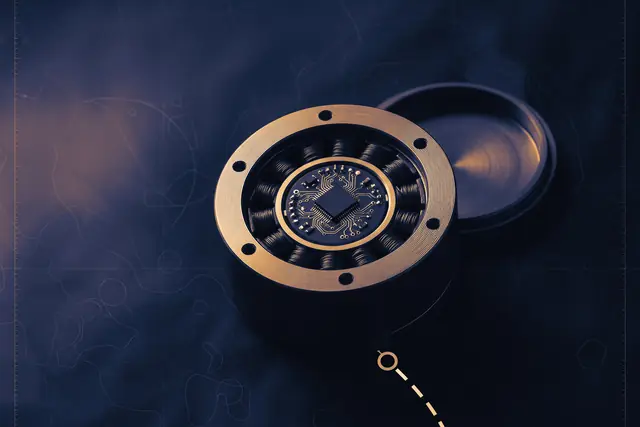
MIPS says its Actus chip can drive a robot joint's motor and also run models that predict when maintenance is due, and no independent measurement was found.
Open in iot and industrial automation
3 of 14 open deliverables
Open · Sensors
Test wireless sensors from outside
A published bench test of commercial wireless vibration sensors, the battery-powered units fixed to motors and pumps to warn of wear. Each sensor is mounted on a shaker table beside a calibrated reference accelerometer and shaken along its main axis and across it from 10 Hz to 1,000 Hz, while its current draw is logged to check the battery life its maker claims.
Built with what exists
an electrodynamic shaker and a reference accelerometer with a current calibration certificate, as found in university vibration labs; a bench meter that logs microamp currents; sensors bought from makers at list price; Python to fit the results.
Open · Controllers
Move old programs, prove them
An AI pipeline that translates a PLC program from one maker's format to another's and then proves with a model checker, a program that explores every possible sequence of inputs, that the two versions give the same outputs, or else returns the input sequence where they differ.
Built with what exists
PLCverif, CERN's open-source verifier for PLC programs, which reads Siemens STEP 7 code; makers' export formats such as Rockwell's L5X files; OpenPLC, an open-source PLC runtime, to replay recorded inputs; AI coding agents to write translations and proof harnesses (see the Note "Proven in four weeks"). AI agents that help a few people write proofs about real code are what bring this within reach of a small team.
Open · Networks
A register map per device
An open library of machine-readable register maps, the tables that say which numbered location in a device holds which reading, in what units and at what scale, written by an AI agent from makers' PDF manuals and each checked by reading the real device.
Built with what exists
the OpenModbusSpecs format (MIT licence); pymodbus, an open-source Python Modbus library, for live reads; AI models that extract tables from long manuals (see the Note "The jobs agents repeat"); low-cost Modbus devices such as energy meters and temperature controllers.