Industries / Industrial equipment and services / Industrial machinery
Generators
The generator industry makes machines in which an engine or a turbine spins an alternator to make electricity, either as a building's backup when the grid fails or as the main supply for a site, a town or a power plant.
1882
Thomas Edison's Pearl Street Station in New York began commercial service on 4 September 1882, with six engine-driven "Jumbo" dynamos of about 100 kW each, and IEEE calls it "the forerunner of all central electric generating stations.".
25
Milestones achieved across 5 domains.
9
To watch for: announced, not yet confirmed outside.
10
Open deliverables. Nobody has shipped them.
In one minute
Where it started
In 1882 Edison's Pearl Street Station coupled steam engines directly to dynamos to light about 400 lamps for some 85 customers on its first day, by IEEE's account. Charles Parsons coupled a steam turbine to a generator in 1884, Rudolf Diesel's engine passed its test in 1897, and Brown Boveri put the first commercial gas turbine generator into service at Neuchâtel in 1939, by ASME's account. The Science Museum calls Parsons's machine the forerunner of the turbo-generators that provide most of the world's electricity today.
Where it stands
Data centres for AI have made generators a growth business. Caterpillar told investors that its power generation sales passed 10 billion US dollars in 2025, up more than 30% on 2024, and that it plans to double its large engine capacity and more than double its industrial gas turbine capacity by 2030. Some data centres now order engines and turbines as their main supply, not only as backup. Regulators are catching up: Virginia, home of the largest US cluster of data centres, began in 2026 to require exhaust cleanup on new data-centre backup diesels.
What is open
Much of what the industry knows about how its machines behave sits in makers' spec sheets, owners' logs and closed failure databases. No one has built open tables of genset fuel burn or load response, an open record of how emergency diesels fail, labelled fault recordings from small generators, or a public register of the thousands of permitted standby engines. Cheap sensors, open software for reading controllers and AI models that read long documents put each of these within reach of a small team.
Domains
AchievedWatch forOpen
Domain
Progress
Last achieved
Watch for
Open
Engines and turbines
This is the work of building the engines and gas turbines that spin the generator in a generator set (an engine and alternator on one frame, or genset) or a turbine-generator package.
4 · 2 · 2
Last achievedJet engine turned generator driver1992
Watch forEngine plants for data centres
2
openAlternators
This work builds the electrical half of a generator: the spinning rotor, the fixed stator with its copper windings, the cooling that carries heat away, and the exciter that feeds current to the rotor's magnet coils.
5 · 1 · 2
Last achievedCracking retaining rings1979
Watch forGenerators for data-centre turbines
2
openControls and switching
This work covers the governor, voltage regulator, genset controller, paralleling gear and automatic transfer switch that start a generator, hold its speed and voltage, and connect it to the load when mains power fails.
5 · 2 · 2
Last achievedGenerator gateways get security advisories2024
Watch forGrid calls on backup generators
2
openFuel and emissions
This work covers what generators burn, such as diesel, natural gas, renewable diesel and hydrogen, how the fuel reaches the engine, and how makers and regulators limit what comes out of the exhaust.
6 · 2 · 2
Last achievedVirginia requires cleanup on standby2026
Watch forHydrogen engine for data-centre backup
2
openTesting and service
This work is the routine starting, loading, inspecting and repairing of generator sets and turbine-generators, so that they start and carry load when the normal supply fails.
5 · 2 · 2
Last achievedRobots inspect without pulling rotors2016
Watch forBaffle-crossing generator inspection robot
2
open
Figureheads
3 people
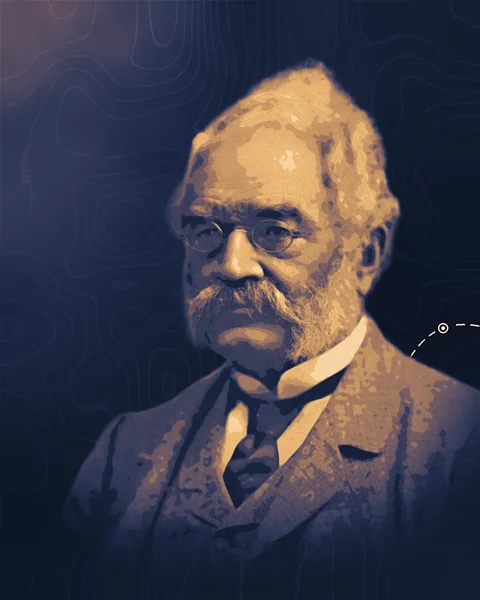
Werner von Siemens
1816–1892
He showed that a generator can raise its own magnetic field from the current it makes, which freed electric machines from weak permanent magnets and from batteries.
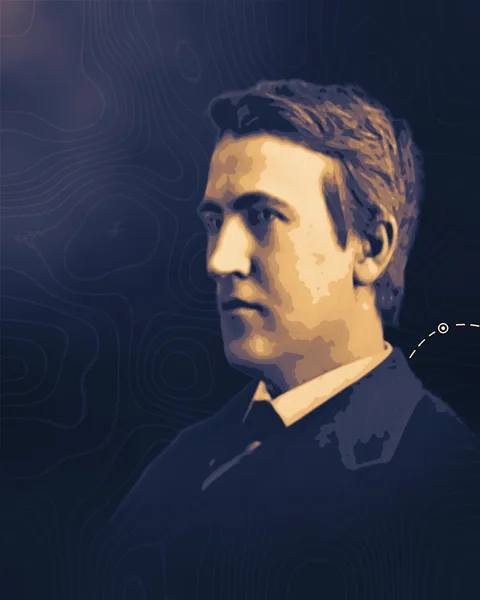
Thomas Edison
1847–1931
He built the first permanent central power station, which sold electric light to a whole district from one plant, and the lamps, dynamos and underground wiring to go with it.
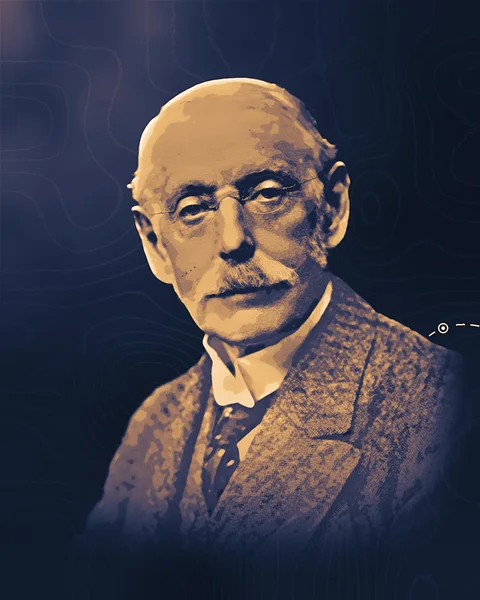
Charles Parsons
1854–1931
He built the steam turbine that drives a generator directly, the kind of machine that still makes most of the world's electricity.
Open in generators
3 of 10 open deliverables
Open · Engines and turbines
Open genset block-load table
A public, machine-readable table of how gensets respond to a block load, a large load switched on at once. The ISO 8528-5 standard measures this as the dip in frequency and voltage and the time to recover. Gather every value makers have published in spec sheets, white papers and test reports, mark each row as measured or claimed, and note whether it used the standard's step sizes.
Built with what exists
pdfplumber or pdftotext to read spec-sheet PDFs; Python with pandas; a CSV schema on GitHub; a DOI from Zenodo; an AI document reader to find the figures in long PDFs, every value checked by hand (the Note "Seven more flagged" covers an AI reviewer of long documents).
Open · Alternators
Small alternator fault heat maps
An open, labelled set of thermal images and electrical readings from a small brushless alternator of a few kVA on a test bench, covering faults put in on purpose: a blocked air inlet, an unbalanced load, one open rotating diode and an overloaded exciter.
Built with what exists
A small portable or bench generator set; a FLIR C5 or MLX90640 thermal camera; plug-in resistive loads; a Raspberry Pi or Arduino logger with a power meter; Python with OpenCV; Zenodo for release.
Open · Controls and switching
Open security bench for controllers
A test bench anyone can rerun. One part is a software stand-in for a genset controller that answers on Modbus, a simple register protocol used by monitoring systems, and J1939, the CAN bus protocol engines use to report speed, oil pressure and faults. The other is a set of scripted checks, such as whether an unauthenticated client can write the remote-start register or download the settings file. The same checks run against one cheap real controller on a 12 V DC bench supply, with no engine or mains connected.
Built with what exists
Python with pymodbus and python-can; Linux virtual CAN and can-utils; Conpot as a base; a used entry-level controller such as a SmartGen HGM unit; a 12 V bench supply; a USB-CAN adapter.
Where it sits
Broader
Industrial machinery