Industries / Transport and vehicles / Warehousing and distribution
Cold-chain logistics
Cold-chain logistics keeps food and medicine at a set temperature from the place they are made or harvested to the place they are used, through refrigerated stores, vehicles, containers and insulated packaging, with records to show that the temperature held.
1806
In February 1806 Frederic Tudor of Boston went to sea with his first cargo of ice, in his own brig bound for St. Pierre, Martinique, the start of a trade in natural ice that later kept ice houses in ports from Havana to Calcutta.
41
Milestones achieved across 6 domains.
13
To watch for: announced, not yet confirmed outside.
12
Open deliverables. Nobody has shipped them.
In one minute
Where it started
In February 1806 Frederic Tudor of Boston went to sea with a cargo of ice for Martinique, and by 1835 he was shipping ice to Calcutta. Machines took over from natural ice in the 1870s: by Lloyd's Register Foundation's account the steamer Paraguay delivered 5,500 frozen carcasses from Buenos Aires to Le Havre in 1878, and the sailing ship Dunedin reached London from New Zealand in 1882 with frozen mutton and lamb after 98 days at sea. A refrigerator car for railways was patented in 1867, London's first cold store opened in 1882, a patent on a self-contained cooling unit for trucks was filed in 1939, and from 1976 the World Health Organization and Ghana worked out a cold chain for vaccines that other countries copied.
Where it stands
The Global Cold Chain Alliance counted 719 million cubic meters of refrigerated warehouse space in 51 countries in 2020, and a 2026 review from Wageningen University, using figures from the shipping analyst Drewry for 2019, put the fleet of refrigerated containers at about 1.6 million, carrying 80% of the refrigerated cargo that goes by sea. Coverage is uneven: a 2022 report by the UN Environment Programme and the Food and Agriculture Organization says that in 2017 less than half of the food that needed refrigeration got it, and that 526 million tons, 12% of world production, was lost for lack of it. On the medical side Gavi, the vaccine alliance, says it has helped buy more than 45,000 solar-powered vaccine refrigerators and freezers for more than 50 countries since 2017.
What is open
Most open jobs are public measurements and open data that the trade keeps private or has never pooled: the temperatures a parcel meets in the mail, bench tests of paper box liners and of cheap loggers, a map of cold stores, their energy use drawn from public city files, and a case file of lost loads. Others put new AI tools to a counted test: a robot arm picking in a freezer, a model checking a loaded trailer from photos, software judging a logger file as a quality reviewer would, and a model reading every US drug label for the time it allows out of the refrigerator. Low-cost loggers, open robot software and AI models that read tables, labels and images bring these within reach of a small team.
Domains
AchievedWatch forOpen
Domain
Progress
Last achieved
Watch for
Open
Cold stores
A cold store is an insulated warehouse or room held at a set temperature, chilled or frozen, where food and medicine wait between the farm or factory, the port and the shop.
7 · 1 · 2
Last achievedSolar cold rooms, measured2023
Watch forRobots store frozen pallets
2
openRefrigerated trucks and containers
This is the work of building and running the insulated vehicles and boxes that carry cold goods by road, rail, sea and air, together with the cooling units fitted to them.
7 · 2 · 2
Last achievedCalifornia drops a mandate2025
Watch forSolar and battery trailer units
2
openTemperature tracking
Temperature tracking is measuring how warm or cold goods are through storage and transport, keeping the record, and proving afterwards that they stayed in range.
7 · 3 · 2
Last achievedContainers report from sea2017
Watch forUS food tracing by lot
2
openPackaging
Packaging is the insulated boxes, coolants and liners that keep a single shipment cold when there is no refrigerated vehicle around it, as with parcels, air freight and doorstep delivery.
7 · 2 · 2
Last achievedCell therapies ride in vapor2025
Watch forFeather insulation for medicines
2
openVaccines and medicines
This work keeps vaccines, insulin, blood and other biological medicines at their labeled temperature from the factory to the patient, often in places where the power supply is unreliable.
7 · 2 · 2
Last achievedInsulin tolerates camp heat2021
Watch forA fridge-free tetanus-diphtheria shot
2
openEnergy and refrigerants
This is the work of choosing the working fluid inside cold-chain machines, called the refrigerant, and of cutting the electricity and fuel those machines use.
6 · 3 · 2
Last achievedThe cold chain's footprint counted2021
Watch forMinus 15 in the lab
2
open
Advances to build with
3 research notes
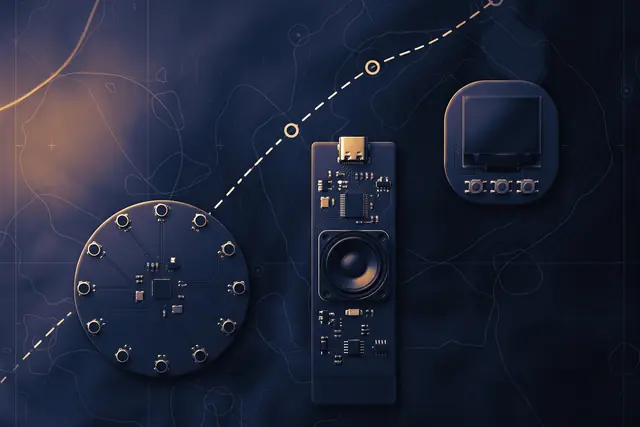
Claude Fable 5.2
Three working devices
Anthropic says its AI model Claude Fable 5.2 designed three prototype devices that worked without electrical modifications, with no outside test reported.

NVIDIA GR00T 2
Five demonstrations per task
By NVIDIA's own test, its robot model GR00T 2 averages 95% success after five demonstrations of a task, on 50 tasks picked from those it learns that way.

Muse Ember
The jobs agents repeat
Meta's Muse Ember matched Claude Haiku 5.5 on an outside firm's tests at a third of the cost per task, though both list the same prices for text in and out.
Open in cold-chain logistics
3 of 12 open deliverables
Open · Cold stores
An open cold-store register
A public, sourced list of every cold store in one European country: name, town, map coordinates, approval number, and an estimate of volume from the building's footprint and height. The national total is then set beside the trade association's figure for that country.
Built with what exists
The national lists linked from the European Commission's approved-establishments page; OpenStreetMap building outlines and its Nominatim address search; public aerial imagery; an AI model such as Claude Fable 5.2 to read each country's list format into one table (see the Note "Three working devices").
Open · Refrigerated trucks and containers
Public file of lost loads
An open, case-by-case table of refrigerated cargo losses taken from public court rulings. Each row gives the cargo, the mode of transport, the temperature ordered and the temperature used, the cause the court found (wrong set point, unit breakdown, power off, cargo loaded warm, delay), and the sum claimed, with a link to the ruling.
Built with what exists
CourtListener, the Free Law Project's searchable archive of US court opinions, and its API; published English admiralty judgments; a small, low-cost model for pulling fields out of long rulings, such as Muse Ember (see the Note "The jobs agents repeat"); a fixed-answer model such as Gemini Decision 1 to give each case one cause from a set list (see the Note "A thousand questions, one pass"); a spreadsheet and a second human coder.
Open · Temperature tracking
Score excursion calls openly
A public test for software that reads a temperature logger file and makes the call a quality reviewer makes: release the goods, hold them for a person, or reject them. The test set is built from real logger files given by clinics and pharmacies, with names removed. Each file is paired with the product's allowed range and its stated allowance for time out of range, and two qualified reviewers label it before any software sees it. The result is a score, not a release procedure, and no site changes how it handles stock.
Built with what exists
Logger exports in the makers' file formats; the Varo Foundation's open parser for Berlinger Fridge-tag files; a rule-based baseline such as the open cold-chain-excursion-engine; a language model such as Claude Fable 5.2 (see the Note "Three working devices"); a model that returns probabilities for fixed answers, such as Gemini Decision 1 (see the Note "A thousand questions, one pass"); a reviewer model that flags doubtful calls for a person (see the Note "Seven more flagged").
Where it sits
Broader