Industries / Transport and vehicles
Warehousing and distribution
Warehousing and distribution holds goods between the people who make them and the people who buy them, and fills orders from that stock, in buildings run by retailers, wholesalers, manufacturers and contract logistics firms.
1802
On 27 August 1802 the West India Docks opened in London, which the London Museum calls the city's first enclosed dock system, with a row of quayside warehouses each about 223 feet long, built to hold sugar, coffee and rum.
38
Milestones achieved across 7 domains.
13
To watch for: announced, not yet confirmed outside.
14
Open deliverables. Nobody has shipped them.
In one minute
Where it started
On 27 August 1802 the West India Docks opened in London with a row of quayside warehouses, each built to hold about 8,000 hogsheads (large barrels) of sugar, where goods were weighed, stored and guarded. In 1906 Sears, Roebuck opened a mail-order plant in Chicago that gave every order a time to ship and carried goods to it on belts and chutes. The forklift, the standard pallet and the barcode followed, and in 1962 a crane that runs along a rack aisle began storing loads in high racks in Germany.
Where it stands
Interact Analysis, a market research firm, counted about 163,000 warehouses larger than 50,000 square feet worldwide in 2022, with 45% of them in China and the United States. Amazon says it had deployed its millionth robot by June 2025, yet DHL Supply Chain, one of the largest contract warehouse operators, had 10 of its truck-unloading robots at work in mid-2025. Retailers expected 15.8% of their 2025 sales to come back as returns, by a survey from the National Retail Federation and Happy Returns.
What is open
Most open jobs involve soft or uneven goods, or loads that must stay put: picking clothes in plastic bags, folding returned garments, and building mixed pallets and trailer walls that do not shift. Others are tests nobody has published, such as how often counting drones miss an error, how well a phone measures a carton, and how much empty space a parcel holds. Low-cost robot arms, open robot models and AI models that read images bring these jobs within reach of a small team.
Domains
AchievedWatch forOpen
Domain
Progress
Last achieved
Watch for
Open
Receiving
Receiving is taking goods in at the dock: unloading trucks and containers, checking what arrived against what was ordered, labeling it, and passing it on to storage.
4 · 2 · 2
Last achievedRobots unload trailers2023
Watch forUPS buys Pickle robots
2
openStorage
Storage is holding goods between arrival and order, in racks, automated systems and buildings designed for the purpose, with warehouse management software recording where everything is.
5 · 2 · 2
Last achievedWalmart automates its network2022
Watch forSymbotic's denser storage structure
2
openPicking
Picking is taking the items for each order off the shelves, whether a person walks the aisles with a list, a robot brings the shelf to a person at a station, or a robot arm lifts each item.
7 · 3 · 2
Last achievedA humanoid robot's paid job2024
Watch forAmazon's arm with touch
2
openPacking
Packing is putting the picked items into a box or mailer, filling the empty space, and sealing and labeling the parcel for shipment.
6 · 1 · 2
Last achievedPaper replaces air pillows2024
Watch forRobots pack multi-item orders
2
openSorting and shipping
Sorting and shipping is sending each packed order or case to the right outbound door, building and wrapping pallets, and loading the trailers that leave the dock.
4 · 2 · 2
Last achievedRobot arms sort small parcels2021
Watch forRobot trailer loading at FedEx
2
openCounting stock
Counting stock is how a warehouse knows what it holds and where: the computer record for every location, and the counts that check that record against the shelf.
7 · 1 · 2
Last achievedDrones make counts monthly2026
Watch forLonger-range rack scanning robot
2
openReturns
Returns work takes back what customers send back, inspects and grades each item, and decides whether to restock, repair, resell or dispose of it.
5 · 2 · 2
Last achievedRobots sort fashion returns2026
Watch forRobots inspect returns at Otto
2
open
Narrower industries
Advances to build with
3 research notes
Claude Fable 5.2
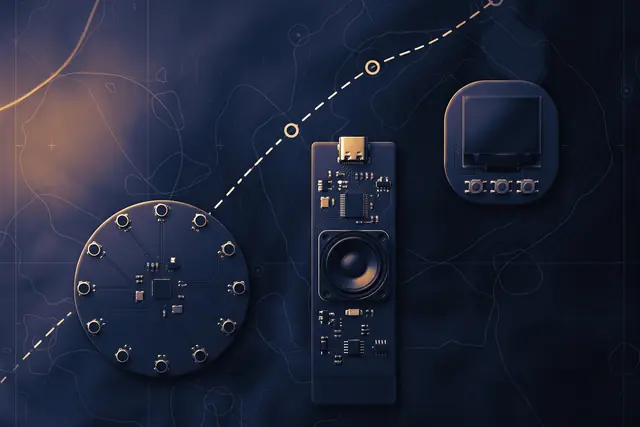
Three working devices
Anthropic says its AI model Claude Fable 5.2 designed three prototype devices that worked without electrical modifications, with no outside test reported.

NVIDIA GR00T 2
Five demonstrations per task
By NVIDIA's own test, its robot model GR00T 2 averages 95% success after five demonstrations of a task, on 50 tasks picked from those it learns that way.
Ring Rover Cam
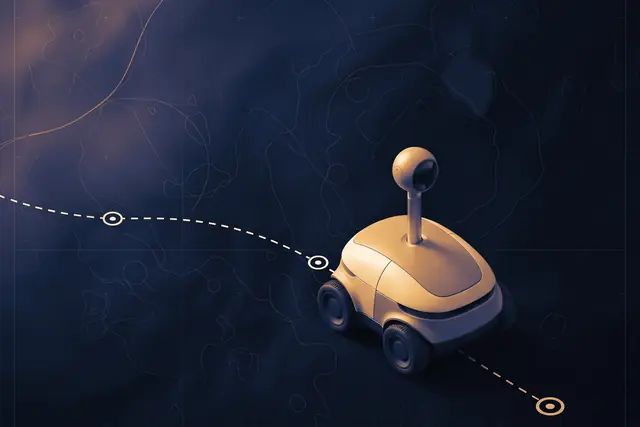
A camera on patrol
Amazon says Ring's $999.99 Rover Cam, a camera on wheels, maps an indoor space and drives itself to saved spots, and launch coverage reports no outside test.
Open in warehousing and distribution
3 of 14 open deliverables
Open · Receiving
Check a pallet from photos
A public test of whether a vision-language model, an AI model that reads images and text together, can check a received pallet against its packing list from phone photos alone. The model counts the cases of each product, reads carton labels, and flags missing cases, extra cases, wrong products and visible damage. Pallets are stacked by hand on the floor; no forklift or powered pallet truck is used.
Built with what exists
A phone camera; a vision-language model such as Claude Fable 5.2 (see the Note "Three working devices"); a reviewer model that flags doubtful readings for a person to check (see the Note "Seven more flagged"); real or empty cartons with printed barcode labels; a spreadsheet of packing lists and a hidden answer key.
Open · Storage
Rack damage graded by measurement
An open dataset of photographed pallet-rack uprights (the vertical posts of a rack), each with its bend measured by hand and graded green, amber or red by a qualified rack inspector, plus a detector that grades damage from a phone photo. Work only on unloaded uprights removed from service, laid on the floor or a bench; do not climb, load or strike racks in use.
Built with what exists
A phone camera on a simple stand for repeatable views; a SEMA-style inspection kit (straight edge and step gauge); scrapped uprights from a rack installer; a labeling tool such as Roboflow; an open object detector (Ultralytics YOLO) or a vision-language model such as Claude Fable 5.2 (see the Note "Three working devices").
Open · Picking
Hard-item picking tally
A low-cost robot arm that picks the items warehouse robots still struggle with (clothing in plastic bags, items in clear plastic, soft and floppy goods) out of a tote one at a time, with every attempt filmed and logged as a success, a double pick, a drop or damage.
Built with what exists
An SO-101 arm with Hugging Face's LeRobot software (see the Note "No download"); an open robot model such as Runway Praxis-1 (see the Note "Open robot model weights") or NVIDIA GR00T 2, which learns a task from a few demonstrations (see the Note "Five demonstrations per task"); a parallel gripper or small suction cup; a webcam.