Industries / Industrial equipment and services / Industrial machinery
Wire and cable
The wire and cable industry casts copper and aluminum into rod, draws it into wire, twists the wires together, covers them in insulation and protective jackets, tests the result and ships it on reels, as cable that carries electric power and signals.
1847
Werner von Siemens and Johann Georg Halske founded the Telegraphen-Bauanstalt von Siemens & Halske in Berlin on 1 October 1847, a workshop whose early products included gutta-percha insulation for telegraph wire, applied without a seam by a press that Siemens dates to the same year.
35
Milestones achieved across 6 domains.
13
To watch for: announced, not yet confirmed outside.
12
Open deliverables. Nobody has shipped them.
In one minute
Where it started
Wire and cable became an industry with the telegraph. In the 1840s Werner Siemens built a press that coated copper wire in gutta-percha, a rubber-like gum, without a seam, and in 1851 a cable wrapped in a rope of wires crossed the English Channel. Power cable followed: in 1890 Sebastian de Ferranti's paper-insulated cable carried 10,000 volts from Deptford into London.
Where it stands
Wire took 63% of the copper that went into first products in 2025, by the International Wrought Copper Council's figures in the World Copper Factbook 2026. Cable to carry wind and solar power has filled order books: Prysmian reported revenues of €19,650 million for 2025 and a transmission backlog of €17 billion, and Nexans an adjusted backlog of 7.7 billion at the end of 2025. Cable for direct current is now qualified at 525 kV, and ships carry up to 17,000 tonnes of it in one load.
What is open
Much of the factory floor still runs on hands and eyes. Operators thread wire through dies and join broken wires by hand, and judge wire breaks, extrusion defects and water damage in old insulation by eye. Open jobs include robots for those tasks, public answer keys for defects, breaks and reel lengths, and public tables of fire classes and DC cable qualifications that today are scattered across makers' own pages.
Domains
AchievedWatch forOpen
Domain
Progress
Last achieved
Watch for
Open
Drawing wire
Drawing wire is casting copper or aluminum into rod and pulling it through a series of ever smaller dies, hard blocks with a tapered hole, until it reaches the size wanted, with heat along the way to soften it again.
5 · 2 · 2
Last achievedMan-made diamond dies1974
Watch forDies that warn of wear
2
openStranding and twisting
Stranding twists many wires together into one flexible conductor, and twisting insulated wires into pairs and laying pairs or cores together builds up a cable.
6 · 1 · 2
Last achievedLarge conductors measured2005
Watch forFaster compacted stranding
2
openInsulating
Insulating covers each conductor in a layer that keeps the current in, today mostly by extrusion, pushing melted plastic through a die around the moving wire, and for most power cable by curing that plastic so it holds its shape when hot.
7 · 3 · 2
Last achievedPlastic cable for direct current1999
Watch forHotter-running DC cable
2
openJacketing and armour
Jacketing puts the outer layers on a cable: sheaths that keep out water and slow fire, braids and metal screens, and wire armour that protects the cable from being crushed or cut.
6 · 2 · 2
Last achievedFire classes for EU cable2017
Watch forFluoropolymer jackets under review
2
openTesting
Testing checks wire and cable as it is made and before a new design is sold: conductor resistance, insulation thickness and flaws, strength against high voltage, behaviour in fire and, for new designs, long-term ageing.
6 · 3 · 2
Last achievedYears of testing for DC2012
Watch forCable for 3,000 m depths
2
openReels and delivery
Reels and delivery is winding finished cable onto drums, getting it to the customer, by ship for long subsea cable, and getting the empty drums back.
5 · 2 · 2
Last achievedShips that carry 17,000 tonnes2025
Watch forRFID gates for 2,300 drums
2
open
Figureheads
2 people
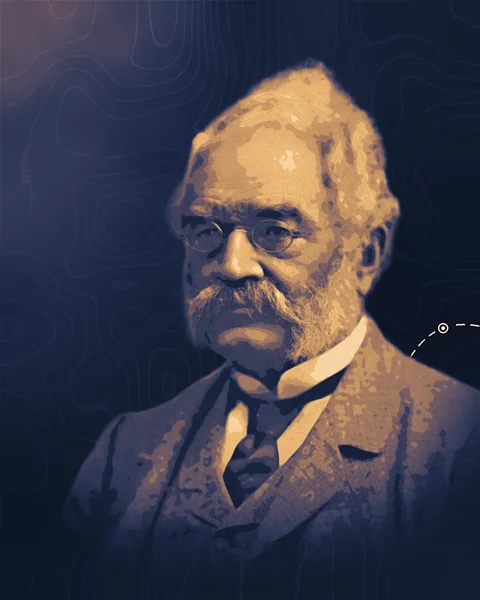
Werner von Siemens
1816–1892
He showed that a generator can raise its own magnetic field from the current it makes, which freed electric machines from weak permanent magnets and from batteries.
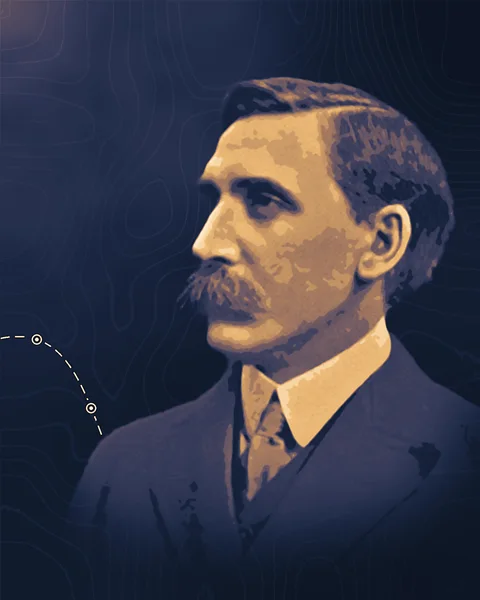
Sebastian Ziani de Ferranti
1864–1930
He built the Deptford power station on the Thames and sent its current into central London at 10,000 volts through cables of his own design.
Advances to build with
2 research notes

NVIDIA GR00T 2
Five demonstrations per task
By NVIDIA's own test, its robot model GR00T 2 averages 95% success after five demonstrations of a task, on 50 tasks picked from those it learns that way.

Muse Ember
The jobs agents repeat
Meta's Muse Ember matched Claude Haiku 5.5 on an outside firm's tests at a third of the cost per task, though both list the same prices for text in and out.
Open in wire and cable
3 of 12 open deliverables
Open · Drawing wire
Robot threads the dies
A robot that feeds the pointed end of a copper wire through a row of drawing dies and wraps it round each capstan, the driven pulley that pulls the wire through the die before it. Operators do this by hand after every break and every change of dies.
Built with what exists
A low-cost arm supported by Hugging Face's LeRobot library (Note "No download"), a wrist camera, a robot model that learns from a few demonstrations such as NVIDIA's GR00T 2 (Note "Five demonstrations per task"), and a bench rig of used dies and hand-turned capstans with no motor.
Open · Stranding and twisting
Crosstalk forecast from lay data
A model that takes the twist lengths measured on the line for each pair of a data cable and predicts the near-end crosstalk, the signal that leaks from one pair into its neighbour, that the finished reel will show at its final test.
Built with what exists
Line lay readings and final-test reports from one plant, a transmission-line simulation written in Python with scikit-rf, and a fitted correction model.
Open · Insulating
One table of DC qualifications
A public table of every qualification of an extruded DC cable system, one row each: maker, voltage, conductor temperature, land or subsea, insulation and shield compounds, test standard, laboratory and witness, date, and whether a link now runs on it, each row linked to its source.
Built with what exists
The press archives of cable makers and compound suppliers, CIGRE and Jicable conference papers, transmission operators' project pages, and a small model for pulling fields out of documents (Note "The jobs agents repeat").
Where it sits
Broader
Industrial machinery