Industries / Industrial equipment and services
Robotics
Robotics is the industry that designs, builds, sells and installs robots, machines that move under the control of a stored program, from factory arms and the motors and gears inside them to mobile robots, home robot vacuums and humanoids.
1961
A Unimate robot arm, built by Unimation to George Devol's patented design, went to work at General Motors' Ternstedt plant in Trenton, New Jersey, unloading finished castings from a die-casting press; IEEE Spectrum calls it the first successful application of an industrial robot.
42
Milestones achieved across 7 domains.
14
To watch for: announced, not yet confirmed outside.
14
Open deliverables. Nobody has shipped them.
In one minute
Where it started
George Devol filed a patent for a "programmed article transfer" machine on 10 December 1954, and he and Joseph Engelberger built it as the Unimate. In 1961 General Motors paid $18,000 for the first one, which IEEE Spectrum says cost about $65,000 to make, and Unimation did not turn a profit until 1975. Makers in Japan and Europe followed with a licensed Unimate in 1969 and arms driven by electric motors instead of oil pressure in 1973 and 1974.
Where it stands
The International Federation of Robotics (IFR), the industry's statistics body, counts 5 million industrial robots at work in 2025, with more than 600,000 installed that year, 354,000 of them in China, where Chinese makers now sell more robots than foreign ones. The IFR also counts almost 34.2 million consumer robots, mostly for household cleaning, and about 7,000 full-size humanoid robots sold in 2025; Omdia, a market research firm, counts about 13,000 humanoids shipped, because it counts by different rules.
What is open
Many open jobs are tests nobody has published on the cheap arms, servo motors and joint modules now used to train robot AI models: how precisely they return to a point, how hard they bump, how long they last and whether makers' torque figures hold. Others are records the industry lacks, such as real prices paid for robot cells, payback measured by someone other than the seller, a list of robots stranded when their makers shut down, and one humanoid count with stated rules. Low-cost arms such as the SO-101, open robot models and AI models that read documents bring these within reach of a small team.
Domains
AchievedWatch forOpen
Domain
Progress
Last achieved
Watch for
Open
Arms
Arms are the robot arms themselves: chains of motor-driven joints ending in a wrist that carries a tool or a part, designed, built and sold by robot makers.
7 · 1 · 2
Last achievedChinese makers lead at home2024
Watch forSoftBank's purchase of ABB Robotics
2
openMobile robots
Mobile robots move themselves from place to place on wheels or legs, from factory carts that follow a wire to robot vacuums in homes and four-legged robots sold for inspection rounds.
7 · 1 · 2
Last achievedRobots lose their cloud2025
Watch forRing's robot on patrol
2
openHumanoids
Humanoids are robots built roughly in human form, with two legs or a wheeled base, a torso, two arms and a head, so that they can work in places built for people.
4 · 3 · 2
Last achievedThousands sold in a year2025
Watch forOptimus on a Fremont line
2
openTeaching robots
Teaching robots is telling a robot what to do: guiding its arm through points, writing a program in a robot language, rehearsing the job in a simulator, or training an AI model on recorded demonstrations of the job.
6 · 3 · 2
Last achievedOpen models, ranked blind2025
Watch forFive demonstrations, by NVIDIA's count
2
openParts and motors
Parts and motors are what goes inside each joint and at the end of the arm: the motors, the reduction gears that trade speed for turning force, the sensors that measure angle and force, the drive electronics, and the grippers that hold the work.
6 · 3 · 2
Last achievedMagnets become a choke point2025
Watch forMaintenance models in the joint
2
openInstalling robots at a customer
Installing is the work of turning a robot bought from a maker into a working cell in a customer's plant: choosing the robot, designing the grippers, fixtures and guarding around it, programming it, and starting it up on the line, usually done by a firm called a system integrator.
5 · 2 · 2
Last achievedChina's robot density recounted2026
Watch for655,000 robots in 2026
2
openSafety standards
Safety standards are the rules, written by standards bodies and governments, for how robots must be built, guarded and used so that they do not hurt the people who work near them.
7 · 1 · 2
Last achievedThe core standard rewritten2025
Watch forA standard for self-balancing robots
2
open
Advances to build with
5 research notes
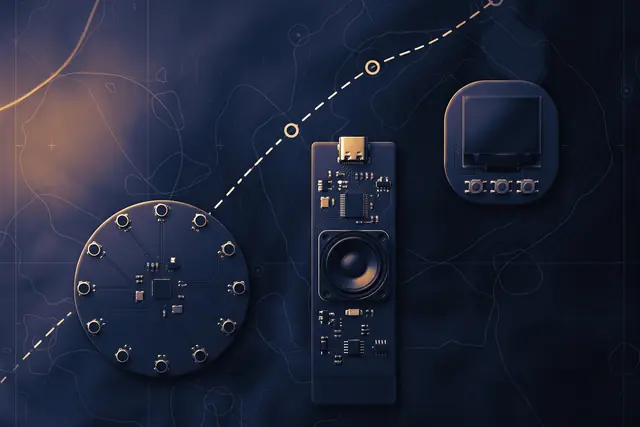
Claude Fable 5.2
Three working devices
Anthropic says its AI model Claude Fable 5.2 designed three prototype devices that worked without electrical modifications, with no outside test reported.
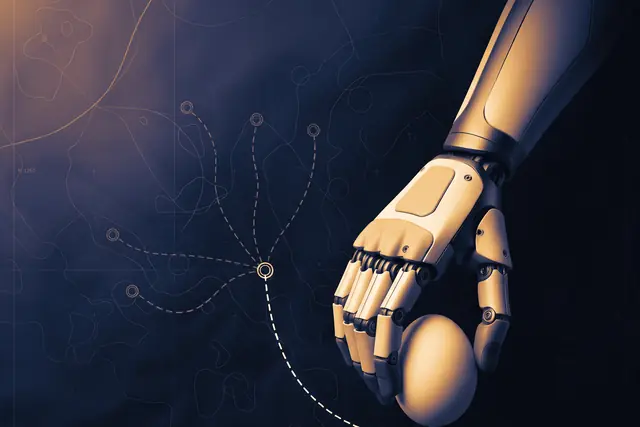
NVIDIA GR00T 2
Five demonstrations per task
By NVIDIA's own test, its robot model GR00T 2 averages 95% success after five demonstrations of a task, on 50 tasks picked from those it learns that way.
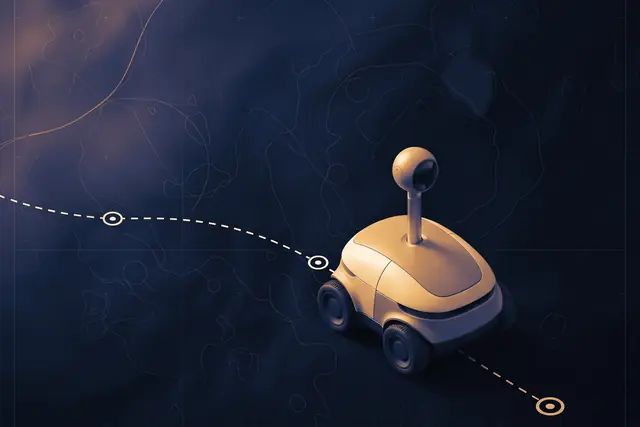
Ring Rover Cam
A camera on patrol
Amazon says Ring's $999.99 Rover Cam, a camera on wheels, maps an indoor space and drives itself to saved spots, and launch coverage reports no outside test.
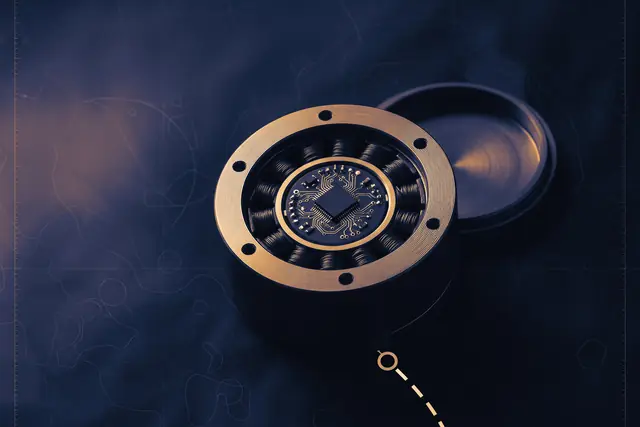
MIPS Actus
Maintenance inside the joint
MIPS says its Actus chip can drive a robot joint's motor and also run models that predict when maintenance is due, and no independent measurement was found.
Agentic robotics
Readable robot programs
A UC Berkeley lab has AI agents write readable robot programs, which scored below human-written ones in all twelve of its own test conditions on one simulator.
Open in robotics
3 of 14 open deliverables
Open · Arms
One test for cheap arms
A side-by-side, published test of repeatability, how closely an arm returns to the same taught point, for the low-cost arms now used to train robot models, run by one method on every arm. The method follows ISO 9283, the international standard for testing industrial robot performance.
Built with what exists
SO-101 arms from Hugging Face's LeRobot project and its software to command them (see the Note "No download"); two or three other arms sold for under US$5,000; dial test indicators reading to 0.01 mm on a rigid printed fixture; a webcam with printed fiducial markers as a second measure; a spreadsheet or Python script for the statistics.
Open · Mobile robots
A register of orphaned robots
A public, sourced list of home and business robots whose maker closed, sold the product line or shut down the servers the robots depend on. For each model it gives the date, what still works, what stopped working, and whether owners can run it without the maker's servers.
Built with what exists
Company notices, news archives and court filings; community projects that run robots without the maker's cloud, such as Valetudo, open-source software under the Apache 2.0 license for supported Dreame, Midea and Roborock vacuums; a spreadsheet published as a CSV file with a source link for every entry.
Open · Humanoids
One push test, many humanoids
A cheap, repeatable push rig with a force sensor, and a published method that gives several small humanoids sold today the same measured shove from the front, back and sides, with the results and force records posted side by side by robot model, plus the same pushes run in simulation on models of full-size humanoids.
Built with what exists
A pendulum of known mass and drop height, or a spring-loaded plunger, fitted with a load cell (a force sensor); a phone camera filming at high frame rate; small humanoids of a few kilograms such as the ROBOTIS OP3 (about 3.5 kg and 510 mm tall) or Stanford's open-source ToddlerBot; MuJoCo, an open-source physics simulator maintained by Google DeepMind under the Apache 2.0 license, for full-size models.