Industries / Transport and vehicles
Railcar manufacturing
Railcar manufacturing designs, builds and rebuilds the vehicles that run on rails: locomotives, freight cars, and the passenger cars of trains, metros and trams.
1823
Robert Stephenson & Co. was founded in Newcastle upon Tyne, England, to build locomotives, with workshops on Forth Street and the 19-year-old Robert Stephenson as managing partner. The trade journal Rail Engineer calls it "the world's first locomotive works", and the Science Museum Group "the first locomotive works in the world".
32
Milestones achieved across 6 domains.
7
To watch for: announced, not yet confirmed outside.
12
Open deliverables. Nobody has shipped them.
In one minute
Where it started
Richard Trevithick's engine made the first recorded steam locomotive run, in Wales in 1804, and in 1823 the Stephensons opened the first works built to make locomotives, in Newcastle. Builders then added the air brake (1869) and the self-latching coupler (1873), and replaced wooden car bodies with steel, as on New York's first subway cars in 1904. Failures taught as much as inventions did: aluminum car bodies split along their welds in the Ladbroke Grove crash of 1999, and in 2017 a Shinkansen bogie frame cracked where its plate had been ground too thin.
Where it stands
The world market for new rolling stock averaged €63.3 billion a year in 2021 to 2023, almost a third of a €201.8 billion market for rail equipment and services, by the count of UNIFE, the European rail suppliers' association. China's CRRC reported revenue of RMB 273.1 billion in 2025, RMB 123.6 billion of it from railway equipment, and Alstom took over Bombardier's train business in 2021, giving it about 75,000 staff in 70 countries by its own count. North American freight car builders delivered 31,205 cars in 2025, down from 42,486 in 2024, by the Railway Supply Institute's count.
What is open
Much of the open work is checking that is still done by eye or by hand: mapping plate thickness after grinding, straightening warped side walls, matching each interior part to its fire test, and measuring seat layouts against accessibility rules. Other jobs need open models and data that today only builders and railways hold, such as a crash model for Europe's collision cases, a vehicle-dynamics model run against the Manchester benchmarks, wheel profiles measured before and after turning, and a public list of faults found after delivery. A robot that lays copper coils into large traction motors has been prototyped but not finished.
Domains
AchievedWatch forOpen
Domain
Progress
Last achieved
Watch for
Open
Car bodies and welding
Car body work builds the shell of a railcar, its floor, sides, roof and ends, from steel, stainless steel, aluminum or composites, and joins the pieces by riveting, welding or bonding.
6 · 2 · 2
Last achievedCarbon fiber carries the load2025
Watch forRobot-welded shells in New York
2
openWheels, bogies and brakes
This is the work of making the running gear under every rail vehicle: the wheels, axles and bearings, the bogie (called a truck in North America) that holds them under the car, the couplers that join cars, and the brakes.
5 · 1 · 2
Last achievedA frame ground too thin2017
Watch forDigital couplers for European freight
2
openLocomotives and traction
This is the work of building new locomotives and the traction systems of powered trains: the engines, batteries or overhead-wire equipment that supply power, and the inverters and motors that turn it into pull at the rails.
5 · 1 · 2
Last achievedCalifornia drops its rule2025
Watch forIndia's 9,000 hp locomotives
2
openInteriors
Interior work fits out the shell for people: seats, berths, toilets, lighting, heating and air conditioning, and the panels and floors, all chosen to meet rules on fire safety and access for disabled passengers.
6 · 1 · 2
Last achievedIndia's first sleeper trainset2026
Watch forMore sleeper trainsets for India
2
openTesting and certification
Testing and certification proves, on test tracks, rigs and computer models, that a new locomotive or car is safe and does what its maker promised, and wins the regulator's permit to run it.
5 · 1 · 2
Last achievedA model holds up Acela2025
Watch forIndia's own test track
2
openOverhaul
Overhaul takes a locomotive or car apart at set intervals or in mid-life, repairs or replaces what has worn, and often rebuilds it to a newer standard.
5 · 1 · 2
Last achievedA thousand diesels modernized2025
Watch forDiesels rebuilt for hydrogen
2
open
Figureheads
2 people
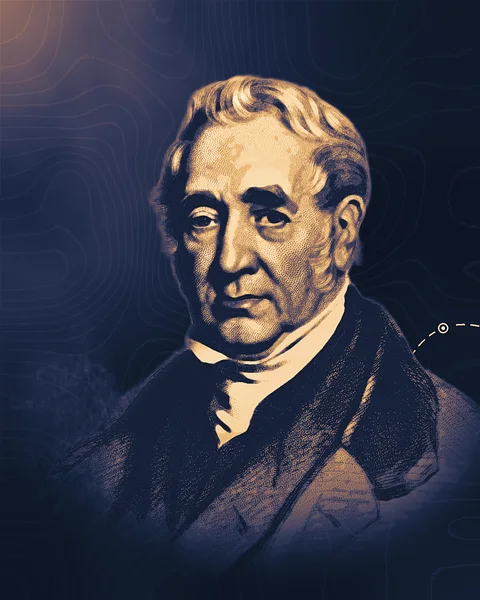
George Stephenson
1781–1848
A colliery engineman who taught himself to read, he built the Stockton and Darlington and the Liverpool and Manchester railways, and his 4 ft 8½ in gauge became the standard for railways.
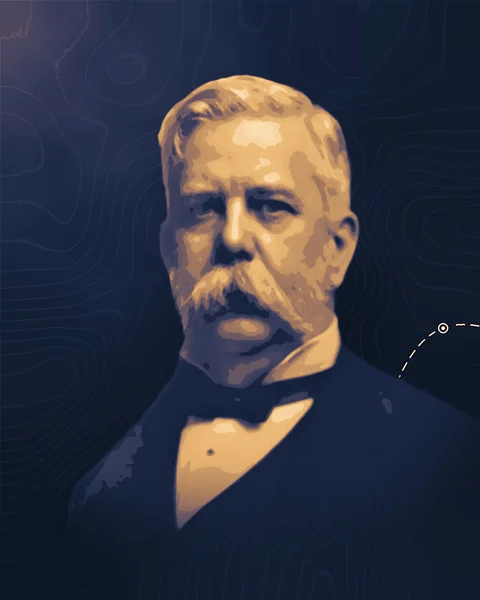
George Westinghouse
1846–1914
He put his company behind alternating current when American stations ran on direct current, and built the generators at Niagara Falls that settled the question.
Advances to build with
3 research notes

NVIDIA GR00T 2
Five demonstrations per task
By NVIDIA's own test, its robot model GR00T 2 averages 95% success after five demonstrations of a task, on 50 tasks picked from those it learns that way.

Muse Ember
The jobs agents repeat
Meta's Muse Ember matched Claude Haiku 5.5 on an outside firm's tests at a third of the cost per task, though both list the same prices for text in and out.
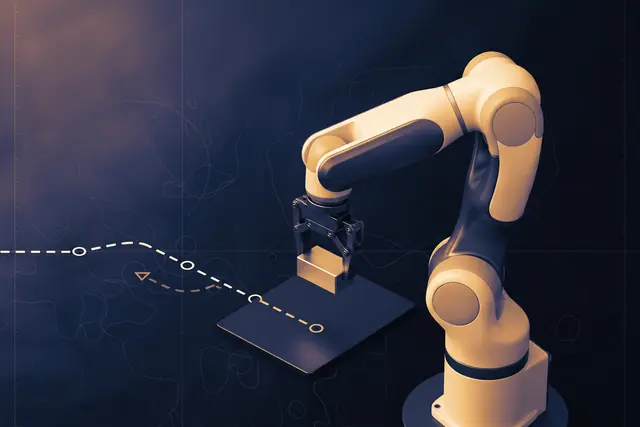
Agentic robotics
Readable robot programs
A UC Berkeley lab has AI agents write readable robot programs, which scored below human-written ones in all twelve of its own test conditions on one simulator.
Open in railcar manufacturing
3 of 12 open deliverables
Open · Car bodies and welding
Straightening data for side walls
A public set of 3D scans of thin welded steel or stainless steel body panels, each scanned before and after a skilled worker straightens it with heat, with the place and order of every heat spot recorded. Add software that reads a "before" scan and proposes heat spots, scored against what the worker did. The shop's own qualified staff do the heating; the project only scans and records.
Built with what exists
A structured-light 3D scanner or a phone with a depth sensor; Open3D or CloudCompare to compare each scan with the flat target shape; a thermal camera to log where and when each spot was heated; PyTorch to train a model that turns a map of warping into a list of heat spots.
Open · Wheels, bogies and brakes
Thickness check after grinding
A test station where a robot arm carries an ultrasonic thickness probe over welded steel box sections shaped like bogie side frames, after a fabricator has ground them to fit, and maps the plate thickness everywhere grinding was done. It flags every spot thinner than the drawing allows. Some test pieces are ground below the minimum on purpose.
Built with what exists
A collaborative robot arm such as a Universal Robots UR10e; an ultrasonic thickness gauge with a data output, such as the Evident 38DL PLUS; a laser line profiler such as a Keyence LJ-X8000 to find the ground areas; AI agents that write and test the robot's scan paths as readable programs (see the Note "Readable robot programs").
Open · Locomotives and traction
Robot inserts motor coils
A robot cell that picks up form-wound coils, the stiff, pre-shaped copper coils used in large traction motors, and lays them into the slots of a stator, the motor's outer core of stacked steel sheets. Use a short section of stator with the real slot shape and dummy coils, with no power applied. A camera guides each coil into its slot.
Built with what exists
Two collaborative arms such as Universal Robots UR5e; a depth camera such as an Intel RealSense D435; 3D-printed grippers, as the FAU team used; a robot model that learns a task from a few demonstrations, such as NVIDIA GR00T 2 (see the Note "Five demonstrations per task") or Runway Praxis-1 (see the Note "Open robot model weights").