Industries / Energy, water and waste
Oil and gas extraction
Oil and gas extraction is the work of finding oil and natural gas underground, drilling wells to reach them, and bringing them to the surface ready to be shipped.
1859
Edwin Drake's well near Titusville, Pennsylvania, struck oil at 69.5 feet on 27 August 1859; the American Oil & Gas Historical Society calls it the first U.S. commercial oil well.
36
Milestones achieved across 6 domains.
8
To watch for: announced, not yet confirmed outside.
10
Open deliverables. Nobody has shipped them.
In one minute
Where it started
Before 1859, oil turned up mostly in wells drilled for salt water. Edwin Drake drilled to find oil on purpose, and drove an iron pipe into the ground to stop the hole caving in. By 1901 rotary rigs in Texas were reaching more than 1,000 feet, and wells that could not be shut in led to the first blowout preventer in 1922.
Where it stands
Wells are now steered sideways through thin layers of rock, and shale is cracked open with water pumped at high pressure. Companies say software now steers some wells and runs some fracturing jobs with no one at the controls, but no outside party has checked those results. Satellites show the industry burned off 167 billion cubic meters of gas in 2025, the third yearly rise in a row, according to the World Bank.
What is open
Much of what the industry knows sits in scanned logs, paper reports and incident files that no one has turned into data others can check. Models that read images and text, and public data such as Equinor's Volve field release, now let a small team do that work. The most useful early jobs are outside tests of company claims and open records of what went wrong.
Domains
AchievedWatch forOpen
Domain
Progress
Last achieved
Watch for
Open
Exploration and seismic surveys
Exploration is the search for places where oil and gas are trapped underground, mostly by sending sound into the earth and reading the echoes, and by measuring the rock inside drilled holes.
6 · 2 · 2
Last achievedA whole field, made public2018
Watch forSeismic AI model goes commercial
2
openDrilling
Drilling is making a hole from the surface to the target rock, sometimes several kilometres down and then sideways, and keeping that hole open and on course.
7 · 1 · 1
Last achievedDrilling sideways1982
Watch forSelf-steering well offshore
1
openIn depthOilfield services
Completing a well
Completion turns a drilled hole into a working well: the hole is lined with steel casing and cement, holes are punched into the target rock, and the rock is often cracked open so oil and gas can flow.
5 · 1 · 1
Last achievedTest-site data goes public2021
Watch forFracturing that adjusts itself
1
openIn depthOilfield services
Production
Production is bringing oil and gas up from a finished well for years or decades, separating them from water and gas near the well, and dealing with the well at the end of its life.
7 · 1 · 2
Last achievedFlaring keeps rising2025
Watch forSmaller leaks seen from orbit
2
openOffshore platforms
Offshore work is building and running the structures and vessels that drill for and produce oil and gas under the sea, from piers off a beach to machines on a seabed 300 m down.
6 · 2 · 2
Last achievedCompressors on the seabed2015
Watch forRobot on an unmanned platform
2
openIn depthOffshore drilling
Well control and spills
Well control is keeping underground pressure inside the well at all times, and, when that fails, stopping the flow and dealing with the oil that escapes.
5 · 1 · 2
Last achievedA capping stack on standby2012
Watch forKick warning from many signals
2
open
Other narrower industries
Mineral rights and royalties
Figureheads
2 people
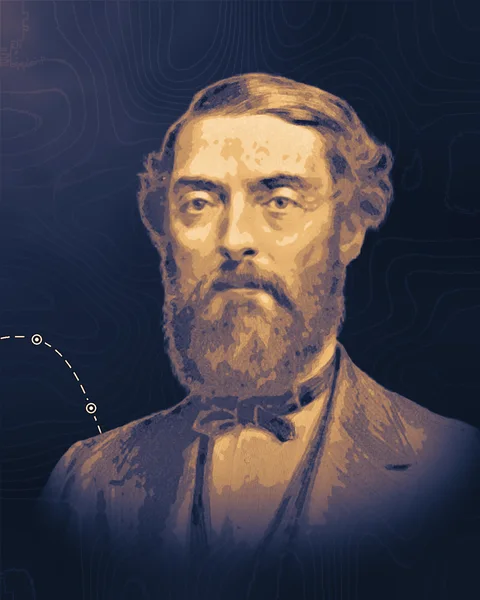
Edwin Drake
1819–1880
He drilled a well to find oil on purpose and drove an iron pipe down first to keep the hole open, which is how oil wells have been started since.

M. King Hubbert
1903–1989
He worked out from physics how fluids move through rock and which way a hydraulic fracture runs, and he forecast in 1956 that United States oil output would peak about 1970.
Advances to build with
2 research notes

Mistral Large 4
A trillion open parameters
Mistral published its Large 4 AI model, a trillion numbers by its count, free to download and sell, though firms that rent out models need a separate license.
Cursor Agent SDK
Findings that cite notes
Cursor released a kit for building AI agents, and its example, a code reviewer that cites the note behind each finding, is known only from Cursor's account.
Open in oil and gas extraction
3 of 10 open deliverables
Open · Exploration and seismic surveys
Read old paper well logs
A tool that turns a scanned paper well log (a long strip chart of rock measurements against depth) into a digital curve file in the standard LAS format, and states its error.
Built with what exists
Vision-language models that read images; open-weight models that can run on your own hardware (Note: "A trillion open parameters"); the VeerNet method as a published baseline; scanned logs from state archives.
Open · Drilling
Label Volve's drilling problems
A public set of drilling problems (stuck pipe, lost drilling mud, kicks, equipment failures) taken from the Volve field's daily drilling reports and lined up with the time-stamped sensor data from the same wells.
Built with what exists
Volve data from Equinor; a language model that proposes each label and links it to the sentence that supports it (Note: "Findings that cite notes" covers an agent that links each finding to its evidence); two human checkers; Python.
Open · Completing a well
Read cement logs from scans
A tool that reads scanned cement bond logs and grades each depth interval as good, partial or poor bond, with a confidence score. A cement bond log sends sound along the steel casing; a strong echo means the cement behind it is missing or loose, which can let fluids leak between rock layers.
Built with what exists
Vision-language models; open-weight models for local runs (Note: "A trillion open parameters"); scanned logs from state well-file archives; two experienced log analysts to set the reference grades.