Industries / Energy, water and waste / Power generation
Nuclear decommissioning
Nuclear decommissioning is the work of closing a nuclear power plant for good, taking out its fuel, taking the reactor and buildings apart, packaging and storing the radioactive waste, and cleaning the site until its license can end.
1974
The US Atomic Energy Commission had its Elk River Reactor in Minnesota, a small demonstration plant shut in 1968, taken apart, and a final survey of the site in June and July 1974 found no radioactivity above normal background; an article in the Oak Ridge National Laboratory Review calls it "the world's first decommissioning project.".
39
Milestones achieved across 6 domains.
10
To watch for: announced, not yet confirmed outside.
13
Open deliverables. Nobody has shipped them.
In one minute
Where it started
The first nuclear plants to be taken apart were small demonstration reactors. Elk River in Minnesota was dismantled and its site surveyed clean by 1974, and between 1985 and 1989 the US Department of Energy took apart the 72 MW Shippingport plant in Pennsylvania and shipped its reactor vessel whole to a burial site. From 1988 US owners had to show that the money for the job would be there before they needed it.
Where it stands
By mid-2026, 224 power reactors had closed worldwide, but only 25 had been fully decommissioned, 17 of them in the United States, and only 10 sites had been returned to land free for any use, by the count of the World Nuclear Industry Status Report, which puts the average job at 22 years. Canada, France, Russia and the United Kingdom had yet to finish one. At Fukushima Daiichi, by 2025 remote tools had brought out less than a gram of the melted fuel that TEPCO, the plant's owner, estimates at 880 tonnes, while in October 2026 Finland licensed its deep repository for used fuel to operate.
What is open
Much of what the industry has learned sits in thousands of separate filings, and no public table sets each plant's first cost estimate beside its final cost, or the survey results of every released site side by side. AI models that read long documents, open robot models trained from a few demonstrations, and free satellite images now let a small team build those records, test robot skills on safe mock-ups and watch waste sites from orbit, without touching radioactive material.
Domains
AchievedWatch forOpen
Domain
Progress
Last achieved
Watch for
Open
Planning and cost
Planning decides when and how a closed plant will be taken apart, either soon after shutdown or after decades of waiting for radioactivity to decay, and makes sure the money for the job exists before the work starts.
6 · 2 · 2
Last achievedA public fund takes over2017
Watch forFaster starts, fewer comments
2
openRemoving fuel
Removing fuel means taking the used fuel out of the reactor and its cooling pool, including fuel that melted in an accident, and moving it into sealed casks that can stand on a pad outside.
7 · 2 · 2
Last achievedFirst grams of melted fuel2024
Watch forUnit 2 pool emptying
2
openCutting up reactors
Cutting up a reactor means taking its most radioactive parts, the steel pressure vessel that held the fuel and the internals, the metal structures inside it, out of the building, either in one piece or cut into pieces small enough to pack and ship.
7 · 1 · 2
Last achievedOne supplier, seven years2025
Watch forJapan's first commercial vessels
2
openPackaging and storing waste
Packaging and storing waste means sorting the radioactive material a plant leaves behind by how dangerous it is and for how long, sealing it in drums, boxes or canisters, and placing it in a store or a disposal site.
7 · 1 · 2
Last achievedRepository licensed to operate2026
Watch forFirst canister disposed
2
openRemote handling
Remote handling is doing work where radiation is too high for people by using tools, arms, vehicles and cameras that operators control from behind shielding or from another building.
6 · 2 · 2
Last achievedA robot dog at Sellafield2021
Watch forA UK arm for Fukushima
2
openCleaning and releasing the site
This work removes or measures the radioactivity left in buildings, soil and groundwater, proves with a final survey that what remains is below a legal limit, and ends the license so the land can be used for anything.
6 · 2 · 3
Last achievedLeaks become cleanup bills2011
Watch forCrystal River asks for release
3
open
Advances to build with
4 research notes

NVIDIA GR00T 2
Five demonstrations per task
By NVIDIA's own test, its robot model GR00T 2 averages 95% success after five demonstrations of a task, on 50 tasks picked from those it learns that way.

Muse Ember
The jobs agents repeat
Meta's Muse Ember matched Claude Haiku 5.5 on an outside firm's tests at a third of the cost per task, though both list the same prices for text in and out.

Cursor Agent SDK
Findings that cite notes
Cursor released a kit for building AI agents, and its example, a code reviewer that cites the note behind each finding, is known only from Cursor's account.
Ring Rover Cam
A camera on patrol
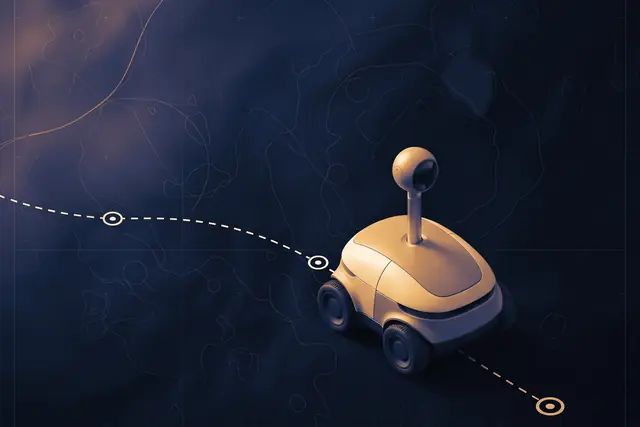
Amazon says Ring's $999.99 Rover Cam, a camera on wheels, maps an indoor space and drives itself to saved spots, and launch coverage reports no outside test.
Open in nuclear decommissioning
3 of 13 open deliverables
Open · Planning and cost
Compare first estimates with outcomes
A public table of every power reactor whose decommissioning is finished or nearly finished: the 25 that the World Nuclear Industry Status Report counted as fully decommissioned in 2026, plus the US plants handed to decommissioning firms since 2010. For each, give the first published cost estimate and finish date, the strategy chosen, and the final cost and finish date, each figure linked to the document it came from. Then publish the median gap between first estimate and outcome, in cost and in years.
Built with what exists
PSDARs, funding reports and license termination letters from the NRC's public ADAMS document library; national audit reports such as the National Audit Office's and GAO's; older project reports on OSTI, such as the NRC's 1982 summary of Elk River; an AI model that reads long PDFs and pulls out figures with page references (see the Note "The jobs agents repeat"); a spreadsheet; a second person to check.
Open · Removing fuel
Count casks from aerial photos
A year-by-year count of dry storage casks at nuclear plant sites in countries that publish no per-site figures, made by finding casks in published aerial and satellite photos, and joined with the official per-site figures where they exist into one open world table. Use only published imagery; no drone flights near plants.
Built with what exists
USDA NAIP aerial photos (free, US) to calibrate against the INL counts; national open aerial photo services in Europe, such as France's IGN, Spain's PNOA and the Netherlands' PDOK; Google Earth Pro's historical imagery for checks by eye; an object-detection model such as Ultralytics YOLO or Meta's Segment Anything, fine-tuned on one graphics card (see the Note "One GPU to fine-tune"); QGIS.
Open · Cutting up reactors
Shared test for cut plans
A public test case and open-source planner for cutting up and packing a reactor vessel and internals. The test case is a 3D model of a generic pressurized water reactor vessel built from published dimensions, an assumed map of how radioactive each part is, a set of standard waste container sizes, and a scoring script that counts cut length, pieces and containers. The planner proposes cut lines and a packing plan and is scored against simple baselines, such as a uniform grid of cuts.
Built with what exists
FreeCAD or OpenSCAD for the model; Python with trimesh for geometry; Google OR-Tools for the packing search; public dimensions such as those in the Trojan package notice and Fort Calhoun's report (32 feet tall, 14 feet wide, 7- to 10-inch walls).
Where it sits
Broader