Industries / Mining and materials
Mining and quarrying
Mining and quarrying finds minerals, coal and stone in the ground, digs them out, and processes the ore until it is ready to sell or to smelt.
About 43,000 years ago
People dug ochre, an earth pigment, at Lion Cavern in Ngwenya, Eswatini. The University of Tübingen calls the site the oldest evidence for ochre mining in the world, and a project begun in 2019 is re-testing its 1960s radiocarbon dates.
29
Milestones achieved across 6 domains.
7
To watch for: announced, not yet confirmed outside.
11
Open deliverables. Nobody has shipped them.
In one minute
Where it started
People were digging pigment out of rock in southern Africa about 43,000 years ago, by the oldest radiocarbon date at Lion Cavern. Gunpowder came into mines by 1574 in Italy and 1627 in present-day Slovakia, and Alfred Nobel patented dynamite in 1867. Cyanide leaching (1887) and froth flotation (1905) changed how metal is pulled out of ore.
Where it stands
Some large mines now run driverless trucks and trains: Codelco's Gabriela Mistral mine in Chile has moved more than 1 billion tons with self-driving trucks, and Rio Tinto runs driverless iron ore trains in Western Australia. After deadly tailings dam failures in Canada and Brazil, a global tailings standard came in 2020, and by August 2025 the industry body ICMM said two-thirds of its members' 836 facilities fully met it. US mining deaths fell from 272 in 1977 to 86 in 2000 under one federal law, by MSHA's count, yet severe black lung has come back among coal miners in central Appalachia.
What is open
Much of the open work is checking. AI tools now read old reports, rank ground for exploration and drive trucks, but few public tests show how well they do it. Open jobs include answer keys for AI that reads exploration reports, rock piles of known size for image tools, robot loading of broken rock, silica readings during a shift, an open flotation simulator, and open tables of tailings dams and mining deaths. Most can be done at a desk, in a lab or in a yard, without entering a mine.
Domains
AchievedWatch forOpen
Domain
Progress
Last achieved
Watch for
Open
Exploration
Exploration is the search for rock that holds enough of a mineral, in one place, to be worth mining.
5 · 2 · 2
Last achievedA salted gold find1997
Watch forAI explorer's copper mine
2
openDrilling and blasting
Drilling and blasting breaks solid rock into pieces small enough to dig, by filling drilled holes with explosive.
4 · 1 · 1
Last achievedWireless blasting in production2021
Watch forCutting hard rock, no blasting
1
openLoading and hauling
Loading and hauling digs up broken rock and moves it out of the mine by truck, train, conveyor or underground loader.
4 · 1 · 2
Last achievedDriverless trucks collide2019
Watch forBattery-electric haul trucks
2
openMineral processing
Mineral processing crushes and grinds ore and separates the valuable minerals from the waste rock, up to a concentrate or metal ready to sell or smelt.
4 · 1 · 2
Last achievedThe Jameson cell1985
Watch forMicrobes leach hard copper ore
2
openTailings and water
Tailings are the ground-up waste left after processing; this work stores them safely and keeps mine water clean.
5 · 1 · 2
Last achievedA global tailings standard2020
Watch forTwo-thirds of dams conform
2
openMine safety
Mine safety keeps people alive and healthy around gas, dust, falling rock, moving machines and fire, and gets them out when things go wrong.
7 · 1 · 2
Last achievedBlack lung returns2018
Watch forA lower silica limit
2
open
Narrower industries
Salt and mineral extractionCoal miningFrac sandUranium miningRare earth processingCopper and gold miningMine blasting
Figureheads
4 people
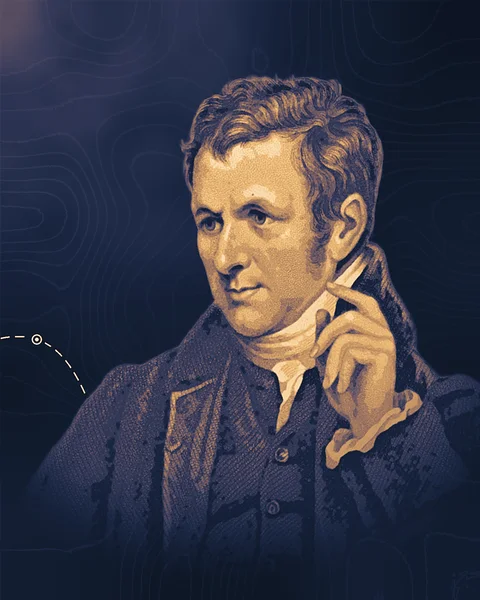
Humphry Davy
1778–1829
He made a lamp whose flame, shut inside wire gauze, could burn in a coal mine without setting off the gas.
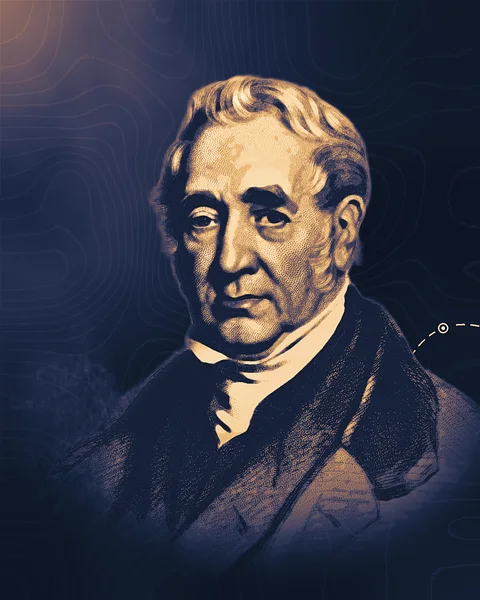
George Stephenson
1781–1848
A colliery engineman who taught himself to read, he built the Stockton and Darlington and the Liverpool and Manchester railways, and his 4 ft 8½ in gauge became the standard for railways.
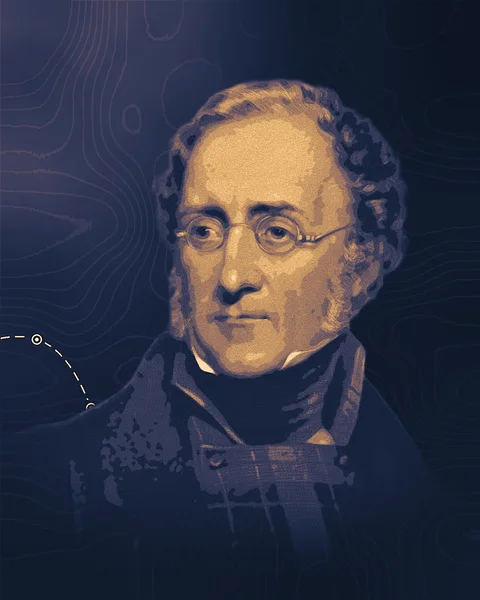
Henry De la Beche
1796–1855
He persuaded the British government to pay for geological maps, and built the first national geological survey, a mine plans office and a school of mines around them.
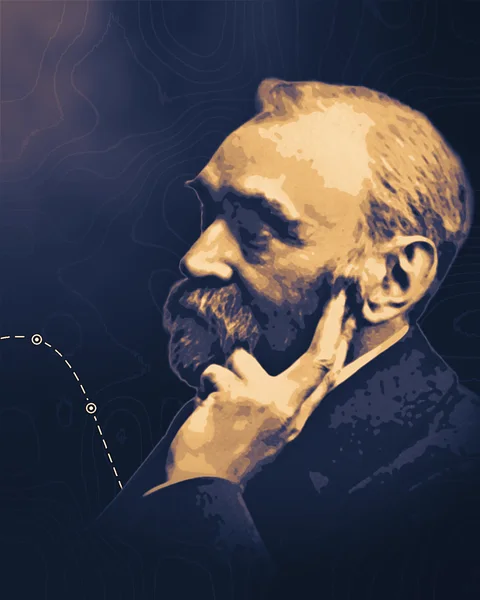
Alfred Nobel
1833–1896
He made nitroglycerine safe enough to carry and fire on purpose, as dynamite set off by a blasting cap, and rock has been broken with high explosives ever since.
Open in mining and quarrying
3 of 11 open deliverables
Open · Exploration
Blind tests for prospect maps
A public test for prospectivity maps, which rank ground by the chance it holds a deposit. Each method builds its map only from data available before a cutoff year, and is then scored on the deposits found after that year.
Built with what exists
Public geology and geophysics grids from national surveys such as the USGS and Geoscience Australia; deposit lists with discovery dates, such as the USGS Mineral Resources Data System; Python with scikit-learn and XGBoost; QGIS.
Open · Drilling and blasting
Rock piles of known size
A public set of photos and 3D scans of rock piles whose size distribution is known in advance, so fragmentation software can be scored against a true answer. Fragmentation software estimates the sizes of broken rock from images after a blast.
Built with what exists
Graded crushed rock bought from a quarry or building supplier; a sieve shaker and scales; a phone or digital camera; a drone for overhead shots; photogrammetry software such as OpenDroneMap or Agisoft Metashape; image segmentation models such as Meta's Segment Anything.
Open · Loading and hauling
Robot loading of broken rock
A loader that fills its bucket from a pile of broken rock without a driver, built on a scale model or a compact machine and tested in a yard, not in a mine.
Built with what exists
A physics simulator such as AGX Dynamics or NVIDIA Isaac Sim; a depth camera and force sensors; ROS 2; a 1:14 scale hydraulic loader or a hired compact wheel loader; LeRobot for recording demonstrations and training (the note "No download" covers LeRobot v0.7.0).