Industries / Construction and property
Elevator and escalator services
Elevator and escalator services are the companies and mechanics who install, inspect, maintain, repair and modernize the lifts and moving stairs in buildings and stations, often under long service contracts with the building's owner.
1854
At the Crystal Palace exhibition in New York, Elisha Graves Otis had the rope holding a raised elevator platform cut, and his safety brake stopped the fall; Otis, the company he founded, says he had sold his first elevator with the brake in 1853.
35
Milestones achieved across 6 domains.
9
To watch for: announced, not yet confirmed outside.
13
Open deliverables. Nobody has shipped them.
In one minute
Where it started
The trade began with a brake. In 1854 Elisha Graves Otis showed in New York a safety brake that held an elevator platform when its rope was cut, and in 1857 his company put a passenger elevator in a Broadway store. Service followed at once: in 1861 Charles Otis wrote what the company calls its first service agreement, to look after an elevator for $780 a year, and in 1921 the American Society of Mechanical Engineers issued its first elevator safety code, the ancestor of today's A17.1.
Where it stands
A handful of large makers, chief among them Otis, KONE, Schindler and TK Elevator, compete with many small independent firms. By their own counts Otis maintains about 2.5 million units and KONE about 1.8 million, and Otis says independent firms service about half of all units under contract; service brought Otis 65% of its 2025 sales and 91% of its segment operating profit. China, with more than 11.5 million elevators at the end of 2024, is the largest market for new ones, and in April 2026 KONE agreed to buy TK Elevator for €29.4 billion, a deal that still needs antitrust approval.
What is open
Most open jobs are about evidence. Makers report what remote monitoring, robots and AI assistants achieve from their own pilots, while the public records that could test those claims, on outages, inspections, accidents and earthquake trappings, sit in separate files that nobody has joined and checked. The physical jobs, such as fitting guide rails by robot or wearing out a lift door on a bench, can be tried in a workshop, with nobody entering a shaft or touching a working lift.
Domains
AchievedWatch forOpen
Domain
Progress
Last achieved
Watch for
Open
Installation
Installation is the work of fitting a new elevator or escalator into a building: anchoring rails and doors in the shaft, setting the machine, hanging the car and testing everything before handover.
6 · 1 · 2
Last achievedA robot drills the shaftc. 2021
Watch forForty percent faster shafts
2
openScheduled maintenance
Scheduled maintenance is the routine visit, under a contract with the building owner, in which a mechanic cleans, lubricates, adjusts and tests a lift or escalator and replaces worn parts before they fail.
6 · 1 · 2
Last achievedA written maintenance program2007
Watch forPhone apps plan the rounds
2
openBreakdowns and callouts
Breakdowns and callouts are the unplanned side of the trade: freeing people trapped in stopped cars, answering alarm calls, and getting broken lifts and escalators running again.
6 · 1 · 3
Last achievedOsaka quake traps 339 cars2018
Watch forCameras spot trapped riders
3
openRemote monitoring
Remote monitoring connects lifts and escalators to a service center, first by telephone line and now over the internet, so that faults and wear show up in data before, or without, a visit.
5 · 2 · 2
Last achievedAdd-on sensors find faults2023
Watch forAI agents cut callbacks
2
openModernization
Modernization replaces the worn or outdated parts of an existing elevator or escalator, such as the controller, drive, doors or machine, while keeping the shaft and often the rails.
5 · 3 · 2
Last achievedA standard for robot riders2021
Watch forModernized in one week
2
openInspection and safety codes
Safety codes set how lifts and escalators must be built, tested and kept, and inspection is the regular check, by a public inspector or a licensed private one, that each machine still meets them.
7 · 1 · 2
Last achievedChina adds self-testing years2023
Watch forISO lift standard for Europe
2
open
Figureheads
1 person
Advances to build with
4 research notes

NVIDIA GR00T 2
Five demonstrations per task
By NVIDIA's own test, its robot model GR00T 2 averages 95% success after five demonstrations of a task, on 50 tasks picked from those it learns that way.

Muse Ember
The jobs agents repeat
Meta's Muse Ember matched Claude Haiku 5.5 on an outside firm's tests at a third of the cost per task, though both list the same prices for text in and out.

Cursor Agent SDK
Findings that cite notes
Cursor released a kit for building AI agents, and its example, a code reviewer that cites the note behind each finding, is known only from Cursor's account.
MIPS Actus
Maintenance inside the joint
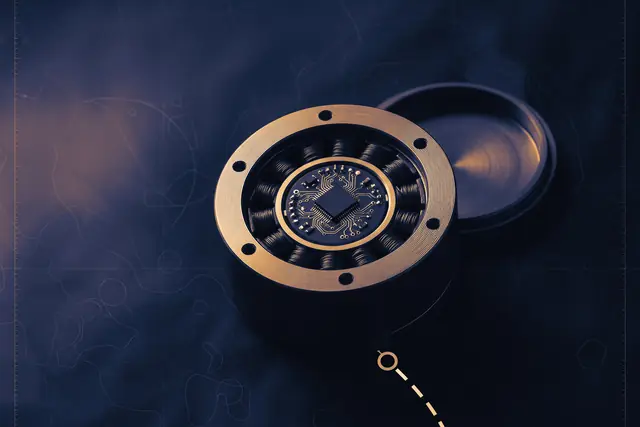
MIPS says its Actus chip can drive a robot joint's motor and also run models that predict when maintenance is due, and no independent measurement was found.
Open in elevator and escalator services
3 of 13 open deliverables
Open · Installation
Fit guide rails by robot
A robot arm that bolts short sections of elevator guide rail (the steel T-shaped tracks the car runs on) to brackets on a test frame at floor level, joins two sections end to end, and adjusts them until they are plumb and the right distance apart, checking its own work with a laser. All work is on a bench rig outside any shaft.
Built with what exists
A collaborative robot arm with a large payload and force sensing, such as a Universal Robots UR20; short sections of standard T-profile guide rail with brackets and clips from a lift-parts supplier; a line laser and dial gauges for checking; Hugging Face's LeRobot software to record demonstrations and train (see the Note "No download"); open robot models that learn a task from a few demonstrations, such as NVIDIA's GR00T 2 (see the Note "Five demonstrations per task") or Runway's Praxis-1 (see the Note "Open robot model weights").
Open · Scheduled maintenance
Test lift maintenance assistants
A public test of AI assistants on lift maintenance questions. Licensed mechanics write 300 questions about controllers whose manuals are public, covering fault codes, adjustment steps and required tests, each with the correct answer and the manual page that supports it. Run several AI models with and without the manual, and any maker's assistant that agrees to take part, and score each answer for correctness, for whether its cited page supports it, and for unsafe advice such as bypassing a safety circuit. Nobody touches equipment; the test is on paper.
Built with what exists
Public controller manuals, such as Smartrise's C4 user manual, GUI manual and predictive maintenance guide; current AI models from Anthropic, Google and OpenAI through their APIs; an agent that quotes the page behind each answer (see the Note "Findings that cite notes"); and cheaper models scored on the same questions (see the Note "The jobs agents repeat").
Open · Breakdowns and callouts
Staged lift alarm calls
A public set of at least 1,000 staged lift alarm calls, recorded by volunteer actors through a lift emergency telephone on a bench and passed over a phone line, in at least five languages. Each call is labeled: trapped and calm, trapped and panicking, medical emergency, no speech (a caller who cannot talk), misuse or prank, or an accidental press. The set is used to score speech-to-text and call-sorting software on how often it misses a real emergency.
Built with what exists
A new lift emergency telephone of the kind sold for retrofits, wired to a test phone line on a desk, never fitted to a lift; open speech recognition such as OpenAI's Whisper, and ElevenLabs' Scribe v3 (see the Note "Fewer word errors"); a model that gives probabilities for fixed answers, such as Gemini Decision 1 (see the Note "A thousand questions, one pass"); a signed consent form for every actor.