Industries / Government, education and community / Government
Public transit
Public transit runs buses, trams, metros and commuter trains on published routes and timetables that anyone may ride, usually for a fare.
1662
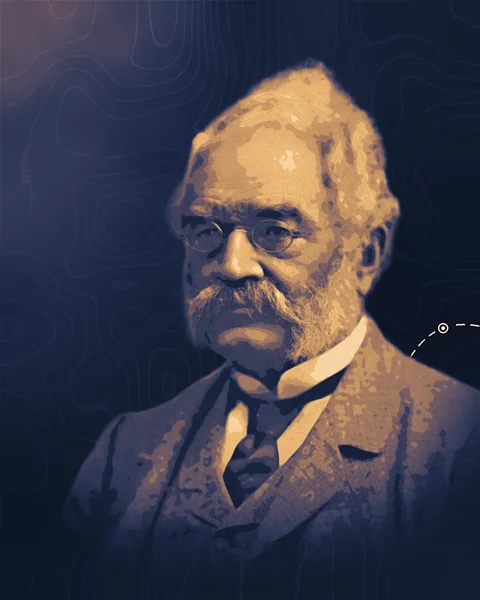
On 18 March 1662 carriages devised by Blaise Pascal began running on fixed routes across Paris for a fixed fare; the magazine Works in Progress calls this "the world's first regular bus service".
37
Milestones achieved across 7 domains.
9
To watch for: announced, not yet confirmed outside.
14
Open deliverables. Nobody has shipped them.
In one minute
Where it started
In 1662 carriages devised by Blaise Pascal ran on fixed routes across Paris for a fixed fare. Horse buses returned in the 1820s, electric streetcars spread after Frank Sprague's Richmond line of 1888, and a Benz motor bus began a scheduled service in 1895. Fare boxes, timetables and the lessons of fires, such as the one that killed 84 people in the Paris Métro in 1903, set the shape of the work.
Where it stands
Much of the industry now runs on shared data and ordinary payment: GTFS, a timetable format begun by Portland's TriMet and Google in 2005, lets any app read an agency's routes and times, and London has taken fares from riders' own bank cards since 2012. Large changes have mixed records: Tallinn's free fares drew more walkers than drivers, Washington's 2025 bus redesign lost riders in its first year, and Scotland's CAVForth driverless bus ended in 2025 for lack of passengers. Safety rules still tend to follow disasters, from King's Cross in 1987 to the Croydon tram in 2016.
What is open
Much of what is open is checking: whether arrival predictions, stop announcements, step-free routes, app departure times and safety records match what riders actually meet. Language models make it practical to try turning labor agreements, fare tables, staff-written alerts and incident descriptions into data a computer can check, but none of these jobs has a public answer key showing how often the model is right. Open registers of bus fires, driverless bus services and fleets whose maker has failed would let agencies learn from each other's mistakes.
Domains
AchievedWatch forOpen
Domain
Progress
Last achieved
Watch for
Open
Routes and timetables
This is the work of deciding where buses and trains go, how often they run, and which vehicle and which driver covers each trip.
5 · 1 · 2
Last achievedA redesign without new riders2025
Watch forAI agents draft driver schedules
2
openOperations and control
This is the daily running of the service: keeping buses and trains moving, evenly spaced and on time, from control rooms, traffic signals and lanes of their own.
5 · 1 · 2
Last achievedSelf-driving buses find few riders2025
Watch forDriverless buses in Stavanger
2
openVehicles and maintenance
This is the work of choosing, powering, keeping up and repairing the fleet of trams and buses, and the depots they return to each night.
6 · 1 · 2
Last achievedA bus maker goes bankrupt2023
Watch forBuses that park themselves
2
openFares and ticketing
This is the work of setting prices, collecting them, and checking that riders have paid.
5 · 1 · 2
Last achievedA national monthly ticket2023
Watch forFree buses across New York
2
openAccessibility
This is the work of making stops, stations, vehicles and information usable by riders who use wheelchairs, cannot see or hear well, or cannot climb stairs.
5 · 2 · 2
Last achievedFive percent of trips2017
Watch forTicket machines under EU law
2
openPassenger information
This is the work of telling riders where their bus or train is, when it will come, and what has changed.
4 · 1 · 2
Last achievedOne format for live data2011
Watch forNine in ten predictions right
2
openSafety
This is the work of keeping riders, staff and people in the street from harm in and around buses, trams and metros: fires, crashes, falls from platforms and assaults.
7 · 2 · 2
Last achievedWorker assaults in safety plans2024
Watch forFatigue alarms on London buses
2
open
Figureheads
1 person
Open in public transit
3 of 14 open deliverables
Open · Routes and timetables
Work rules read by machine
A public test of whether AI models can turn the work rules in a bus drivers' labor agreement into scheduling rules a computer can check. Examples are the maximum spread, the time from a driver's first sign-on to the end of the working day, and the point where overtime starts. Collect ten public agreements, have a person write each scheduling rule as code by hand, and score each model's version against it by running both over sample duties built to test the edge cases.
Built with what exists
Public agreements, such as the 2025–2027 agreement between Denver's Regional Transportation District and Amalgamated Transit Union Local 1001, which pays overtime for driving "beyond a spread of eleven (11) hours from the time of first assignment"; a current AI model; Python; Google's open-source OR-Tools solver to check duties against each rule.
Open · Operations and control
A bunching score for cities
Bus bunching is when buses on a frequent route arrive in clumps with long gaps between them. Build an open tool that records the live vehicle positions many agencies publish in GTFS-realtime, a standard data format, and scores every frequent route in at least ten cities by one rule, for example the San Francisco agency SFMTA's: a bus is bunched if it departs under two minutes after the one ahead, and gapped if its gap is more than five minutes longer than scheduled. Publish the scores monthly.
Built with what exists
GTFS-realtime feeds listed in MobilityData's open Mobility Database catalog; Google's gtfs-realtime-bindings library for Python; a small cloud server to record each feed every 30 seconds.
Open · Vehicles and maintenance
A public bus fire register
A public, cited register of fires on transit buses of every fuel type (battery, diesel, gas and hydrogen), with date, place, whether the bus was in service, parked or charging, the cause where an investigator found one, and fleet sizes, so that fires per 1,000 buses can be compared by fuel type.
Built with what exists
Public investigation reports such as BEA-TT's; news archives; fleet counts from the US National Transit Database and national vehicle registers; a model that sorts each report into a fixed list of causes (see the Note "A thousand questions, one pass"); a web agent to gather reports (see the Note "Deleting 80% to start over").
Where it sits
Broader