Pharmaceuticals
The pharmaceutical industry discovers, tests, makes and wins approval for medicines and vaccines, and moves them to where they are used.
1827
Heinrich Emanuel Merck, a pharmacist in Darmstadt, Germany, began making morphine and other plant alkaloids in larger amounts than his own pharmacy needed, and sold them to others.
44
Milestones achieved across 7 domains.
9
To watch for: announced, not yet confirmed outside.
12
Open deliverables. Nobody has shipped them.
In one minute
Where it started
In 1827 a German pharmacist, Heinrich Emanuel Merck, began making purified plant drugs such as morphine for sale beyond his own shop, the step from pharmacy to factory. In 1910 Paul Ehrlich's laboratory found a synthetic drug for syphilis by testing compounds one after another, and the chemical firm Hoechst was soon filling 12,000 to 14,000 ampoules of it a day. Penicillin, grown in deep fermentation tanks from 1944, showed how far production could scale.
Where it stands
A medicine now passes through fixed stages: discovery, tests in cells and animals, trials in people, manufacture under written rules called good manufacturing practice (GMP), and review by a regulator such as the US Food and Drug Administration (FDA) or the European Medicines Agency (EMA). Many of these rules were written after disasters, from a toxic elixir that killed more than 100 people in 1937 to contaminated heparin in 2008. Output has not kept pace with spending: the number of new drugs approved per billion US dollars of research halved roughly every nine years from 1950, by the count of J. W. Scannell and colleagues. AI models now help design molecules and review paperwork, but most of their results so far are companies' own tests.
What is open
Much of the evidence the industry runs on sits in private documents: batch records, trial protocols, toxicology reports. The open jobs below build public answer keys from public or made-up data, so that anyone can score a tool or a forecast against them. Each can be started this month with open data, open-source software and current AI models.
Domains
AchievedWatch forOpen
Domain
Progress
Last achieved
Watch for
Open
Drug discovery
Finding a molecule that acts on a cause of disease and could become a medicine.
6 · 2 · 1
Last achievedProtein structures predicted2020
Watch forAn AI-found drug in patients
1
openPreclinical testing
Testing a candidate in cells, tissues and animals to judge whether it is safe enough to try in people, and at what dose.
7 · 1 · 2
Last achievedFDA plans fewer animal tests2025
Watch forAn organ-chip nears qualification
2
openClinical trials
Testing a candidate medicine in people, in planned studies, to learn whether it is safe and whether it works.
6 · 1 · 2
Last achievedTrial rules rewritten2025
Watch forForecasting which trials succeed
2
openIn depthClinical research
Manufacturing
Making a medicine at scale, the same way every time, under good manufacturing practice (GMP).
6 · 1 · 1
Last achievedContinuous manufacturing gets rules2022
Watch forRules for AI in factories
1
openQuality and records
Checking that each batch was made as written, and keeping records that prove it.
6 · 1 · 2
Last achievedAI-drafted records draw a warning2026
Watch forAI review of batch records
2
openApproval
Regulators deciding, from the evidence a company submits, whether a medicine may be sold.
7 · 2 · 2
Last achievedAn approval taken back2023
Watch forAn AI assistant for reviewers
2
openSupply and cold chain
Moving medicines from factory to patient without loss, spoilage or fakes, including vaccines that must be kept cold.
6 · 1 · 2
Last achievedOne plant, half the supply2022
Watch forFull US electronic tracing
2
open
Other narrower industries
Figureheads
5 people
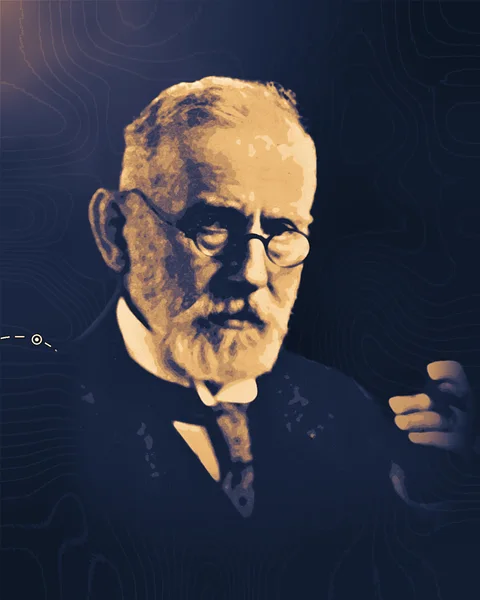
Paul Ehrlich
1854–1915
He set out to find chemicals that kill a germ and spare the patient, had compounds made and tested by the hundred, and with Salvarsan in 1910 showed that a drug could be found that way and made in a factory.
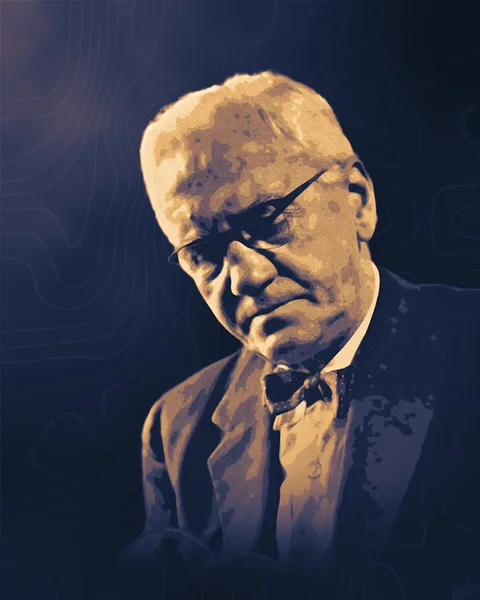
Alexander Fleming
1881–1955
He noticed in 1928 that a mould had killed the bacteria around it on a culture plate, named its product penicillin and published the finding that others turned into a medicine twelve years later.
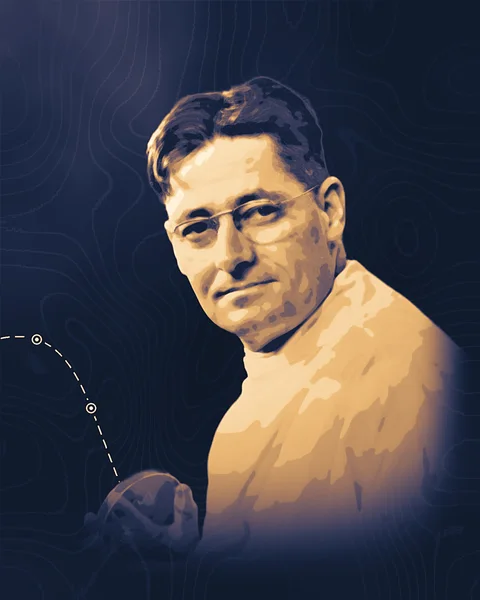
Howard Florey
1898–1968
He led the Oxford team that made penicillin into a drug, proved it in mice and then in patients, and carried it to the United States to be made in bulk.
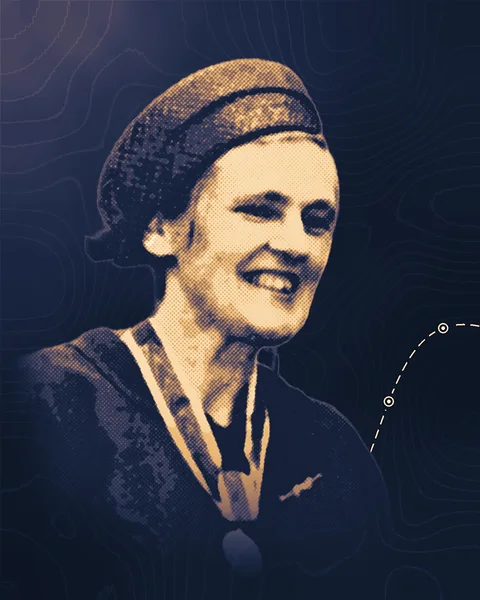
Frances Oldham Kelsey
1914–2015
The medical officer at the US Food and Drug Administration who would not pass thalidomide in 1960 and 1961 for want of evidence, and whose stand helped bring the 1962 law that makes drug makers prove a medicine works.
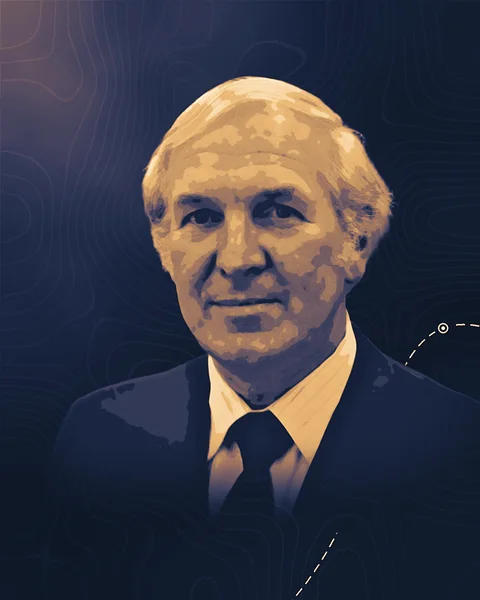
James Black
1924–2010
A Scottish physiologist who started from a receptor on the cell and had a molecule designed to block it, which gave propranolol for the heart and cimetidine for stomach ulcers.
Advances to build with
1 research note

Open in pharmaceuticals
3 of 12 open deliverables
Open · Drug discovery
A ledger of AI-found drugs
A public table of every drug candidate that a company has called AI-discovered or AI-designed. Each row links to the candidate's trial registry entries, its phase and status, any posted results, and, where the structure is public, the most similar molecule known before the programme began. The table refreshes itself from the registries every week.
Built with what exists
the ClinicalTrials.gov API (version 2); ChEMBL and PubChem for structures; RDKit for similarity scores; a language model such as Claude or Gemini to read company pipeline pages and press releases, with a person checking every row it adds. The advance that makes this a small-team job is language models that can read hundreds of web pages and fill a fixed table, citing the page for each value.
Open · Preclinical testing
Beat the Liver-Chip on paper
A computer model, trained only on public data, that sorts the same 27 benchmark drugs used in the Liver-Chip study into liver-toxic and safe, scored the same way the study scored the chip.
Built with what exists
the FDA's DILIrank 2.0 dataset, which sorts 1,336 approved drugs into four classes of liver-injury concern; RDKit for chemical features; scikit-learn for the model; the list of 27 drugs from the Liver-Chip paper.
Open · Clinical trials
Score trial forecasts in public
A public log of probability forecasts for Phase 2 and Phase 3 trials due to finish soon, each posted before results are known. Each forecast is the chance that the trial meets its main goal. After results come out, each forecast is scored with the Brier score, the average squared gap between forecast and outcome, where lower is better. Forecasts only: no betting or trading.
Built with what exists
the ClinicalTrials.gov API to list trials by expected completion date; company results announcements; Claude, or Gemini Decision 1, which returns probabilities for fixed-answer questions in place of text; a timestamped public record such as a Git repository. The note "A thousand questions, one pass" covers Gemini Decision 1.