Industries / Figureheads
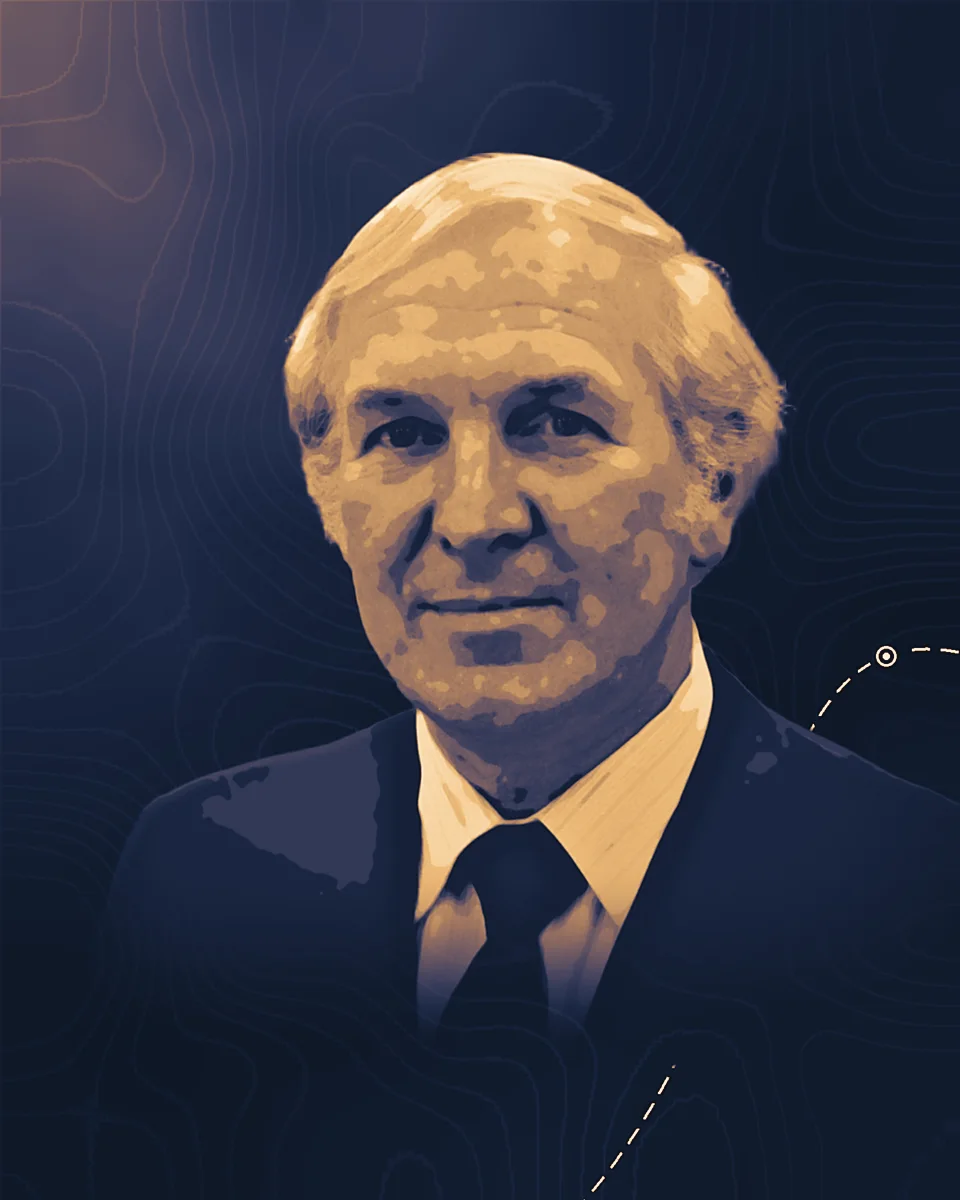
James Black
A Scottish physiologist who started from a receptor on the cell and had a molecule designed to block it, which gave propranolol for the heart and cimetidine for stomach ulcers.
1924–2010
What they changed
1958
A target before a molecule
He joined the pharmaceuticals division of ICI with a plan already formed. Heart pain from narrowed arteries was then treated by trying to raise the heart's supply of oxygen. Black proposed to cut its demand by blocking the beta receptor, the site on heart cells where adrenaline acts, which the American Raymond Ahlquist had proposed in 1948.
1964
Propranolol
His team made pronethalol in 1962 and propranolol in 1964, which the Nobel Assembly called the first beta blockers useful in patients. Trials confirmed the idea, and such drugs came into wide use for angina, high blood pressure and after heart attacks.
1972
A second histamine receptor
At Smith Kline & French he took on stomach acid. The antihistamines of the day did not stop histamine from switching on acid, so he proposed a second kind of histamine receptor, H2, and in 1972 his group proved it existed by making compounds that blocked it.
1975
Cimetidine
An early H2 blocker, metiamide, healed ulcers but in rare cases damaged white blood cells. Cimetidine, in 1975, did the first without the second. The Nobel Assembly wrote that the need for ulcer surgery fell, and The Guardian's obituary says the anti-ulcer drugs were for many years the best-selling drugs in the world.
1988
A Nobel Prize
He shared the Nobel Prize in Physiology or Medicine with Gertrude Elion and George Hitchings "for their discoveries of important principles for drug treatment".
Life
James Whyte Black was born on 14 June 1924 at Uddingston in Lanarkshire and grew up at Cowdenbeath in Fife, the son of a mining engineer who managed a colliery. A teacher pushed him into the entrance examination for the University of St Andrews, where he won a scholarship and studied medicine. He qualified in 1946.
He spent a year in the physiology department at St Andrews and then three years at the University of Malaya in Singapore, a move forced by marriage, student debts and poor prospects at home. He came back in 1950 with no job and was given the chance to build a physiology department at the University of Glasgow's veterinary school, where he stayed for eight years. His work there on the heart's oxygen supply and on stomach acid led to both of his later drugs.
He moved between industry and universities for the rest of his career: ICI from 1958, Smith Kline & French from 1964, a chair of pharmacology at University College London in 1973, the Wellcome Research Laboratories four years later, and from 1984 a small research unit at King's College London, backed by Wellcome and left independent. The Guardian's obituary says he left ICI because supporting and promoting propranolol was taking too much of his time, and that the histamine project was controversial inside Smith Kline & French.
Neither drug was his alone. The Nobel Assembly writes throughout of "Black and coworkers", and names Ahlquist's receptor theory as the starting point and an earlier beta-blocking compound, made by others in 1958, that was fit only for animal experiments. The chemists who made the molecules are not named in the pages read for this file.
He was elected a Fellow of the Royal Society in 1976, knighted in 1981 and appointed to the Order of Merit in 2000. In 1988 he founded the James Black Foundation, a not-for-profit group of scientists working on new drugs. He was chancellor of the University of Dundee from 1992 to 2006. He died on 21 March 2010, aged 85.
Read more
4 accounts
Sir James W. Black: biographical, James Black, 1988.
His own account of his schooling and of each move between university and industry.
nobelprize.org
Nobel lecture, James Black, 1988.
His account of how the two drug projects were reasoned out.
nobelprize.org
Sir James Black obituary, The Guardian, 2010.
A full obituary that follows the science and the changes of employer.
theguardian.com
Press release: the Nobel Prize in Physiology or Medicine 1988, Nobel Assembly at the Karolinska Institute, 1988.
The prize body's explanation of the receptor work, with the earlier research it built on.
nobelprize.org