Industries / Figureheads
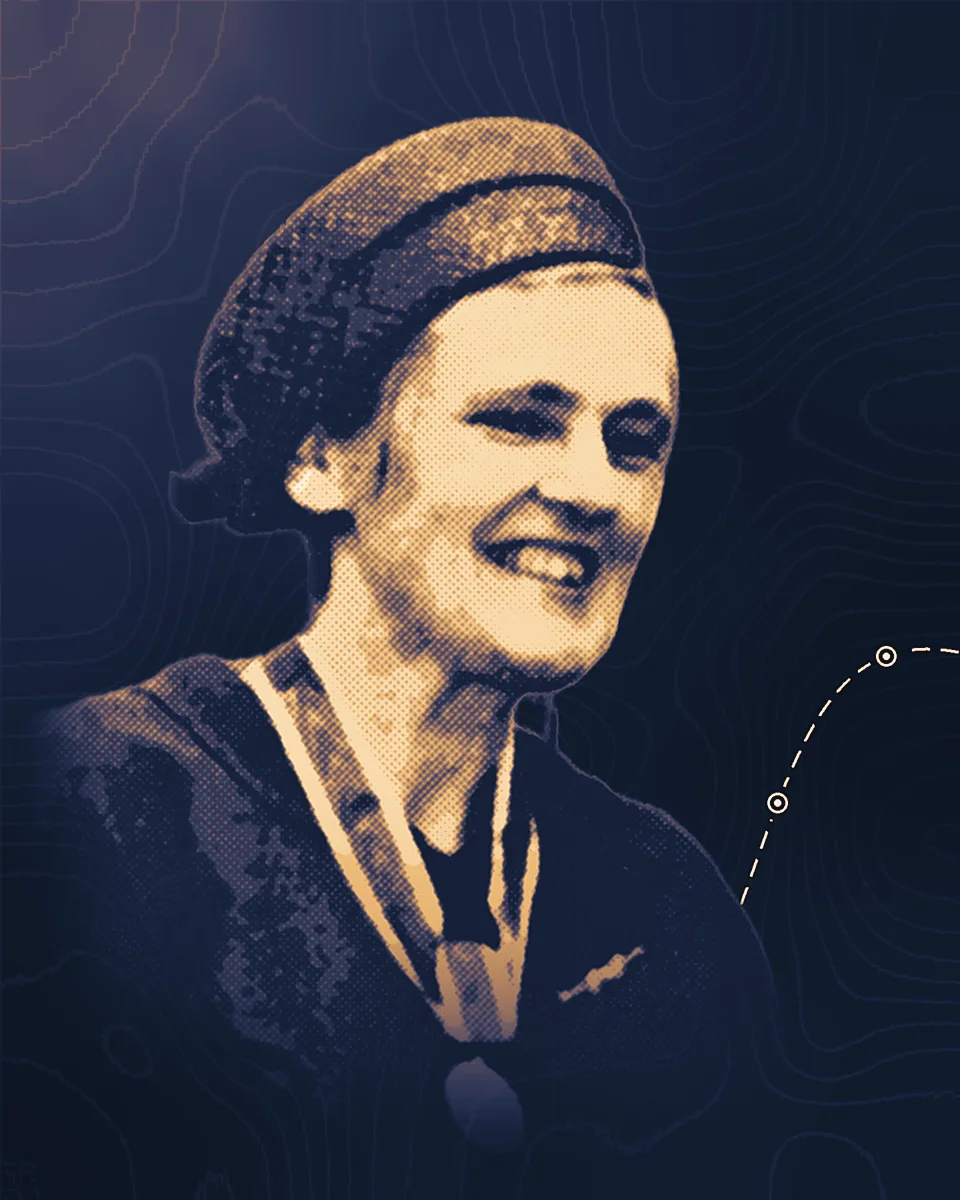
Frances Oldham Kelsey
The medical officer at the US Food and Drug Administration who would not pass thalidomide in 1960 and 1961 for want of evidence, and whose stand helped bring the 1962 law that makes drug makers prove a medicine works.
1914–2015
What they changed
1937
A poison traced
A liquid medicine called Elixir Sulfanilamide killed 107 people in the United States in the autumn of 1937. Kelsey was a graduate student in Eugene Geiling's laboratory at the University of Chicago, which the FDA asked to find the cause. Their animal tests showed it was the solvent, diethylene glycol. The 1938 law that followed made firms show a new drug was safe before selling it.
1960
Thalidomide held back
She started at the FDA on 1 August 1960 and was handed the application for thalidomide, a sleeping pill already sold in dozens of countries, early in September. The agency then had 60 days to object or the drug could go on sale. She found the evidence was mostly doctors' testimonials and refused to pass it, and when a letter in a British journal in December 1960 reported nerve damage in patients, she asked what the drug might do to an unborn child.
1961
The harm shown
In November 1961 doctors in Germany and Australia tied thalidomide taken in early pregnancy to babies born with missing or shortened limbs. The company withdrew its application in March 1962. The FDA historian John Swann counts 17 such births in the United States, where the firm had handed the drug out to more than 1,200 doctors, against thousands abroad.
1962
Proof that a drug works
The near miss carried a stalled reform bill through Congress. The Kefauver-Harris Amendments of 1962 required a drug maker to show that a drug works as well as that it is safe, and required the consent of patients in drug trials.
1963
Watching the trials
She became chief of the FDA's investigational drug branch in 1963, and from the late 1960s into the 1990s led the division that checks the doctors who run drug trials. The University of Chicago credits her with helping to establish institutional review boards, the committees that approve research on people.
Life
Frances Oldham was born in 1914 at Cobble Hill on Vancouver Island, British Columbia, the daughter of a retired British army officer. She took a bachelor's degree at McGill University in Montreal in 1934 and a master's in pharmacology, the science of how drugs act, in 1935.
She wrote to Geiling in Chicago for a research post, and his reply offering one was addressed to "Mr. Oldham". She wrote later that she still wondered whether she would have got that first step with a name like Elizabeth or Mary Jane. She took her doctorate in 1938 and stayed to teach. During the Second World War, working on malaria drugs, she found that rabbit embryos could not break down quinine as adult rabbits could. She married a colleague, Fremont Ellis Kelsey, in 1943, and qualified as a doctor in 1950.
After editorial work for the American Medical Association and six years teaching and practising medicine in South Dakota, she joined the FDA in 1960 as one of a handful of medical officers. The American licensee of thalidomide, Richardson-Merrell, kept pressing for approval. She was not alone in the review: the chemist Lee Geismar and the pharmacologist Jiro Oyama also found the application wanting.
A Washington Post article by Morton Mintz drew wide attention to the case. On 7 August 1962 President Kennedy gave her the President's Award for Distinguished Federal Civilian Service, and she was the second woman to receive it. In her memoir she wrote that she had accepted it "on behalf of a lot of different federal workers" and that "This was really a team effort." Dr Helen Taussig, who had travelled to Europe to investigate the births, testified to the Senate.
She worked at the FDA until she was 90. In 2010 the agency named an annual award after her. She died on 7 August 2015, aged 101, shortly after being made a Member of the Order of Canada.
Read more
5 accounts
Autobiographical Reflections, Frances O. Kelsey, US Food and Drug Administration, undated. Her own memoir, published by the agency, with a long chapter on the thalidomide review.
fda.gov
The Woman Who Stood Between America and a Generation of 'Thalidomide Babies', Leila McNeill, Smithsonian Magazine, 2017.
A historian of science on how her training prepared her for the application, with the FDA historian's figures.
smithsonianmag.com
Frances Oldham Kelsey: Medical Reviewer Famous for Averting a Public Health Tragedy, US Food and Drug Administration, 2018.
The agency's own short account.
fda.gov
Dr. Frances Kathleen Oldham Kelsey, US National Library of Medicine, undated. A biography from the exhibition Changing the Face of Medicine, with the wording of Kennedy's citation.
nlm.nih.gov
Dark Remedy: The Impact of Thalidomide and Its Revival as a Vital Medicine, Trent Stephens and Rock Brynner, 2001.
A book-length history of the drug.
archive.org