Industries / Retail, hospitality and personal services / Retail and e-commerce
Grocery
Grocery is the trade of selling food and everyday household goods to the public, in supermarkets, smaller food shops and online, which means buying from farms and makers, keeping fresh and chilled food fit to sell, pricing it, and handing it over to shoppers.
1930
Michael J. Cullen opened King Kullen in a leased garage in the Jamaica section of Queens, New York, on 4 August 1930. Supermarket News reports that the Smithsonian Institution counts it as the first store to meet all five criteria of the modern supermarket: self-service, separate departments, discount pricing, chain marketing and volume dealing.
38
Milestones achieved across 7 domains.
12
To watch for: announced, not yet confirmed outside.
15
Open deliverables. Nobody has shipped them.
In one minute
Where it started
Chains such as A&P grew in the early 20th century by buying in bulk, and a US law of 1936 was aimed at the discounts their size won. In 1930 King Kullen in New York put self-service, separate departments and low prices under one large roof, the pattern of the supermarket. The same year Birds Eye put frozen food on sale, and grocers soon needed freezer cases to sell it.
Where it stands
Stores now order from scanned sales, cameras watch some shelves and checkouts, and refrigeration is moving to gases such as carbon dioxide, although US stores were estimated in 2007 to leak about a quarter of their refrigerant each year. Most online orders are still picked by hand from store shelves, and in 2025 Kroger closed three of its robot warehouses. Regulators have grown more active: a US court blocked the Kroger and Albertsons merger in 2024, and an Australian court found in 2026 that Coles had advertised discounts that were not real.
What is open
Most open jobs are public measurements that the trade keeps private or has never made: whether advertised price cuts are genuine, each chain's refrigerant leak rate, how warm chilled food is when it is bought, and how well cameras catch missed scans or name loose produce. Others are open test sets and low-cost tools, such as a shelf camera a small grocer could build, a rated set of online substitutions, and a filmed test of a cheap robot arm picking an online order.
Domains
AchievedWatch forOpen
Domain
Progress
Last achieved
Watch for
Open
Buying and suppliers
Buying is the grocer's work of choosing suppliers, agreeing prices and terms with them, and deciding which products, including the store's own brands, go on the shelf.
6 · 2 · 2
Last achievedGrocery merger blocked in court2024
Watch forCanada's grocery code in force
2
openFresh food and waste
This is the work of keeping fresh food fit to sell, dating it, ordering no more than will sell, giving away what does not sell and counting what is thrown out.
6 · 2 · 2
Last achievedTwo date phrases by law2024
Watch forAI orders the fresh food
2
openCold cases and energy
This is the work of keeping chilled and frozen food cold on the shop floor, in display cases and the refrigeration plants behind them, while limiting refrigerant leaks and electricity use.
6 · 2 · 2
Last achievedCase efficiency rule overturned2025
Watch forLeak rates below 8%
2
openShelves and stock
Shelf and stock work keeps a grocery store's shelves full and its aisles safe: ordering for each store, moving goods from the back room to the shelf, finding gaps, and clearing spills.
5 · 1 · 2
Last achievedCameras watch the shelves2025
Watch forShelf maps from delivery shoppers
2
openPricing and promotions
Pricing is setting what each grocery item costs, running the promotions, multibuys and member prices that change it from week to week, and showing shoppers the result honestly.
5 · 2 · 2
Last achievedCourt rules discounts were fake2026
Watch forNew York's algorithm price notice
2
openCheckout
Checkout work covers how shoppers record and pay for what they take: the scanner and the till, the ways of paying that are particular to food shopping, and the bags the goods leave in.
5 · 1 · 2
Last achievedChips on food-aid cards2025
Watch forSmart carts spread
2
openOnline orders and picking
This is the work of taking grocery orders online and getting them picked, packed and ready to hand over, whether staff pick from a store's own shelves, from a store closed to shoppers, or robots fetch goods in a dedicated warehouse.
5 · 2 · 3
Last achievedKroger closes robot warehouses2025
Watch forAmazon same-day fresh groceries
3
open
Figureheads
1 person
Advances to build with
4 research notes
Claude Fable 5.2
Three working devices
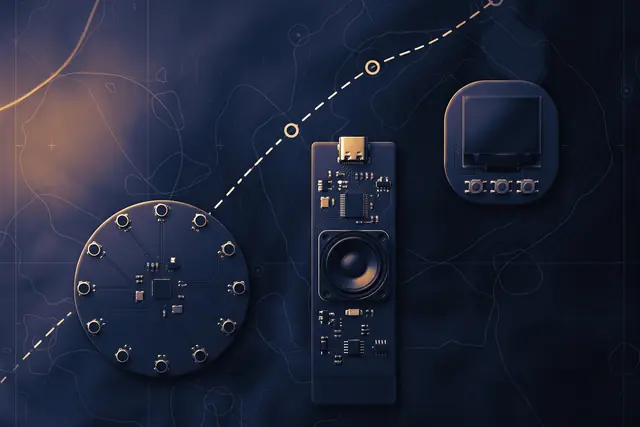
Anthropic says its AI model Claude Fable 5.2 designed three prototype devices that worked without electrical modifications, with no outside test reported.

NVIDIA GR00T 2
Five demonstrations per task
By NVIDIA's own test, its robot model GR00T 2 averages 95% success after five demonstrations of a task, on 50 tasks picked from those it learns that way.

Muse Ember
The jobs agents repeat
Meta's Muse Ember matched Claude Haiku 5.5 on an outside firm's tests at a third of the cost per task, though both list the same prices for text in and out.
Ring Rover Cam
A camera on patrol
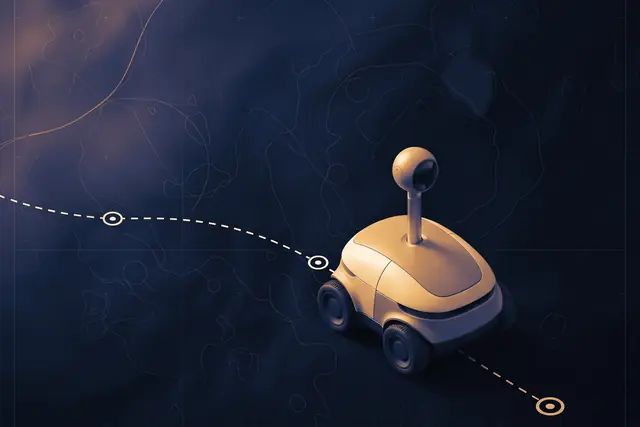
Amazon says Ring's $999.99 Rover Cam, a camera on wheels, maps an indoor space and drives itself to saved spots, and launch coverage reports no outside test.
Open in grocery
3 of 15 open deliverables
Open · Buying and suppliers
Unfair-practice rulings, one table
An open table of every published decision by EU enforcement authorities under the unfair trading practices directive: country, date, buyer, supplier type, practice, article breached, fine and a link to the decision, with the text translated into English.
Built with what exists
The national authorities' annual reports and decision pages; an AI model such as Claude Fable 5.2 to read and translate decisions (see the Note "Three working devices"); a second model to flag doubtful rows for a person to check (see the Note "Seven more flagged"); a spreadsheet published on GitHub or Zenodo.
Open · Fresh food and waste
Census of date labels
A public count of the date phrases printed on packaged food in California stores since the 1 July 2026 rule, set beside the same count in a neighboring state. Each row gives the product, brand, category, store, a photo, the exact phrase and whether it is one of the allowed phrases.
Built with what exists
A phone camera; a vision-language model such as Claude or Gemini to read the phrase in each photo; Label Studio, an open-source labeling tool, for hand checks; Open Food Facts and its pack photos; Python.
Open · Cold cases and energy
Leak rates for every chain
An open table of yearly refrigerant leak rates for the 30 largest US grocers, from every public source: company sustainability reports, CDP climate disclosures, GreenChill awards, court settlements and state records. Each value carries its page link, the year, the stores covered and the company's definition of the rate. Where a company gives total refrigerant emissions and a store count but no rate, an estimate is shown with its method.
Built with what exists
Company reports as PDFs; pdftotext and Python; an AI agent such as Meta's Muse Ember to pull figures out of long documents, with every figure checked by a person (see the Note "The jobs agents repeat"); a public spreadsheet on GitHub or Zenodo.
Where it sits
Broader