Industries / Consumer goods / Textiles and apparel
Footwear
Footwear is the trade that designs shoes and boots on lasts, cuts and sews or knits their uppers, makes their soles, joins the two, sizes them to feet, and collects and recycles them once worn out.
About 10,000 years ago
In 1938 Luther Cressman of the University of Oregon found about 100 sandals woven from sagebrush bark in Fort Rock Cave in Oregon. Radiocarbon dating later showed that Fort Rock-style sandals were made from about 10,200 to 9,300 years ago (BP), which the university's Museum of Natural and Cultural History calls "the oldest directly-dated shoes in the world". Guinness World Records gives 9,300 to 10,500 years for the ten it counts as dated.
40
Milestones achieved across 6 domains.
16
To watch for: announced, not yet confirmed outside.
17
Open deliverables. Nobody has shipped them.
In one minute
Where it started
The oldest shoes dated directly are sandals of sagebrush bark from Fort Rock Cave in Oregon, about 10,000 years old, and the oldest shoe found in Eurasia is a leather shoe from Areni-1 cave in Armenia, cut from one piece of cowhide between 3627 and 3377 BC. People probably wore shoes far earlier: Erik Trinkaus found the toe bones of a 42,000-year-old skeleton from near Beijing slimmer than those of earlier humans, the pattern that comes from wearing shoes. Machines came to the trade in Massachusetts in the 1850s: a sewing machine stitched uppers in Lynn in 1852, Lyman Blake patented a machine to sew soles on in 1858, and Jan Ernst Matzeliger's lasting machine of 1883 took over the hand work of pulling the upper over the last.
Where it stands
The world made 24.6 billion pairs in 2025, 88.7% of them in Asia and 55.6% in China, by the count of the World Footwear Yearbook. Much of the work is still done by people at machines: the robot factories adidas opened in Germany and the United States closed by April 2020, and Nike's automation project with Flex in Mexico ended by early 2019. Foam midsoles with carbon plates changed racing so much that World Athletics capped sole thickness in 2020, and in April 2026 the London Marathon was won in under two hours. Recycling diverts less than 1% of footwear waste, by one 2026 count, and from April 2028 every EU country must make shoe sellers pay for collecting used shoes.
What is open
Many figures the trade relies on are claims no outsider has tested: how much waste knitting saves, how much rubber a sole sheds per kilometre, how close a digital sample is to a real one, and how much room a labelled size gives inside. Other open jobs are handwork no robot has been shown doing, such as pulling an upper onto a last or steering a curved seam under a needle, which low-cost robot arms and open robot models now make worth trying. Most can start this month with bought shoes, a scale, a scanner and a spreadsheet.
Domains
AchievedWatch forOpen
Domain
Progress
Last achieved
Watch for
Open
Design and lasts
Design is the work of shaping a shoe before it is made. It covers the last (the foot-shaped form a shoe is built on, which sets its shape and fit), the style lines drawn on that last, the flat pattern pieces the upper is cut from, grading (scaling a design into a run of sizes), and the samples made to check the result.
6 · 3 · 3
Last achievedAI images start the design2024
Watch forFour-day shoe development at Anta
3
openUppers
Making the upper, the part of the shoe above the sole, means cutting its pieces from leather, synthetic sheet or fabric, by hand knife, by a steel die pressed through the material (the trade calls this clicking) or by a computer-guided knife or laser, and then sewing the pieces together (closing), or else forming the upper in one piece by knitting, fusing, printing or spraying.
6 · 2 · 3
Last achievedAn upper sprayed by robot2024
Watch forSprayed uppers at volume
3
openSoles
Sole making is the choice of materials for the parts under the foot and the moulding, foaming or printing that shapes them: the outsole that meets the ground, the midsole foam that cushions each step and gives some energy back, and any stiff plate inside.
7 · 3 · 3
Last achievedLimits on sole thickness2020
Watch forA 97-gram marathon shoe
3
openAssembly
Assembly is the work of making a shoe from a finished upper and a sole: the upper is pulled tight over a last, the foot-shaped form a shoe is built on, and fastened there, which is called lasting, and the sole is then joined to it by stitching, by gluing (called cementing), or by moulding the sole straight onto it.
7 · 3 · 3
Last achievedAsia makes nine in ten2025
Watch forRobots that learn gluing
3
openFit and sizing
Fit and sizing is the work of measuring feet, labelling shoes with sizes, and matching the two, whether in a shop, at home or online.
7 · 2 · 3
Last achievedReturns counted2019
Watch forOne width fits under half
3
openReuse and recycling
Reuse and recycling covers what happens to shoes after their first owner stops wearing them: collecting and sorting them for resale, mostly abroad, and grinding up or taking apart the ones that cannot be worn again so their rubber, foam, leather and textile can be used again.
7 · 3 · 2
Last achievedEurope's shoe waste measured2026
Watch forShoes paired by machine
2
open
Figureheads
2 people
Charles Goodyear
1800–1860
He found that heating rubber with sulfur makes it tough and stable in heat and cold, the step now called vulcanization.

Isaac Singer
1811–1875
He rebuilt the sewing machine into one that worked all day in a workshop, and his firm sold it to households by showroom, demonstration and monthly payment.
Advances to build with
2 research notes
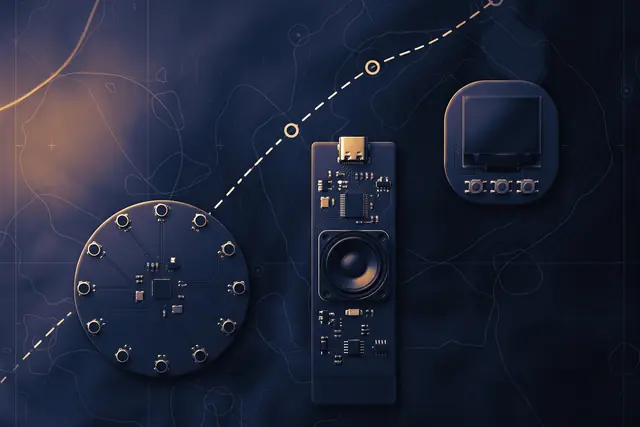
Claude Fable 5.2
Three working devices
Anthropic says its AI model Claude Fable 5.2 designed three prototype devices that worked without electrical modifications, with no outside test reported.

NVIDIA GR00T 2
Five demonstrations per task
By NVIDIA's own test, its robot model GR00T 2 averages 95% success after five demonstrations of a task, on 50 tasks picked from those it learns that way.
Open in footwear
3 of 17 open deliverables
Open · Design and lasts
Digital samples checked against real
A published test of 20 shoe styles, each made twice from the same pattern files on the same last: once as a digital sample in 3D software and once as a physical sample. Each physical sample is 3D-scanned and compared with its digital twin, with the gap measured in millimetres. A panel of five designers is shown photos and renders in random order and judges which pairs match.
Built with what exists
A 3D footwear program that drapes pattern pieces on a digital last, such as Style3D's; one last in one size; a structured-light scanner such as a Revopoint or Shining 3D EinScan, or phone photogrammetry (building a 3D model from many photos) with Polycam; the free program CloudCompare to measure distances between the scan and the digital sample; a spreadsheet.
Open · Uppers
Robot sews a curved seam
A cell in which two low-cost robot arms hold two cut upper parts, such as an outer upper and a heel liner, and steer them under the needle of a post-bed sewing machine (one that sews on top of a raised column, so shaped parts can wrap around it) along a curved seam, with no clamp frame or jig, keeping the stitch line a set distance from the edge.
Built with what exists
Two pairs of SO-101 arms, the open arm design used with Hugging Face's LeRobot software, in which a person moves a leader arm and a follower arm copies it, and LeRobot to record the steered demonstrations and train on them (see the Note "No download"); NVIDIA's GR00T 2 model, which learns a task from five demonstrations by NVIDIA's own test (see the Note "Five demonstrations per task"); a light-duty post-bed machine with a servo motor set to slow speed and a finger guard; pre-cut synthetic upper parts; an overhead camera with OpenCV to measure the stitch line.
Open · Soles
Sole wear per kilometre
A public table of how many milligrams of outsole at least 30 shoe models (running, walking and work shoes) lose per kilometre in real use. Volunteers wear three pairs of each model for 300 km of logged walking or running, and each shoe is cleaned, dried and weighed every 50 km. The same outsole rubber also goes through the ISO 4649 rotating-drum abrasion test, to see whether the lab test predicts wear on the road.
Built with what exists
A balance reading to 0.01 g; a drying cabinet; GPS-watch route logs exported from Strava or Garmin; phone photos or a low-cost 3D scanner for tread depth; a rubber lab's ISO 4649 abrader; a spreadsheet.
Where it sits
Broader