Telecommunications
Telecommunications is the business of carrying voice, text and data between people and machines over mobile networks, fiber and copper lines, cable TV networks and satellites, and of running, repairing and billing for those networks.
1839
The first public telegraph service in the world, by the Science Museum's account, began running 21 km (13 miles) beside the Great Western Railway from London Paddington to West Drayton, on William Cooke and Charles Wheatstone's needle telegraph.
43
Milestones achieved across 7 domains.
15
To watch for: announced, not yet confirmed outside.
14
Open deliverables. Nobody has shipped them.
In one minute
Where it started
Telecommunications began with telegraph lines beside railways in 1839, and the first cable across the Atlantic failed within weeks in 1858 before a lasting one worked in 1866. Telephone exchanges began to switch calls without operators after Almon Strowger's 1891 patent, and the first international radio rules followed in 1906. Mobile phones began as car phones in 1946, and cellular networks opened in Japan in 1979.
Where it stands
About 6 billion people, three-quarters of the world, were online in 2025 by the ITU's count, and 2.2 billion were not. 5G reached 55% of the world's people, but 84% in high-income countries and 4% in low-income ones. Fleets of more than 10,000 low-orbit satellites now sell broadband to homes and texts to ordinary phones, and the largest recent failures came from routine changes to software and settings, such as the outages that cut off more than 12 million Rogers customers in Canada in 2022 and an estimated 10.2 million Optus subscribers in Australia in 2023.
What is open
Much of what the industry knows is kept private: cable fault records, outage reports filed with regulators, spectrum prices and the measurements behind new services. Many of its newest claims, from AI agents that answer customers and close fault tickets to network slices and satellite broadband for phones, have so far been checked only by the companies that make them. AI models that read documents and write code, low-cost robot arms that learn from a few demonstrations, and open-source network software let a small team build the public records, outside tests and bench prototypes that are missing.
Domains
AchievedWatch forOpen
Domain
Progress
Last achieved
Watch for
Open
Mobile networks
Mobile networks carry calls and data by radio between phones and base stations (antennas on masts and rooftops), and then through a core network, the computers that check who each user is and route their calls and data.
7 · 3 · 2
Last achievedShutting 3G strands phones2024
Watch forAI computers in base stations
2
openFiber and cable
Fiber and cable is building and running the wired networks, on land and under the sea, that carry calls and data: copper and coaxial cable at first, glass optical fiber today, and the cable TV lines that now also carry internet service.
7 · 2 · 2
Last achievedAn anchor cuts three cables2024
Watch forHollow-core fiber loss records
2
openIn depthFiber optics
Satellites
Satellite communications is relaying calls, television and internet data through spacecraft, either in geostationary orbit about 35,800 km above the equator, where a satellite keeps pace with the Earth's turn and seems to hang still, or in low orbits a few hundred kilometers up, where large fleets pass overhead.
7 · 2 · 2
Last achievedLow orbit at scale2026
Watch forBroadband from space to phones
2
openIn depthSatellite internet
Network operations
Network operations is the daily work of keeping a network running: switching calls and data to the right place, watching for faults, changing equipment settings safely and restoring service when something breaks.
7 · 2 · 2
Last achievedOptus routers shut down2023
Watch forAutomation graded task by task
2
openRadio spectrum
Radio spectrum work decides who may transmit on which radio frequencies, where and at what power, through treaties, national regulators, licenses, auctions and rules for sharing.
7 · 2 · 2
Last achieved5G meets aircraft altimeters2022
Watch forUpper C-band auction
2
openField work on towers and lines
Field work is the hands-on building and upkeep of the physical network: climbing towers, stringing and lashing cable on poles, digging trenches and splicing fiber.
4 · 2 · 2
Last achievedShallow trenches fail2019
Watch forA robot inside the hub
2
openBilling and customer service
Billing and customer service is the business side of a network: recording what each customer uses, charging for it, protecting customers from charges and fraud, and answering them when something goes wrong.
4 · 2 · 2
Last achievedRoaming at home prices2017
Watch forAI agents answer support calls
2
open
Other narrower industries
Advances to build with
3 research notes
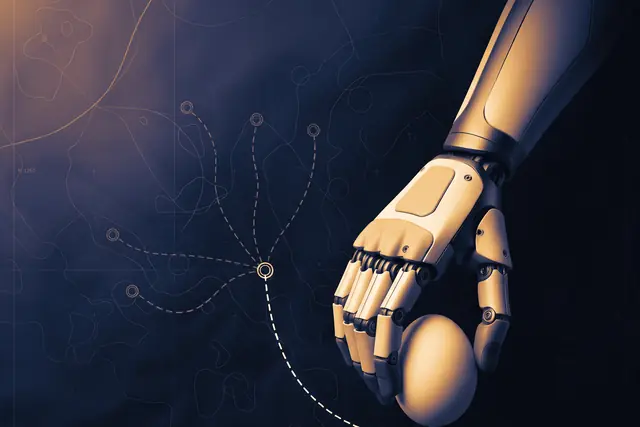
NVIDIA GR00T 2
Five demonstrations per task
By NVIDIA's own test, its robot model GR00T 2 averages 95% success after five demonstrations of a task, on 50 tasks picked from those it learns that way.
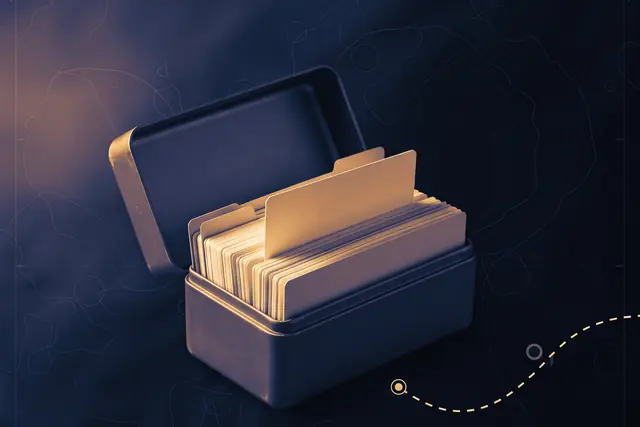
Cursor Agent SDK
Findings that cite notes
Cursor released a kit for building AI agents, and its example, a code reviewer that cites the note behind each finding, is known only from Cursor's account.
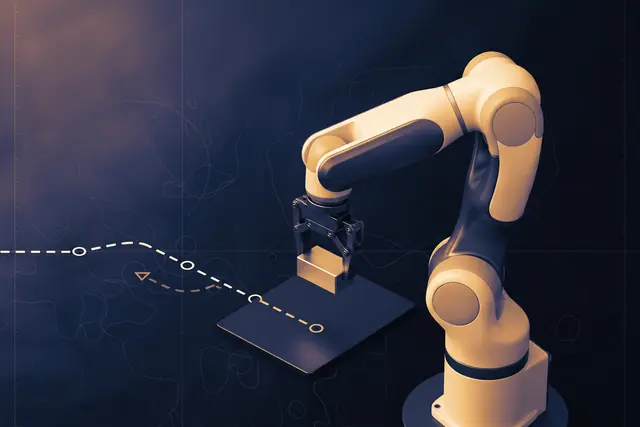
Agentic robotics
Readable robot programs
A UC Berkeley lab has AI agents write readable robot programs, which scored below human-written ones in all twelve of its own test conditions on one simulator.
Open in telecommunications
3 of 14 open deliverables
Open · Mobile networks
Prove a 5G core's login code
Machine-checked proofs that the code an open-source 5G core uses to let a phone join the network does what 3GPP's security standard requires. The target is 5G-AKA (authentication and key agreement), the exchange in which the phone and the network prove who they are and agree on encryption keys, as written in Open5GS, an open-source 5G core in the C language. The standard is 3GPP TS 33.501, "Security architecture and procedures for 5G System."
Built with what exists
The Open5GS source on GitHub (AGPL-3.0 license), including its AUSF and UDM network functions, which handle authentication; CBMC or Frama-C, open-source tools that prove properties of C code; the Tamarin prover, an open-source tool for proving security protocols; an AI coding agent to draft proof harnesses for a person to check (see the Notes "Proven in four weeks" and "Findings that cite notes"). AI agents that help a few people write proofs about real code are what bring this within reach of a small team.
Open · Fiber and cable
An open cable repair log
A public table of undersea cable faults, one row per fault: the date, the cable, the cause where one was reported, the date service came back, and links to the notices behind each field.
Built with what exists
Sentinel's event list; operators' and regulators' notices; ship-tracking data from Global Fishing Watch, which the open shadow-ship-check tool on GitHub already uses to study ships near cable incidents, to see when a repair ship reaches a site; a language model that drafts each row and cites the sentence it came from (see the Note "Findings that cite notes"); two people who check every row.
Open · Satellites
Audit the dodge count
An independent count, from public orbit data, of the collision-avoidance burns Starlink satellites make, set beside the totals SpaceX reports to the FCC (the US Federal Communications Commission) every six months.
Built with what exists
CelesTrak's supplemental orbit data, derived from the ephemerides (predicted positions) SpaceX publishes; the starlink-maneuver-db dataset as a starting set of labels; Python with the sgp4 and Skyfield libraries.