Industries / Industrial equipment and services / Industrial services / Industrial cleaning
Tank cleaning
Tank cleaning is the work of emptying storage tanks that held crude oil, fuel or chemicals, taking out the sludge of heavy oil, wax, water and solids that settles on their floors, and leaving them safe and clean enough to inspect, repair or fill with something else.
1925
Arthur B. Butterworth of Port Arthur, Texas, was granted a US patent on a tank cleaner whose nozzles, let down through an opening on top, turn about two axes at once and sweep jets of washing water round the whole inside of a tank, work that crews had done from inside with shovels, mops and sludge buckets.
28
Milestones achieved across 6 domains.
4
To watch for: announced, not yet confirmed outside.
12
Open deliverables. Nobody has shipped them.
In one minute
Where it started
Oil tanks were cleaned by crews who climbed in with shovels and buckets until Arthur Butterworth patented, in 1925, nozzles that wash a tank from an opening in its roof. By the late 1920s a meter developed at Standard Oil of California could show whether the air in a tank would burn. After washing jets set off explosions that wrecked three supertankers in December 1969, shipping moved to washing tanks with crude oil and filling them with inert gas, under rules adopted in 1978.
Where it stands
Heating, hot oil, mixers and water jets loosen the sludge, but the work is slow: Essar Oil of India said in 2016 that cleaning one of its 80 m crude tanks took four to five months. Remotely driven machines have taken sludge out of tanks with no one inside since the 1990s, and makers now certify robots for zone 0, where vapor that can burn is present all the time, though the job figures published are mostly the makers' own. The same failures keep returning, such as residues that ignite once air gets in and crews who start work without their own gas reading; on 5 November 2026 two workers were found in cardiac arrest inside a tank they were cleaning at Ulsan, South Korea, and both were revived.
What is open
The trade has few shared yardsticks: no standard stand-in sludge, no common test course for robots, and no agreed way to measure the oil in a sample. Nobody has published how often a gas reading taken at one point misses a layer of vapor, or how much residue a floor can carry before a scanner misses the pits beneath it. Each of these can be built now with workshop materials, cheap sensors and AI models that read reports, and none needs a person inside a tank.
Domains
AchievedWatch forOpen
Domain
Progress
Last achieved
Watch for
Open
Planning and isolation
This work settles, before a tank is opened, what it held and what is in its sludge, how the product will be taken out, and how every pipe, power supply and moving part connected to it will be shut off so that nothing can flow in or start up while it is cleaned.
5 · 0 · 2
Last achievedA lesson left out2024
2
openGas testing
Gas testing measures the air inside and around a tank before and during cleaning, for flammable vapor, oxygen and toxic gases such as hydrogen sulfide, and the job keeps that air in a safe range by venting it or by filling the tank with an inert gas that cannot support burning.
5 · 0 · 2
Last achievedOne crew trusted another2013
2
openRemoving sludge
Removing sludge is the work of loosening and taking out the layer of heavy oil, wax, water and solids that settles on a tank floor, by washing it, heating it, dissolving it in lighter oil or pumping it out.
4 · 0 · 2
Last achievedMixers keep sludge moving2016
2
openRobots and cleaning without entry
This work takes people out of the tank: a machine goes in through a manway or roof opening and is driven, or watched, from outside while it breaks up the sludge and sends it out through a hose.
4 · 2 · 2
Last achievedZone 0 needs special machines2002
Watch forCameras that log tank work
2
openTreating the waste
This work decides what happens to what a tank cleaning takes out, the sludge of oil, water and solids and the oily wash water: how the law classes it, and whether its oil is recovered and the rest treated, burned or buried.
4 · 1 · 2
Last achievedChina lists the wash water2021
Watch forSound waves free tank oil
2
openInspection after cleaning
Once a tank is empty and clean, inspectors measure how much steel corrosion has taken from its floor, walls and roof, and decide whether it can go back into service and when it must next be opened.
6 · 1 · 2
Last achievedEurope's tank guide adds robots2025
Watch forLonger gaps between inspections
2
open
Advances to build with
3 research notes

Muse Ember
The jobs agents repeat
Meta's Muse Ember matched Claude Haiku 5.5 on an outside firm's tests at a third of the cost per task, though both list the same prices for text in and out.
Cursor Agent SDK
Findings that cite notes
Cursor released a kit for building AI agents, and its example, a code reviewer that cites the note behind each finding, is known only from Cursor's account.
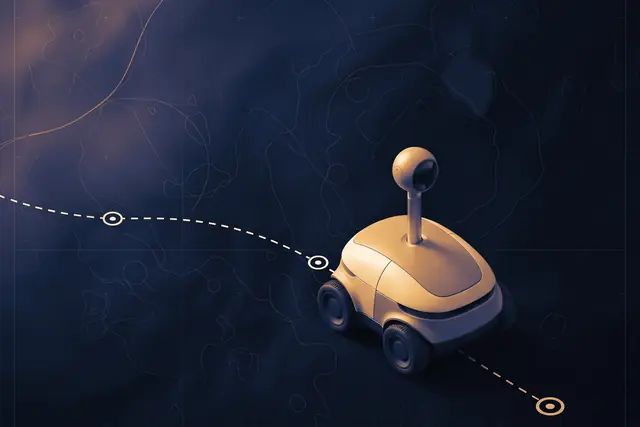
Ring Rover Cam
A camera on patrol
Amazon says Ring's $999.99 Rover Cam, a camera on wheels, maps an indoor space and drives itself to saved spots, and launch coverage reports no outside test.
Open in tank cleaning
3 of 12 open deliverables
Open · Planning and isolation
Tank cleaning accidents, coded
A public table of every tank and vessel cleaning accident in public investigation reports, from the US Chemical Safety Board, the UK HSE, WorkSafeBC in Canada, Norway's Havtil, Japan's Failure Knowledge Database and the European Commission's eMARS database of major accidents. Each accident is coded by the stage at which control was lost (planning, emptying, isolation, degassing, gas testing, opening, sludge removal, or hot work afterward) and by the safeguard that failed, and each code links to the page of the report that supports it.
Built with what exists
The public report databases named above; a model built for reading long documents, such as Meta's Muse Ember (see the Note "The jobs agents repeat"); an agent that cites the page behind each code, such as one built with Cursor's agent kit (see the Note "Findings that cite notes"); a spreadsheet; Zenodo to publish with a DOI.
Open · Gas testing
Find the layer tests miss
A scale model of a storage tank, such as a 2 m steel or plastic drum with a side manway and a roof vent, standing outdoors with no one inside, into which a harmless gas heavier than air, such as carbon dioxide at a few percent, is released at the floor and then ventilated the way tanks are degassed (a blower at the manway, an air mover on the roof). An array of 30 or more sensors records the concentration at every height and radius while common sampling plans are run against it: one reading at the manway, readings at manway and roof, and a probe lowered to the floor. The result is how often, and by how much, each plan misses a pocket of gas.
Built with what exists
Low-cost infrared carbon dioxide sensors, such as Sensirion's SCD41, on Raspberry Pi or Arduino loggers; a variable-speed blower; OpenFOAM, open-source software that simulates air flow, to compare the runs with simulation; Python for analysis.
Open · Removing sludge
A stand-in sludge recipe
A published recipe for a harmless imitation of crude tank sludge, mixed from materials such as kaolin clay, silica sand, paraffin wax and white mineral oil, in three or four grades from soft to hard. Each grade's flow, measured on a rheometer (an instrument that measures how a paste flows under force) at set temperatures, would match a band of figures published for real tank bottoms. Nozzles, chemicals, pumps and robots could then be compared on the same material in a workshop, with no oil tank involved.
Built with what exists
A rotational rheometer in a university lab, such as one from Anton Paar's MCR series; kaolin, silica sand, paraffin wax and white mineral oil, all sold for general use; published composition and flow measurements of tank sludge as targets; Python with SciPy to fit flow curves; Zenodo to publish the recipe with a DOI.
Where it sits
Broader
In outline