Industries / Retail, hospitality and personal services
Hospitality and tourism
Hospitality and tourism houses, feeds and entertains people away from home, through hotels, restaurants, trips and events, and through the businesses that plan and sell them.
1841
On 5 July 1841 Thomas Cook took 485 members of the Leicester Temperance Society by train from Leicester to Loughborough for one shilling each. Leicester City Council's history site calls it "the first railway excursion" and says it earned Leicester the name "birthplace of tourism".
38
Milestones achieved across 6 domains.
14
To watch for: announced, not yet confirmed outside.
15
Open deliverables. Nobody has shipped them.
In one minute
Where it started
Inns, taverns and cook-shops are far older, but the trade took its modern shape between the 1760s and the 1890s. Paris got restaurants with menus and separate tables, Boston's Tremont House gave every guest room its own lock in 1829, and in 1841 Thomas Cook began selling railway trips, later whole tours. Historians such as Susan Major argue that railway companies and many other agents ran excursions too, and that Cook's role has been overstated.
Where it stands
International tourist arrivals reached about 1.52 billion in 2025, up 4% on 2024, by UN Tourism's count. The World Travel & Tourism Council and Oxford Economics forecast that travel and tourism will make up 9.9% of the world economy in 2026 and support 376 million jobs. Rooms, tables and tickets are now mostly sold online through a few large platforms, under new rules on parity clauses and hidden fees. The physical work of cleaning rooms, cooking and carrying plates is still mostly done by hand. Robots that tried to take it over, at Japan's Henn-na Hotel and in robot-run burger and pizza kitchens, were scaled back.
What is open
The open jobs are mostly measurements that nobody has published. There is no public test of how AI booking agents handle hidden fees, of whether AI trip planners send people to places that are open, of how ordering bots answer allergen questions, or of crowd counters against measured crowd density. Hand tasks such as fitting a pillowcase or scraping a griddle have no counted robot trials. Robot models that learn from a few demonstrations, low-cost robot arms, and AI models that read images and speech put these within reach of a student or a small team.
Domains
AchievedWatch forOpen
Domain
Progress
Last achieved
Watch for
Open
Booking and pricing
This work sells hotel rooms, holiday homes, tables and tours and sets their prices, through reservation networks, online travel agencies and the hotels' own channels.
7 · 2 · 2
Last achievedTotal price shown first2025
Watch forAI chat books the room
2
openRunning a hotel
Running a hotel is the daily work of keeping rooms ready and guests looked after: checking guests in and out, issuing keys, cleaning rooms, washing linen, keeping the building repaired and powered, and keeping the records in the software that ties it together, called a property management system (PMS).
7 · 3 · 3
Last achievedOne forged card, every door2024
Watch forTwo humanoids make a bed
3
openRestaurant kitchens
Restaurant and catering kitchens cook food to order for each guest, and this work covers how cooks are organized, the ovens and other equipment they use, the rules that keep food safe and the machines that take over parts of the cooking.
6 · 2 · 3
Last achievedRobot cooks meet real service2018
Watch forInfinite Kitchen changes hands
3
openIn depthRestaurants and food service
Ordering and serving
This is the front of the restaurant: taking reservations, showing the menu, taking orders at the table, the counter, the drive-thru or through delivery apps, carrying food to guests and taking payment.
7 · 2 · 3
Last achievedVoice AI at the drive-thru2026
Watch forTaco Bell's voice AI spreads
3
openIn depthRestaurants and food service
Planning a trip
This work helps travelers decide where to go, what to see and how to fit it together, through guidebooks, package tours, travel agents, review sites, maps and now AI planners.
6 · 2 · 2
Last achievedAI sends tourists astray2025
Watch forPlan in chat, book elsewhere
2
openEvents
Event work plans and runs gatherings such as trade fairs, conferences, concerts, festivals and weddings: finding and fitting out a venue, selling the tickets, and moving large crowds in and out safely.
5 · 3 · 2
Last achievedJury finds a ticketing monopoly2026
Watch forSelling off Ticketmaster
2
openIn depthWedding and events
Other narrower industries
Gaming and casinosTheme parksCruise linesHotelsBars and nightclubsTravel agenciesSummer camps
Figureheads
4 people
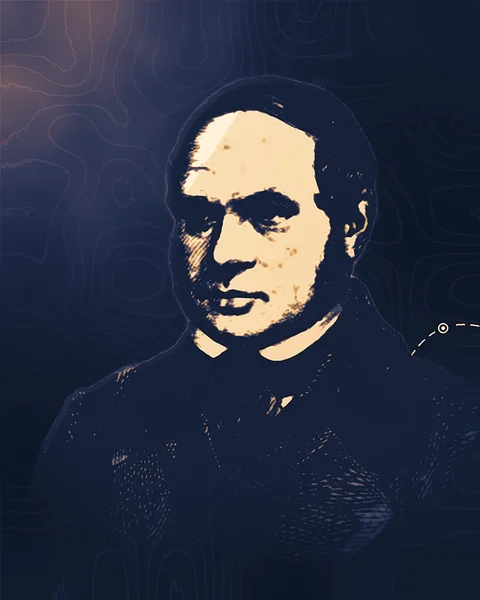
Karl Baedeker
1801–1859
He made the travel guide a book checked on the spot every year, which led the traveller to the sights and rated the inns without fear or favour.
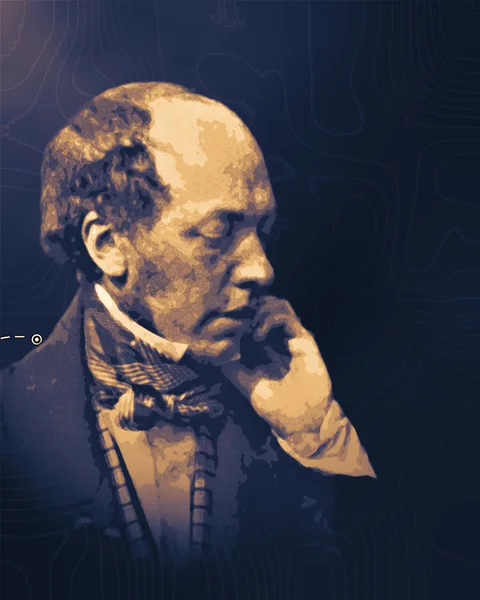
John Murray III
1808–1892
He wrote and published the Handbooks for Travellers, guides laid out by route from facts gathered on the spot, which picked out what was worth seeing and ranked it.
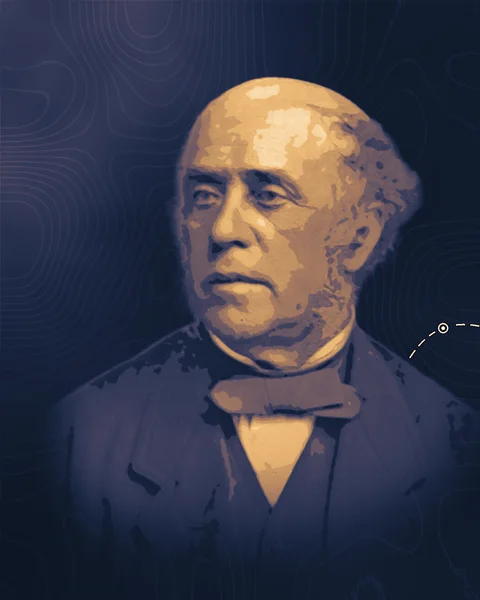
Thomas Cook
1808–1892
He sold railway trips, and later whole tours abroad, as one package with the travel, rooms and guiding arranged for the traveller.
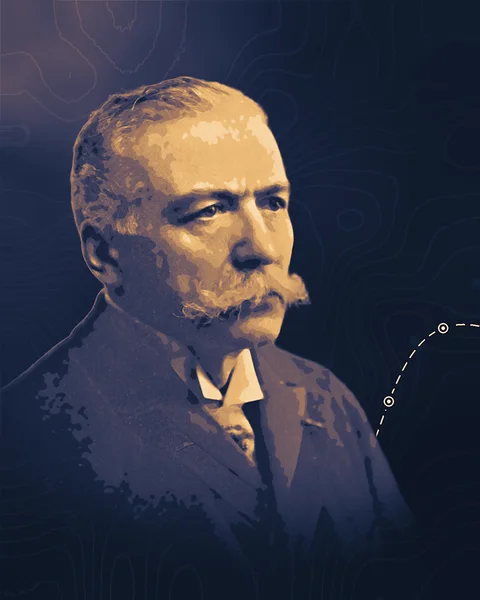
Auguste Escoffier
1846–1935
He ran the kitchens of the first grand hotels as a brigade of specialist cooks under a chef, and wrote down the recipes and methods that hotel and restaurant kitchens still follow.
Advances to build with
4 research notes
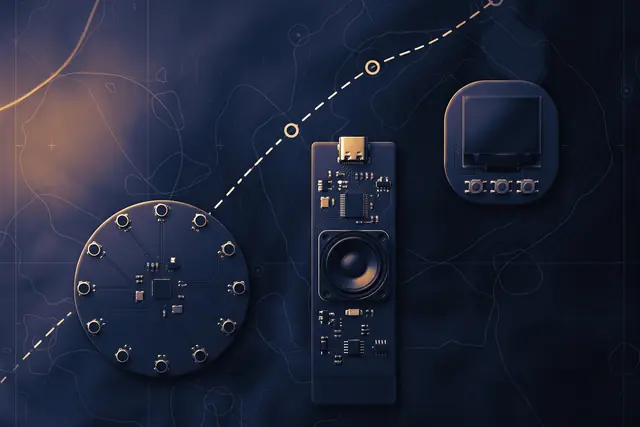
Claude Fable 5.2
Three working devices
Anthropic says its AI model Claude Fable 5.2 designed three prototype devices that worked without electrical modifications, with no outside test reported.
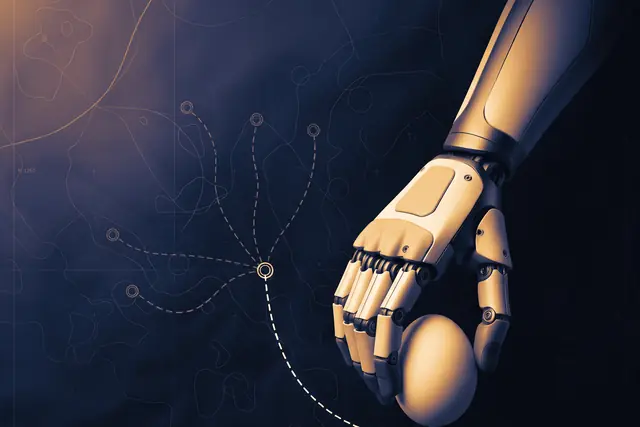
NVIDIA GR00T 2
Five demonstrations per task
By NVIDIA's own test, its robot model GR00T 2 averages 95% success after five demonstrations of a task, on 50 tasks picked from those it learns that way.

Muse Ember
The jobs agents repeat
Meta's Muse Ember matched Claude Haiku 5.5 on an outside firm's tests at a third of the cost per task, though both list the same prices for text in and out.

Microsoft ThinkingBox
All twenty times
By Microsoft's own count, 50 steps of training took an AI model from passing 38 of 507 test tasks on all 20 tries to passing 107.
Open in hospitality and tourism
3 of 15 open deliverables
Open · Booking and pricing
Checkout traps for booking agents
A sandbox hotel booking site with the traps that hotel rules now target added on purpose: a mandatory fee that appears only at the last step, nightly prices shown beside stay totals, taxes added late, a non-refundable rate preselected, and a cheaper room that lacks a requested feature such as a roll-in shower. Build it on an existing open copy of a booking site, such as the Staynb clone in AGI Inc.'s REAL benchmark. Each task gives a traveler's needs, such as a budget for the whole stay including fees and free cancellation, and a program checks the booking record the agent leaves. No real site, booking or payment is touched.
Built with what exists
AGI Inc.'s open agisdk and its REAL website clones; open web agents such as Browser Use 1.0, whose agent writes Python that runs directly on Chrome (see the Note "Deleting 80% to start over"); grading on the records left behind, with each task run 20 times and scored on whether it passes every time, as in Microsoft's ThinkingBox (see the Note "All twenty times"); the FTC rule's definition of a total price.
Open · Running a hotel
Public test for room checks
A public set of photos of a made-up hotel room, with known faults planted before each shot: a missing towel, a hair on the pillow, a used glass, a crooked bedspread, an empty soap dish, a lamp left on. Add a scoring sheet, and score any room-check system on the faults it finds and the false alarms it raises. Shoot in a hotel school's practice room or a furnished test bedroom, never a guest's room.
Built with what exists
A phone camera; standard hotel bedding, towels and amenities; a written 30-item checklist; a vision-language model, an AI model that reads images, such as Claude Fable 5.2 (see the Note "Three working devices"); an open labeling tool such as CVAT; a public spreadsheet.
Open · Restaurant kitchens
Check plates against a photo
An open test of camera checks at the pass, the counter where finished plates wait for servers. In a test kitchen, plate five dishes many times, each against a reference photo and a written specification. Build in planned faults on some plates: a missing garnish, a swapped component, a portion 25% light, sauce on the rim. Weigh every component on a kitchen scale before plating. Then have vision-language models, AI models that read images and text, compare each plate with its reference photo, and publish what they catch and what they flag wrongly.
Built with what exists
An overhead webcam or phone on a fixed mount with fixed lighting; a kitchen scale reading to 1 g; a vision-language model such as Claude Fable 5.2 (see the Note "Three working devices") and the open MiniCPM-V-4.5 model that Intel's checker uses; an open labeling tool such as CVAT; Roboflow Workflows or a short Python script to run each model.