Industries / Mining and materials
Glass and ceramics
Glass and ceramics melts sand and other minerals into glass for bottles, windows and fiber, and shapes and fires clay and mineral powders into tile, brick, sanitaryware and technical ceramics.
c. 18,000 BCE
Foragers in Xianrendong Cave, in Jiangxi Province, China, made pottery vessels, possibly for cooking. Wu and colleagues dated the layers holding the oldest sherds by radiocarbon to 20,000 to 19,000 years before the present, and wrote in Science in 2012 that this pottery is 2,000 to 3,000 years older than other pottery found in East Asia and elsewhere.
43
Milestones achieved across 7 domains.
12
To watch for: announced, not yet confirmed outside.
14
Open deliverables. Nobody has shipped them.
In one minute
Where it started
People made pottery at Xianrendong Cave in China about 20,000 years ago, and Chinese potters were firing glazes above 1,200 °C by the Shang dynasty. Glass came later: workshops at Qantir in Egypt made it from raw materials about 1250 BCE, and glassblowing began on the eastern Mediterranean coast in the 1st century BCE. The factory age brought the regenerative furnace (1856), the tunnel kiln (1912) and machines that made bottles without a glassblower (1903).
Where it stands
Machines now shape almost everything: bottle machines with many identical sections, float lines in which glass spreads on molten tin, and roller kilns that fire tile in under an hour. The European Union made 36.1 million tonnes of glass in 2024, about a third of world output, and its glass industry emitted about 22 million tonnes of CO2 in 2022, most of it from burning natural gas in furnaces that run 10 to 20 years between rebuilds, by the European Commission's figures. Since 2023 the first large furnaces and kilns to run mainly on electricity have started making bottles, bricks and toilets in Germany, Austria, Spain and Canada.
What is open
Much of the open work is shared data and outside checks. Open jobs include public image sets of bottle defects, cullet contaminants and tile shades, a public record of furnace logs and furnace lifetimes, independent drop tests of phone cover glass, fired tests of glaze predictions, and a check of new furnaces' carbon claims against Europe's emissions register. Most can start with a camera, a studio kiln or public data.
Domains
AchievedWatch forOpen
Domain
Progress
Last achieved
Watch for
Open
Raw materials and batching
Raw materials and batching is choosing, weighing and mixing what goes into the furnace or the ceramic body: sand, soda ash, limestone, feldspar, clays such as kaolin, and cullet, the trade's word for crushed recycled glass.
5 · 2 · 2
Last achievedFour in five bottles collected2024
Watch forThermal cameras grade the mix
2
openMelting and furnaces
Melting turns the batch into molten glass inside a furnace lined with refractories, bricks and blocks made to survive heat and molten glass, and keeps that glass hot, clean and steady for the forming machines, often for years without a stop.
5 · 3 · 2
Last achievedElectricity heats the melt2002
Watch forDefects forecast two days ahead
2
openForming
Forming is the work of shaping hot glass or soft clay into bottles, sheets, tiles, slabs and other parts before they set.
7 · 2 · 2
Last achievedSlabs pressed on a beltc. 2014
Watch forLearned settings for gob forming
2
openFiring and kilns
Firing is the heating of shaped clay, glaze or ceramic powder in a kiln until it hardens into its final form, along with the kilns built for it.
7 · 1 · 2
Last achievedFiring in five seconds2010
Watch forFlash sintering with light
2
openCoating and finishing
Coating and finishing is the work done after glass or a ceramic piece takes its shape: strengthening it, coating it, glazing or printing it, and grinding it to size.
7 · 1 · 2
Last achievedSmart glass maker restructured2024
Watch forTougher phone cover glass
2
openInspection
Inspection is checking finished glass and ceramic pieces for cracks, bubbles, stones, wrong size or wrong color, and removing the bad ones before they ship.
5 · 1 · 2
Last achievedHeat soak made cooler2016
Watch forAI sidewall inspection for bottles
2
openEnergy and emissions
Energy and emissions is the work of cutting the fuel that furnaces and kilns burn, and of cleaning and counting what leaves their chimneys. By the European Commission's Joint Research Centre (JRC), about 75 to 80% of the European glass industry's direct CO2 comes from burning fuel in furnaces, and the rest from carbonate raw materials giving off CO2 as they melt.
7 · 2 · 2
Last achievedBrick kilns sorted from orbit2025
Watch forA hybrid furnace in Spain
2
open
Narrower industries
Figureheads
3 people
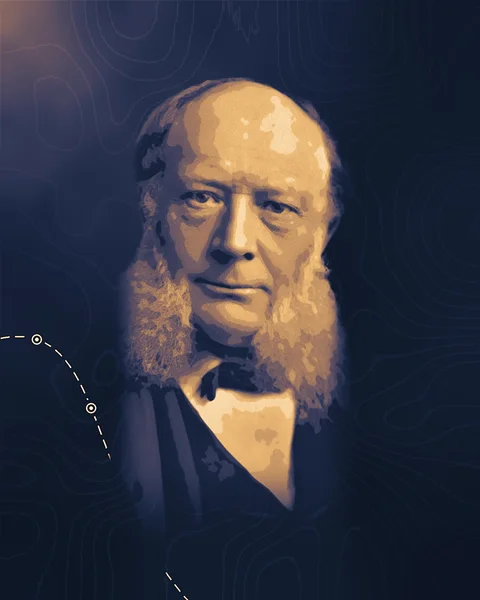
William Siemens
1823–1883
He and his brother Friedrich built the furnace that reuses its own waste heat, and he turned it to melting steel on an open hearth, the method that made most of the world's steel by 1913.
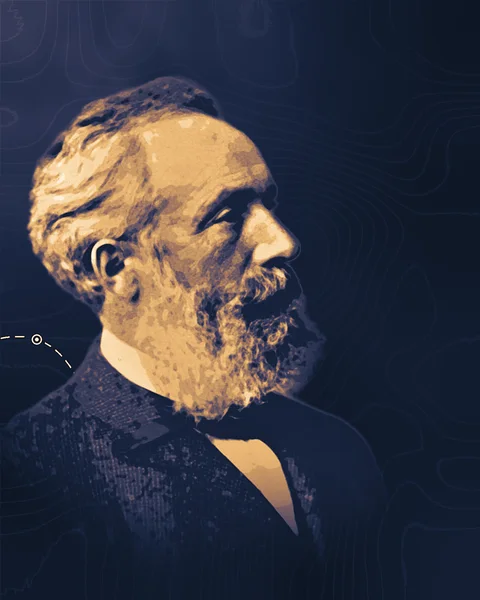
Friedrich Siemens
1826–1904
He patented the furnace that heats its incoming air with its own exhaust, and in Dresden turned it into a tank in which glass melts without stopping.
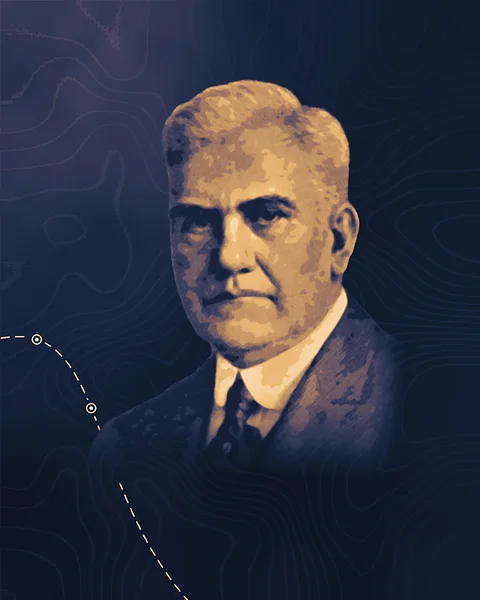
Michael J. Owens
1859–1923
He built the machine that made glass bottles without a glassblower, which made them cheap, uniform and plentiful.
Advances to build with
1 research note

Open in glass and ceramics
3 of 14 open deliverables
Open · Raw materials and batching
Open cullet contaminant benchmark
A public, labeled image set of crushed glass and the pieces that cause trouble in it: ceramics, stones and porcelain (CSP), heat-resistant glass, and the dark, thick glass that optical sorters mistake for CSP. Photograph each piece in light shining through it and light reflected off it, and publish a baseline detector with two scores: the share of CSP caught and the share of good glass thrown out with it.
Built with what exists
A light table with a backlight, a machine-vision camera or a recent phone, cullet samples from recyclers (including their CSP reject stream), labeling in CVAT or Label Studio, and an open detector such as Ultralytics YOLO trained in PyTorch.
Open · Melting and furnaces
Open furnace data benchmark
A public, documented time series from working glass furnaces, with temperatures, fuel and electricity use, pull (glass drawn per hour), batch charging and glass level, plus a forecasting task and baseline scores, so that control and AI methods can be compared on the same data. Work with the furnace's owner and export what their controller already records; change nothing on the burners or controls.
Built with what exists
Exported controller logs, or a data logger such as an ESP32 board running ESPHome (an open project already automates a studio glass furnace this way), a gas meter with a pulse output, and Python forecasting libraries such as statsmodels or Darts.
Open · Forming
An open bottle-forming simulator
free, open-source software that simulates the two blowing steps of bottle making and predicts the wall thickness of the finished bottle from the gob's temperature, the shape of the first-stage blank (the parison) and the machine timing, published with its test cases.
Built with what exists
FEniCSx or OpenFOAM, free solvers for flow and heat problems; Gmsh for meshes; ParaView for viewing results; published viscosity-temperature data for soda-lime glass.