Industries / Construction and property / Real estate
Self-storage
Self-storage is the business of renting small lockable rooms, lockers and drive-up units by the month to households and businesses, who bring, lock and fetch their own goods.
1964
Russ Williams, an oilman in Odessa, Texas, and his stepson Bob Munn put up a cinderblock and corrugated steel building whose units each had their own overhead door, and named it A-1 U-Store-It U-Lock-It U-Carry-the-Key; SpareFoot, a storage booking site, says it is regarded as the first modern US self-storage facility.
30
Milestones achieved across 6 domains.
6
To watch for: announced, not yet confirmed outside.
14
Open deliverables. Nobody has shipped them.
In one minute
Where it started
The form known today, a row of small rooms with their own doors where the renter keeps the only key, took shape in the US in the 1960s, with a building in Odessa, Texas, in 1964. Public Storage opened its first site in El Cajon, California, in 1972. From 1979, when Florida passed its act, US states gave owners a lien that lets them sell the goods in an unpaid unit without going to court.
Where it stands
The data firm Radius+ counted 57,981 US facilities with 2.65 billion square feet of rentable space for the 2025 Self-Storage Almanac. Britain had 67.5 million square feet in 2026 by its trade association's count, and 94.2% of its stores take bookings online. Rents usually start low and rise after move-in, and the rules are catching up: from 2026 California requires the first page of an agreement to state the most the rent can reach in a year, and New York City licenses every facility.
What is open
Basic counts are missing. Nobody publishes how many units are sold each year for unpaid rent, how many units one break-in reaches, what renters pay for protection plans against what comes back in claims, or what "climate-controlled" actually promises. Nobody outside the companies that sell them has tested AI camera guards, and the public records, browser agents and document-reading AI models to do most of this work already exist.
Domains
AchievedWatch forOpen
Domain
Progress
Last achieved
Watch for
Open
Sites and building
This work is choosing where a storage facility goes, putting up or converting its buildings, and owning sites as a business.
5 · 1 · 2
Last achievedOne owner, 3,500 stores2023
Watch forAtlanta's permanent storage rules
2
openRenting units
Renting units is the work of helping a customer choose a space, signing the agreement, taking rent and answering questions, more and more often with no one on site.
6 · 1 · 3
Last achievedStores run with few staff2026
Watch forAI agents answer the phone
3
openAccess and security
Access and security is the work of letting each renter, and nobody else, reach their own unit at any hour, and of dealing with break-ins, police inquiries and the records renters leave behind.
4 · 1 · 2
Last achievedA search site's old breach2023
Watch forAI watching the cameras
2
openPricing
Pricing is setting the monthly rent for each unit: the advertised "street rate" offered to new renters, the discounts that bring them in, and the increases that existing renters are later asked to pay.
5 · 1 · 3
Last achievedNew York sues over raises2026
Watch forA year at one price
3
openUnpaid units
This is what happens when a renter stops paying: the owner's lien on the goods, the notices, the lockout and, in the end, the sale or disposal of what is in the unit.
5 · 1 · 2
Last achievedLien sales move online2017
Watch forFewer newspaper sale notices
2
openClimate, fire and flood
This work is keeping stored goods safe from damp, heat, fire and water, and saying plainly what protection a unit gives.
5 · 1 · 2
Last achievedFlooded outside the floodplain2024
Watch forSolar on 1,300 storage roofs
2
open
Advances to build with
2 research notes

Muse Ember
The jobs agents repeat
Meta's Muse Ember matched Claude Haiku 5.5 on an outside firm's tests at a third of the cost per task, though both list the same prices for text in and out.
Ring Rover Cam
A camera on patrol
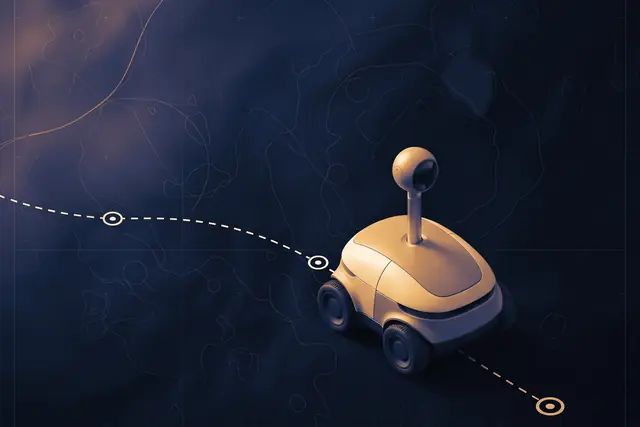
Amazon says Ring's $999.99 Rover Cam, a camera on wheels, maps an indoor space and drives itself to saved spots, and launch coverage reports no outside test.
Open in self-storage
3 of 14 open deliverables
Open · Sites and building
Every storage site, mapped
A free, worldwide map of self-storage facilities, one point per site, giving the operator, the building type (single-storey rows of drive-up units or a multi-storey building) and an estimate of floor area, with a table of storage space per person for each city covered.
Built with what exists
OpenStreetMap's Overpass API; Overture Maps places and building outlines; operators' online store finders, read by a browser agent (see the Note "Deleting 80% to start over"); free aerial photos such as USDA's NAIP in the US, on which long narrow roofs lined with doors mark drive-up rows; an open object detector such as Ultralytics YOLO, fine-tuned on one graphics chip (see the Note "One GPU to fine-tune"); QGIS.
Open · Renting units
Measure the units
A public table of the space renters actually get: for each measured unit, its advertised size, its floor area, the clear height under the lowest pipe, beam or light, the door opening, and the usable volume, set against what the operator's size guide says it holds.
Built with what exists
A laser distance meter; an iPhone with a depth sensor running Apple's RoomPlan or Polycam to scan each unit; a shared web form for volunteers; Python and pandas to compute usable volume and its spread by operator and unit size.
Open · Access and security
Break-ins counted by unit
A yearly table of burglaries at rental storage facilities by US state, built from the FBI's incident-level NIBRS data, giving the number of units entered in each incident, the share entered without force (for example with a code or key) and the share of the population whose police report to NIBRS, set against counts of facilities.
Built with what exists
The FBI Crime Data Explorer's NIBRS downloads by state and year; DuckDB or pandas; OpenStreetMap's Overpass API for facility counts; a public GitHub repository with the code and a method note.
Where it sits
Broader