Industries / Food, farming and forestry / Agriculture and farming
Nursery and horticulture
Horticulture is growing plants in tended places, such as nurseries, greenhouses, orchards and market gardens, for their fruit, vegetables, flowers or for the young plants and trees themselves, from starting each plant to packing what it yields.
c. 9400 BCE
At Gilgal I, a village in the lower Jordan Valley, people stored figs of a seedless kind that Kislev, Hartmann and Bar-Yosef argue could only have come from trees grown from planted branches; they date the village to 11,400–11,200 years ago (Science, 2006).
35
Milestones achieved across 6 domains.
11
To watch for: announced, not yet confirmed outside.
12
Open deliverables. Nobody has shipped them.
In one minute
Where it started
About 11,400 years ago, people in the Jordan Valley may have grown figs from cuttings, about 1,000 years before cereals were domesticated there; other botanists replied in the same journal that the trees could have seeded themselves. Roman gardeners grew cucumbers for the emperor Tiberius under sheets of clear stone. In the 1900s growers learned to root cuttings with hormones, clone plants in glass jars, grow crops without soil, release insects to eat pests, and run greenhouse climate by computer.
Where it stands
FAO counts 2.1 billion tonnes of fruit and vegetables grown worldwide in 2023. A University of Copenhagen team mapped 1.3 million ha of greenhouses in satellite images from 2019, 60% of it in China. Much of the work is still done by hand: in the 2022 US Census of Agriculture, wages and contract labor were 42% of production expenses on greenhouse and nursery farms and 40% on fruit and tree nut farms, against 12% on all farms (USDA Economic Research Service).
What is open
Many routine jobs are still done by hand or judged by eye: taking cuttings, clipping tomato stems to their strings, deciding which pots need water, checking plants that arrive from other nurseries, building bouquets, tying young fruit trees to wires and scoring frost damage. Claims for climate software, pollination robots, pest-trap counters and tomato-picking robots mostly rest on the makers' own trials. Low-cost robot arms trained with open robot models, and image models that run on a phone or a small computer, put many of these jobs within reach of a small team.
Domains
AchievedWatch forOpen
Domain
Progress
Last achieved
Watch for
Open
Starting new plants
Propagation: making new plants from seed, cuttings, grafts and lab cultures, and growing them into the young plants that growers and gardeners buy.
6 · 1 · 2
Last achievedRobots stick cuttings2020
Watch forCameras flag contaminated cultures
2
openGreenhouses and indoor farms
Building and running covered growing spaces, from plastic tunnels to glasshouses and indoor farms, and controlling their heat, light, carbon dioxide and pollination.
6 · 2 · 2
Last achievedIndoor farms go bankrupt2023
Watch forSoftware runs the climate
2
openIn depthVertical farming and hydroponics
Watering and feeding
Giving plants in pots, trays, slabs and greenhouse beds the water and nutrients they need, and choosing what their roots grow in: soil, peat, stone wool or a stream of nutrient solution.
7 · 2 · 2
Last achievedPeat-free holds its water2024
Watch forEngland's peat sales ban
2
openIn depthVertical farming and hydroponics
Pests and disease
Keeping insects, mites, fungi and viruses out of greenhouses and nurseries, and controlling them inside with natural enemies, hygiene, resistant varieties and sprays. Inspecting and quarantining plants that move between growers and countries is part of this work.
6 · 2 · 2
Last achievedA virus beats resistant tomatoes2014
Watch forAI counts sticky-card pests
2
openPicking and packing
Taking ripe fruit, vegetables and flowers off the plant, then grading, cooling, storing, packing and selling them, often across an ocean.
5 · 3 · 2
Last achievedPepper robot needs new plants2018
Watch forSnack-tomato robot picks 45%
2
openOrchard work
Planting and shaping fruit trees, thinning their flowers and young fruit, and protecting them from frost, pests and disease.
5 · 1 · 2
Last achievedXylella kills Puglia's olives2013
Watch forFlying robots pick oranges
2
open
Figureheads
2 people
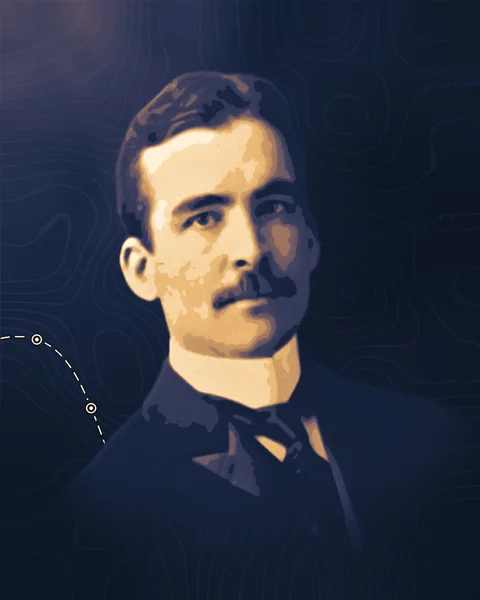
Charles L. Marlatt
1863–1954
A US government entomologist, he pressed for the 1912 law under which imported nursery stock is inspected at the border, and then ran the board that wrote its quarantines.

Percy W. Zimmerman
1884–1958
A plant physiologist at the Boyce Thompson Institute in New York, he and his colleagues found that synthetic hormones such as indolebutyric acid make cuttings root, the basis of the rooting powders nurseries still dip their cuttings in.
Advances to build with
1 research note

Open in nursery and horticulture
3 of 12 open deliverables
Open · Starting new plants
Robot takes cuttings
A robot arm with a small cutter that takes tip cuttings of a set length from potted stock plants (the parent plants kept only to supply cuttings) and lays them in a tray, ready to stick.
Built with what exists
An SO-101 arm with LeRobot (see the Note "No download"); a control model trained from demonstrations with NVIDIA GR00T 2 (see the Note "Five demonstrations per task") or Runway Praxis-1 (see the Note "Open robot model weights"); a small servo-driven snip as the gripper; a wrist camera; potted coleus, pelargonium or chrysanthemum stock plants.
Open · Greenhouses and indoor farms
Score bee bruises on flowers
A phone tool that grades the brown bruises bumblebees leave on tomato flowers when they grip them to shake out pollen, so a grower can tell from photos whether the hives in a greenhouse are doing their work, and whether there are too few or too many.
Built with what exists
A phone with a clip-on macro lens; Label Studio or CVAT for labeling; an open object-detection model such as Ultralytics YOLO to find flowers, with a small classifier to grade them; or an open vision-language model run locally with ggml (see the Note "A first stable number for local AI").
Open · Watering and feeding
Tell which pots need water
A camera tool that looks along a mixed bench of potted plants and marks which pots need water now. That is the call a grower makes by eye and by lifting pots. Score the tool against weighed pots and against the grower's own calls.
Built with what exists
A Raspberry Pi 5 with its camera module; a low-cost thermal camera such as a FLIR Lepton module, to read leaf and surface temperature; load cells with an HX711 board, or a kitchen scale, for ground truth; Label Studio to label images; an open detection model such as Ultralytics YOLO11.
Where it sits
Broader