Industries / Figureheads
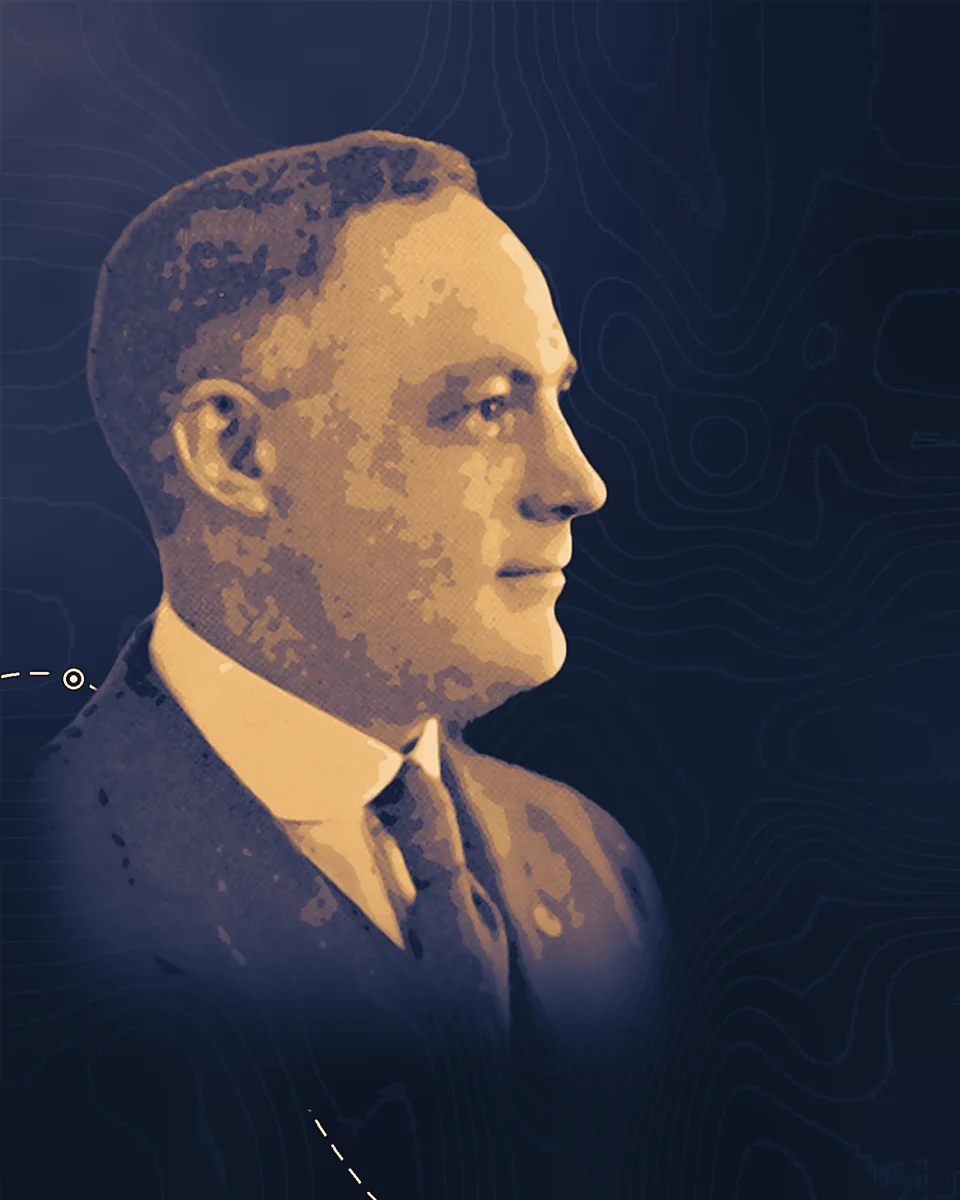
Percy W. Zimmerman
A plant physiologist at the Boyce Thompson Institute in New York, he and his colleagues found that synthetic hormones such as indolebutyric acid make cuttings root, the basis of the rooting powders nurseries still dip their cuttings in.
1884–1958
What they changed
1932
Gas makes stems root
Working with Alfred Hitchcock and William Crocker on the effect of illuminating gas on greenhouse plants, Zimmerman found that a tomato plant left over a long holiday weekend in 1% carbon monoxide had grown roots all along its stem. The Boyce Thompson Institute calls it the first use of a known chemical to make a plant form an organ, and the paper won the New York Academy of Sciences' A. Cressy Morrison prize in 1932. Gases spread through the whole plant, though, and rooted it in the wrong places, so the search turned to compounds that would act only where they were put.
1935
Synthetic hormones root cuttings
Zimmerman and Wilcoxon reported that two synthetic auxins (plant hormones that control growth), indole-3-butyric acid (IBA) and naphthaleneacetic acid (NAA), rooted cuttings better than indole-3-acetic acid, the auxin plants make. E. K. Blythe wrote in 2013 that IBA and NAA "are presently the most widely used auxins for promoting root formation on stem cuttings".
1937
Rooting powder on sale
The institute patented the use of IBA for rooting, with Zimmerman and Hitchcock as inventors, and licensed it to Merck & Co., which sold it as Hormodin; Better Homes and Gardens wrote about it in 1937. The patent has expired, and IBA is still sold as Hormodin and in other rooting products.
1942
Regulators for fruit and weeds
Many growth regulators were first tested in Zimmerman's laboratory, among them the substituted phenoxy acids 2,4-D and 2,4,5-T. Hitchcock lists their uses as rooting cuttings, stopping apples dropping before harvest, setting fruit, making seedless fruit, thinning fruit, timing the flowering of pineapple and killing weeds. The American Society for Horticultural Science gave Zimmerman its Vaughan Award in 1946 for the work on fruit set and seedless fruit.
Life
Percy White Zimmerman was born in Manito, Illinois, on 23 February 1884, and grew up on a farm. He trained as a teacher at the Eastern Illinois State Normal School and was superintendent of schools in Westville, Illinois, from 1910 to 1913. He followed his biology teacher, Otis Caldwell, to the University of Chicago, which gave him a bachelor's degree in 1915, a master's in 1916 and a doctorate in 1925.
In 1916 he went to Maryland State College to teach botany. Within a year he was acting dean of its division of plant industry, and he was dean of its college of agriculture from 1918 to 1925. In 1925 he joined the new Boyce Thompson Institute for Plant Research in Yonkers, New York, where he worked for the rest of his life.
The rooting work was a team's. Hitchcock was co-author and co-inventor; Wilcoxon co-wrote the 1935 paper on IBA and NAA; the Canadian chemist R. H. Manske of the National Research Council in Ottawa supplied compounds, IBA among them. In the same year Thimann and Koepfli at Harvard reported making indoleacetic acid, the natural auxin, and showed that it made cuttings root. Zimmerman and Hitchcock shared the American Association for the Advancement of Science's prize in 1935.
He also bred plants for the nursery trade. From 5,000 hollies planted in a trial plot before the hard winter of 1933–34 he picked hardy strains of American and English holly and released them to growers, and he raised winter-hardy camellias from cuttings sent from Washington State. In his later years he studied the damage that sulfur dioxide, fluorides and other air pollutants do to plants.
Hitchcock's obituary is candid about his methods: Zimmerman "did not think in terms of a balanced experimental design or statistical interpretation of results", repeated tests under many conditions and reported those he thought showed the response best, so that "precise quantitative results were thus sacrificed". He died at Wenatchee, Washington, on 14 August 1958, of an embolism after an emergency operation, while on a field trip to study air pollution.
Read more
5 accounts
Percy W. Zimmerman, February 23, 1884–August 14, 1958, A.
E. Hitchcock, Contributions from Boyce Thompson Institute, vol. 20, 1959. An obituary by his closest colleague, with his honours and methods.
archive.org
Growth of Plants: Twenty Years' Research at Boyce Thompson Institute, William Crocker, 1948.
The institute's own account of the gas, hormone and rooting work, with Zimmerman's chapter on plant hormones.
archive.org
The Formative Influences and Comparative Effectiveness of Various Plant Hormone-like Compounds, P. W. Zimmerman, Torreya, 1943.
His own review of the synthetic growth substances.
archive.org
Going Back to BTI's Roots: A History of Hormodin, Boyce Thompson Institute, undated. How IBA became a garden product.
btiscience.org
Current Options for Using Auxin Solutions in Cutting Propagation, E. K. Blythe, Acta Horticulturae, 2013.
How nurseries apply IBA and NAA today.
ishs.org