Industries / Figureheads
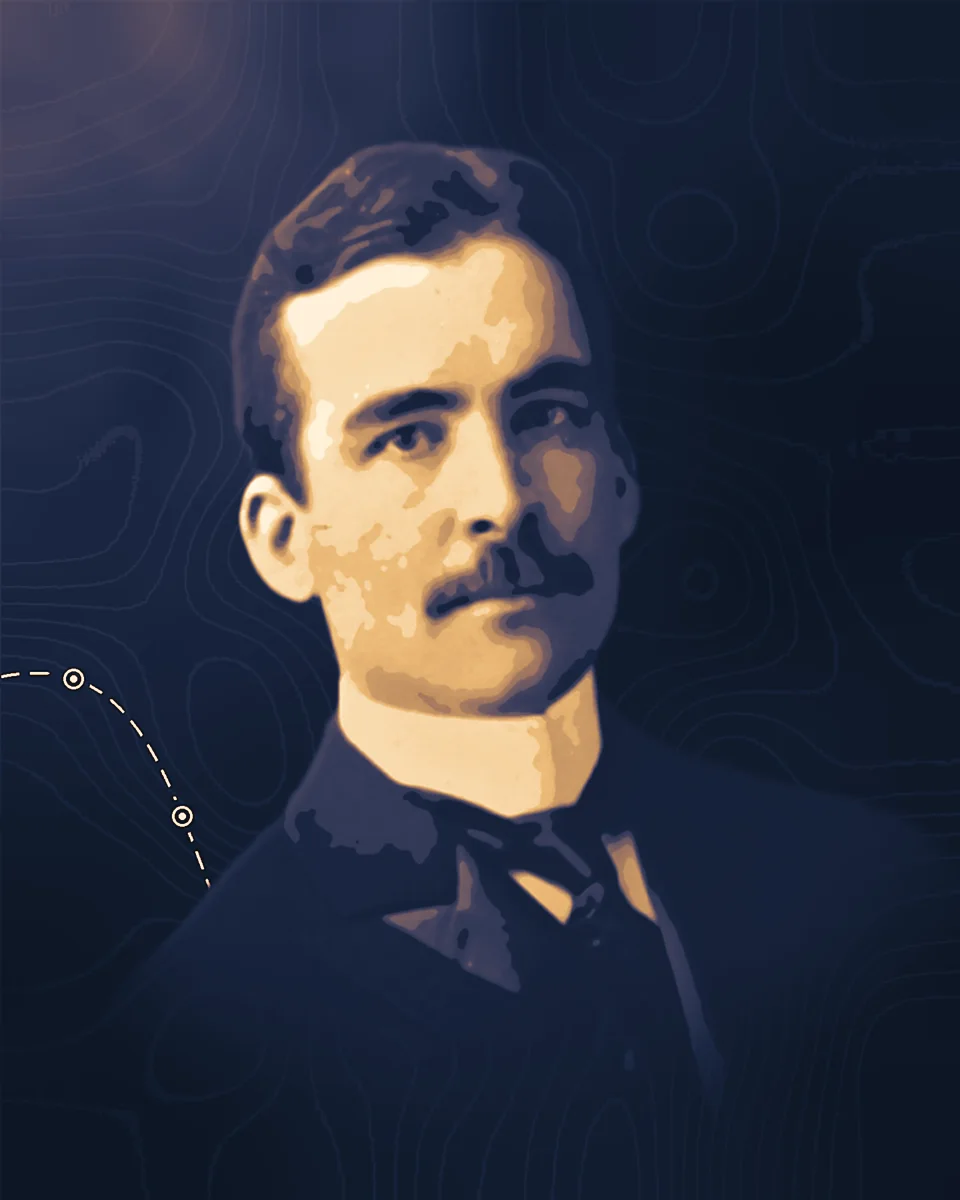
Charles L. Marlatt
A US government entomologist, he pressed for the 1912 law under which imported nursery stock is inspected at the border, and then ran the board that wrote its quarantines.
1863–1954
What they changed
1901
Searching Asia for pests
Marlatt spent 1901 and 1902 on entomological explorations in China, Japan and Java, by the account of American Men of Science, which lists his fields as scale insects, the introduction of foreign beneficial insects and plant quarantine. Kansas State University's profile says he went to find a natural enemy of an insect from China that was destroying crops he had seen in California.
1910
Japan's cherry trees burned
In January 1910 about 2,000 flowering cherry trees from Tokyo reached Washington. Marlatt, acting chief of the Bureau of Entomology, had them inspected although the bureau had no formal power over private imports; his report found them infested and recommended they be destroyed, and President Taft approved burning them on 28 January 1910. The Library of Congress notes that the decision was controversial and could be seen as a political ploy for the law he wanted.
1911
The case for a law
In the National Geographic Magazine Marlatt wrote that "The United States is the only great power without protection from the importation of insect-infested or diseased plant stock", while several European countries banned American nursery stock outright. He blamed the delay on "a small body of importing nurserymen" and put the declared value of imported nursery stock at about $350,000 a year.
1912
Inspection at the border
The Plant Quarantine Act took effect on 20 August 1912 and set up the Federal Horticultural Board to enforce it. Marlatt chaired the board from 1912 to 1927. The law and those that followed set up inspection stations at the main ports of entry, now run by USDA's Animal and Plant Health Inspection Service under the Plant Protection Act of 2000.
1919
Quarantine 37 limits imports
Under Marlatt's chairmanship the board issued Quarantine No. 37, in force from 1 June 1919. It let field, vegetable and flower seeds in freely, admitted listed classes of plants for propagation, such as certain bulbs, rose stocks and fruit stocks, only under permit, and reserved every other plant for import by the Department of Agriculture for experiment.
Life
Charles Lester Marlatt was born at Atchison, Kansas, on 26 September 1863. His father, Washington Marlatt, ran Bluemont College in Manhattan, Kansas, the forerunner of Kansas State University. He took a bachelor's degree there in 1884 and a master's in 1886, and was assistant entomologist at the college before he joined the US Department of Agriculture's entomology division in 1889.
He rose through the Bureau of Entomology: first assistant and assistant chief from 1894, associate chief from 1925 and chief from 1927 to 1933. He also edited the Journal of Agricultural Research from 1913 to 1927 and headed the Plant Quarantine and Control Administration in 1928 and 1929.
His campaign set him against the plant explorer David Fairchild, a boyhood friend from Manhattan, Kansas, whose USDA office brought new crop plants into the country. Kansas State University's profile calls them rivals: Fairchild looked for plants abroad, and Marlatt tried to keep out the pests that travelled with them. It was Fairchild who brokered the 1910 gift of cherry trees, and Marlatt who insisted on inspecting them.
The importing nurserymen he named had blocked a federal law for years, although, as US Customs and Border Protection is quoted by the Library of Congress, 39 states had passed laws of their own and had sought a national one since 1898. Japan's second gift, 3,020 trees fumigated before shipment, arrived in Washington on 26 March 1912 and was planted the next day.
The quarantines changed how plants moved. Damery's review of Luke Keogh's history of the Wardian case, the glass box in which live plants had crossed the oceans since the 1830s, says that by the 1920s quarantines and import restrictions had slowed its use. Marlatt died in 1954, the same year as Fairchild.
Read more
5 accounts
Pests and Parasites: Why We Need a National Law to Prevent the Importation of Insect-Infested and Diseased Plants, Charles Lester Marlatt, National Geographic Magazine, 1911.
His argument for the law, with photographs from the Department of Agriculture.
archive.org
Nursery Stock, Plant, and Seed Quarantine: Notice of Quarantine No. 37, with Regulations, Federal Horticultural Board, 1918.
The rules that took effect on 1 June 1919, signed by Marlatt as chairman.
archive.org
Cherry Blossoms, Insects, and Inspections, Library of Congress Law Library blog, 2012.
How the burned trees led to the 1912 act, with the library's holdings on it.
blogs.loc.gov
The Legacy of Charles Marlatt and Efforts to Limit Plant Pest Invasions, Andrew Liebhold and Robert Griffin, American Entomologist, 2016.
A history of US plant imports and their regulation; only the opening extract was read in this session.
academic.oup.com
Kansas Profile: Charles Marlatt, food protector, Ron Wilson, Kansas State University, 2026.
A short profile that sets him beside David Fairchild.
ksre.k-state.edu