Industries / Construction and property
Janitorial and facility services
Janitorial and facility services keep offices, schools, hospitals, stores and other buildings clean and working from day to day: floors, restrooms, windows and bins, plus routine checks and small repairs, done by a building's own staff or by contractors.
1909
Morris Rosenberg spent $4.50 on a bucket, a sponge and a mop and began washing windows for merchants on San Francisco's Fillmore Street, by ABM's own timeline. As the work grew from windows into full janitorial service, he renamed the business American Building Maintenance Company in 1913; it is now ABM Industries.
40
Milestones achieved across 7 domains.
10
To watch for: announced, not yet confirmed outside.
14
Open deliverables. Nobody has shipped them.
In one minute
Where it started
Cleaning other people's buildings for pay became a business of its own around 1900: Hubert Cecil Booth's company sold vacuum cleaning as a service in London from 1901, and Morris Rosenberg's window-washing round in San Francisco, begun in 1909, grew into the contractor ABM. Supplies and tools followed, from Scott Paper's toilet rolls (1890) and paper towels (1907) to a squeegee that works at any angle (1936) and throwaway bin liners in the 1950s. In 1963 the trade association ISSA published its first table of minutes per cleaning task, and staffing has been planned from such tables since.
Where it stands
The US had 2,432,600 janitors and cleaners in 2025, by the Bureau of Labor Statistics' count, and Europe's cleaning companies employed 4.19 million people in 2018, with turnover of almost €130 billion, by their federation EFCI's count. Much of the work is contracted out, to firms such as ISS, which reported more than 325,000 employees and revenue of DKK 85 billion in 2025, and pay and staffing have been fought over since the Justice for Janitors march in Century City in 1990. Robots now scrub the open floors of large stores, door sensors send some cleaners only to rooms that were used, and newer rules make workplaces sort their waste (England, 2025) and US building owners certify roof anchors for window cleaners (2017).
What is open
Most open jobs are measurements of things the trade still sets by rule of thumb or takes on a seller's word: how long tasks take, whether sensor schedules and AI bins save what their makers say, whether two inspectors agree, how fast rooms get dirty, how much paper a hand dry uses and how pure window-cleaning water must be. The rest are shared tests and records: a test course for floor robots, a map of floor grip, a robot that wipes sinks it has not seen, a scored test for help-desk AI, a check of tap-flushing logs and a coded record of window cleaners' falls.
Domains
AchievedWatch forOpen
Domain
Progress
Last achieved
Watch for
Open
Routes and schedules
Routes and schedules decide who cleans what, how often and at what hour: how long each task should take, how many cleaners a building needs, which shift they work, and whether the building's own staff or a contractor does the work.
6 · 1 · 2
Last achievedJanitorial firms must register2016
Watch forSchedules set by sensors
2
openFloor care
Floor care is the daily and periodic work of keeping floors clean and safe to walk on: sweeping, vacuuming, mopping and machine scrubbing, stripping and refinishing hard floors, and deep-cleaning carpet.
5 · 2 · 2
Last achievedRobots scrub store floors2019
Watch forRobots that refill themselves
2
openRestrooms and supplies
Restroom work is cleaning toilets, urinals, sinks and washroom floors and keeping them stocked with toilet paper, towels and soap, along with the dispensers, chemicals and tools cleaners use.
5 · 1 · 2
Last achievedSoap first, disinfect less2021
Watch forDispensers that never run out
2
openWindow cleaning
Window cleaning keeps a building's glass clear, from shop windows washed by hand or with poles from the ground to towers cleaned from ropes, from platforms hung off the roof and, lately, by robots and drones.
7 · 1 · 2
Last achievedRobot arm on a tower2024
Watch forDrones wash Ghent's tallest tower
2
openWaste and recycling
Inside a building, waste work means emptying bins, keeping recycling and food waste apart from general rubbish, and getting each stream to the loading dock for collection.
5 · 2 · 2
Last achievedThree streams at work2025
Watch forAI screens at the bin
2
openBuilding checks and small repairs
Building checks are the routine rounds and small jobs that keep a building working between bigger projects: looking for faults, changing lamps and filters, flushing little-used taps and logging what was done.
5 · 2 · 2
Last achievedEmpty buildings, idle water2020
Watch forRobot rounds in data centers
2
openQuality inspection
Quality inspection checks that cleaning was done and done well, by looking, by measuring dirt and germs on surfaces, and by auditing against a standard that customer and contractor agree on.
7 · 1 · 2
Last achievedStar ratings on the wall2021
Watch forA phone grades the dots
2
open
Narrower industries
Advances to build with
5 research notes
Claude Fable 5.2
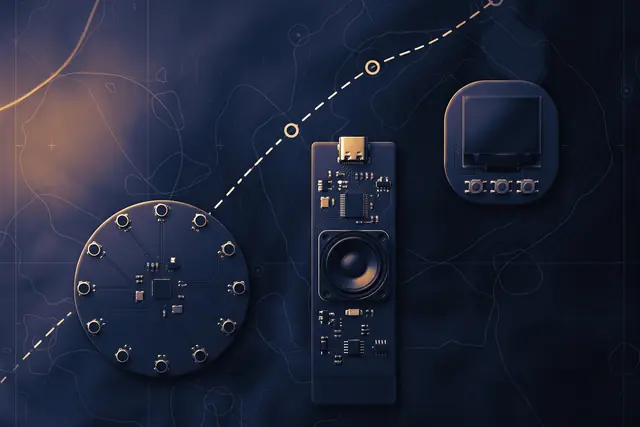
Three working devices
Anthropic says its AI model Claude Fable 5.2 designed three prototype devices that worked without electrical modifications, with no outside test reported.

NVIDIA GR00T 2
Five demonstrations per task
By NVIDIA's own test, its robot model GR00T 2 averages 95% success after five demonstrations of a task, on 50 tasks picked from those it learns that way.

Muse Ember
The jobs agents repeat
Meta's Muse Ember matched Claude Haiku 5.5 on an outside firm's tests at a third of the cost per task, though both list the same prices for text in and out.

Cursor Agent SDK
Findings that cite notes
Cursor released a kit for building AI agents, and its example, a code reviewer that cites the note behind each finding, is known only from Cursor's account.
Ring Rover Cam
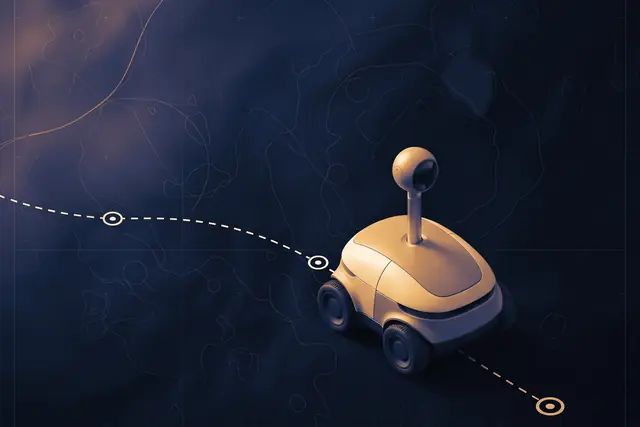
A camera on patrol
Amazon says Ring's $999.99 Rover Cam, a camera on wheels, maps an indoor space and drives itself to saved spots, and launch coverage reports no outside test.
Open in janitorial and facility services
3 of 14 open deliverables
Open · Routes and schedules
Open cleaning times, measured
An open table of how long common cleaning tasks take, measured on video in working buildings with the cleaners' consent: vacuuming carpet with each type of machine, mopping, emptying bins, wiping desks, cleaning a toilet. Each task gets a median and a spread across workers and buildings, not one fixed number, with the clips behind it.
Built with what exists
Phone or body-worn cameras; an open video-labeling tool such as CVAT; a model that reads video, such as Google's Gemini, to mark where each task starts and stops, checked by a person; floor plans to measure the area cleaned; a public spreadsheet under a CC BY license.
Open · Floor care
A test course for robots
An open test course and scoring method for commercial floor-cleaning robots: a marked floor with open aisles, a strip along walls, inside corners, chair legs and a dropped cable, spread with a measured test soil before each run. The score covers the share of floor cleaned, the soil removed, the width of the strip left along walls, the water left behind and the number of times a person had to step in.
Built with what exists
Floor tape and a gym or warehouse floor; a test soil mixed to a published recipe; a camera on a pole or ceiling mount and the open-source OpenCV library to compare before and after photos; a moisture meter for water left behind; robots borrowed or rented from makers such as Tennant, Avidbots, Gausium, LionsBot and Kärcher; a walk-behind scrubber run by a person as the baseline.
Open · Restrooms and supplies
Paper used per hand dry
A low-cost counter fitted under paper towel dispensers in working restrooms that logs each pull and the weight of paper taken, and a public table of grams of paper per hand dry for each common dispenser type: roll towels cut by lever or sensor, folded towels pulled one at a time, and folded towels pulled from an open stack. A hand dry is counted as all the pulls within 20 seconds of each other.
Built with what exists
A 5 kg load cell with an HX711 amplifier board; an ESP32 microcontroller logging over Wi-Fi; a break-beam sensor on the restroom door to count visits (no cameras in restrooms); Python and the pandas library to group pulls into hand dries.